US Defense Secretary Hegseth to Cut General and Admiral Positions by 20%
US Defense Secretary Pete Hegseth is set to announce a plan to reduce the number of general and admiral positions in the military by 20%.
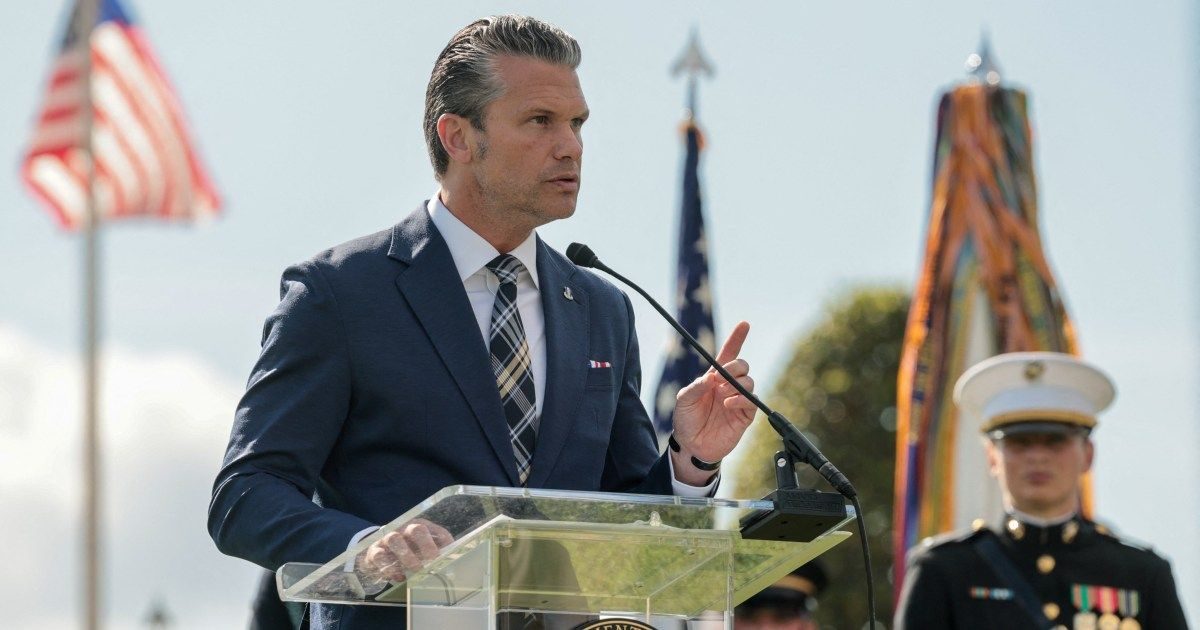
US Defense Secretary Pete Hegseth is poised to cut the number of general and admiral positions across the US military by 20%. This significant change is expected to impact leadership roles across the Army, Navy, and Air Force. The decision is anticipated to be announced during Hegseth's 'State of the Force' address at the Marine Corps Base Quantico in Virginia.
Highlights
- Defense Secretary Hegseth will reduce general and admiral positions by 20%.
- The plan will affect approximately 800 flag and general officer roles.
- The cuts are scheduled to be completed by January 1, 2027.
- This move doubles a previous 10% reduction ordered last year.
- Senator Jack Reed expressed concern, stating the cuts 'should alarm every American' and require Congressional consultation.
Details
According to a Pentagon official who spoke to Al Jazeera, Defense Secretary Pete Hegseth will direct all military services to double the 10% reduction he ordered last year. This will result in a total 20% decrease in the roughly 800 flag and general officer positions, with completion targeted for January 1, 2027. The new reductions could include any one-star general or above, or officers of equivalent Navy rank, as reported by Fox News.
The Washington Post indicated that these cuts could impact the careers of 'hundreds of current and rising military leaders' following numerous firings and denied promotions. Since taking office in January 2025, President Donald Trump and Secretary Hegseth have removed or pushed into retirement over two dozen military leaders, including General Randy George, the Army's top uniformed officer. Hegseth has stated that the aim is to remove 'redundant force structure to optimize and streamline leadership' and free the military from 'unnecessary bureaucratic layers.'
Why it matters
This decision marks a substantial shift in the US military's leadership structure, potentially altering power dynamics within the Pentagon. Concerns have been raised by some members of Congress, such as Senator Jack Reed, who emphasized that such significant changes should be made in consultation with Congress. Reed stated, “Our military is conducting major operations around the world, and the force is already under strain,” highlighting potential implications for national security and the military's operational capacity. This move is likely to spark further debate regarding civil-military relations and the future direction of the armed forces.