Germany Narrows Down Olympic Bids: Munich Emerges as Slight Favorite for 2036 Games
Germany is selecting its candidate for the 2036, 2040, or 2044 Summer Olympics, with Munich, Berlin, and the Cologne-Rhine-Ruhr region in contention; Munich is considered a slight favorite by the Germ
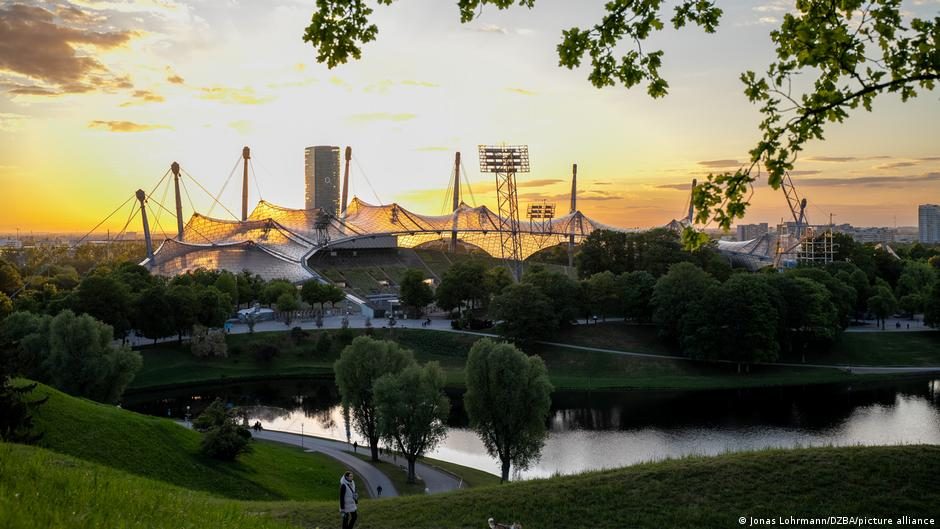
Germany is aiming to host the Summer Olympic Games in 2036, 2040, or 2044, with Munich, Berlin, and the Cologne-Rhine-Ruhr region vying for the nomination. The German Olympic Sports Confederation (DOSB) is set to vote on Saturday to endorse one of these three bids. According to the DOSB's evaluation report, Munich holds a slight advantage as the preferred candidate.
Highlights
- Germany is seeking to host the Olympic Games in 2036, 2040, or 2044, with three cities submitting bids.
- Munich's bid emphasizes sustainability, leveraging existing infrastructure and enjoying 66.4% public support.
- Berlin's candidacy faces political opposition and historical debate concerning the 1936 Nazi-era Olympics.
- The Cologne-Rhine-Ruhr region proposes a regional concept, utilizing numerous existing venues across multiple municipalities.
- Munich scored 87.03 points in the DOSB's preliminary evaluation, ahead of Cologne-Rhine-Ruhr (85.02) and Berlin (74.64).
Details
Munich's bid, themed "For Games with heart and soul," prioritizes sustainability. The city plans to center the event around the 1972 Olympic Park, with approximately 90% of competition venues located within 30 kilometers of the Olympic Village. The reliance on existing facilities and minimal temporary constructions aims to present a cost-effective model. Munich Mayor Dominik Krause highlighted the city's ideal conditions, noting that 66.4% of residents supported the bid in a referendum.
Berlin's situation is more complex. Local political opposition, particularly from the Left Party (Die Linke) and the Green Party, opposes the Olympic bid. Elif Eralp, leader of the Left Party, has called the bid a "waste of taxpayer money." Furthermore, the prospect of hosting the 2036 Games has reignited discussions about the 1936 Berlin Olympics, which were exploited by the Nazi regime for propaganda. According to Kaweh Niroomand, Berlin's Olympic commissioner, 97% of the required sports facilities already exist.
The Cologne-Rhine-Ruhr region offers a regional approach, encompassing 15 municipalities. Cologne would serve as the "lead city," hosting the Olympic Village and a temporary athletics stadium. Public support in the affected municipalities stands at 66%. However, the wide dispersion of competition venues across Germany's most densely populated region raises concerns about potential traffic congestion.
Why it matters
Germany's ambition to host the Olympics reflects its desire to strengthen its position on the international sports stage and to present a sustainable, cost-efficient model for future Games. The DOSB's vote on Saturday marks an initial step in a lengthy process, as the International Olympic Committee (IOC) will not decide on the host city for the 2036 Olympics until 2029. This decision could significantly influence Germany's future sports and urban development strategies.