German Town Bans 'Stumbling Stone' Memorials to Nazi Victims
The town of Heidenau in Germany has decided to ban 'stumbling stone' memorials dedicated to Nazi victims, sparking widespread criticism across the country.
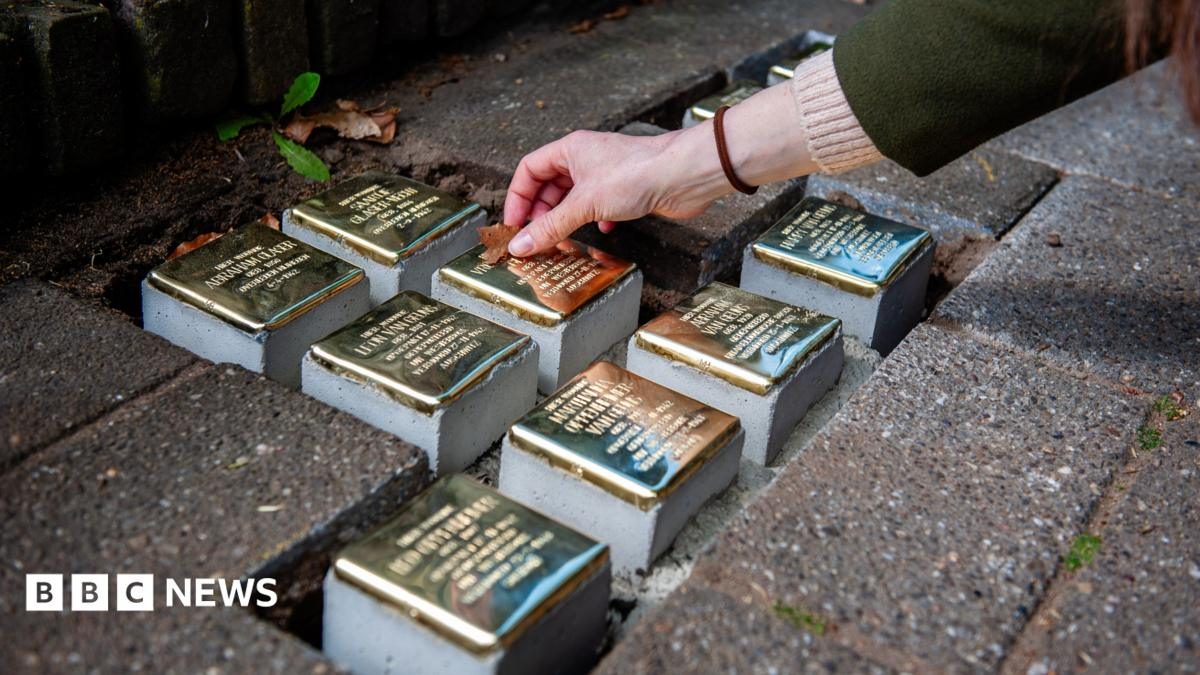
The town of Heidenau, located near Dresden in Saxony, Germany, has decided to ban the placement of "stumbling stone" (Stolpersteine) memorials, which are small brass plaques commemorating victims of Nazi atrocities. This decision has been labeled a "scandal" by Germany's Education Minister, Karin Prien, and has drawn significant criticism nationwide.
Highlights
- The town of Heidenau has voted to ban "stumbling stone" memorials dedicated to victims of Nazism.
- German Education Minister Karin Prien condemned the decision, calling it a "scandal."
- The ban was approved by councillors from the far-right Alternative for Germany (AfD) and the conservative Christian Democratic Union (CDU).
- Holocaust survivor Charlotte Knobloch stated that removing memorials from public spaces is a "completely wrong approach."
- Stumbling stones have been placed across Europe since the 1990s, often outside the former homes or workplaces of Nazi victims.
Details
The Heidenau town council's decision to ban stumbling stones was passed with votes from members of the far-right Alternative for Germany (AfD) party and the conservative Christian Democratic Union (CDU). The motion states that future memorials should be placed at the city's Nordfriedhof cemetery to make it "impossible to step directly onto the memorial elements." The AfD's Saxony branch has been classified as extreme-right by German intelligence, a designation the party rejects.
However, Karin Prien, a CDU member and the Education Minister, strongly criticized the decision. Prien stated, "Anyone who banishes Stolpersteine and memorial sites commemorating Jewish life from public spaces to the cemetery is prioritizing death over life and rendering Jewish people invisible once again." Charlotte Knobloch, a Holocaust survivor and president of the Jewish Community in Munich, also expressed her dismay, calling the removal of memorials from the cityscape "completely the wrong approach."
Why it matters
This decision has ignited a significant debate in Germany regarding the presence of Holocaust memorials in public spaces and the culture of remembrance. With the rise of far-right parties, the discussion around confronting the Nazi era and its commemorative practices is resurfacing. Such bans have the potential to undermine efforts to reconcile with history, as stumbling stones serve as an important form of remembrance, prompting people to reflect on the history of their location and its past.