Bosnia-Herzegovina Votes Amidst Divisive Campaigns and EU Aspirations
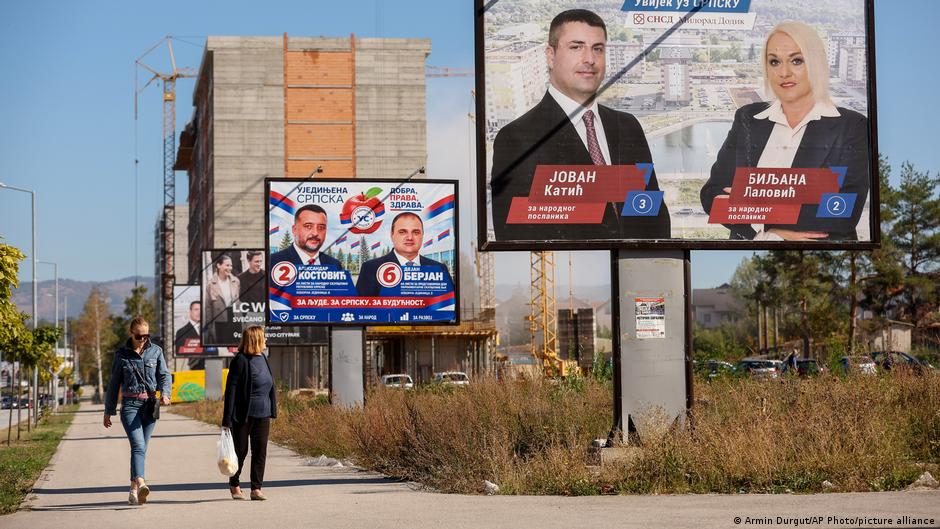
Bosnia and Herzegovina held critical elections for parliamentary, presidential, and local offices, with 3.4 million voters participating amidst economic slowdowns, stalled EU progress, and deep-seated
Highlights
- Approximately 3.4 million eligible voters participated in Bosnia and Herzegovina's general election, selecting officials across various governmental levels.
- The elections occurred during a period marked by economic challenges, slow advancement toward European Union membership, and persistent political gridlock.
- Contests featured ethnically aligned parties—Bosniak SDA, Serb SNSD, and Croat HDZ BiH—against multi-ethnic opposition alliances led by the Social Democratic Party.
- In Republika Srpska, Milorad Dodik, a secessionist leader, maintained significant influence despite not being a candidate himself.
- The nation operates under a complex political framework established by the 1995 Dayton Peace Accords, largely divided along ethnic lines.
Details
Bosnia and Herzegovina's recent elections unfolded within a intricate political structure, a legacy of the 1995 Dayton Peace Accords that concluded the 1992-95 Bosnian War. This framework partitions governance among a multi-ethnic central government, the self-governing Brčko District, and two semi-autonomous regions: the Bosniak-Croat Federation and Republika Srpska. The population is diverse, with roughly half identifying as Muslim Bosniaks, 31% as Orthodox Serbs, and 15% as Catholic Croats.
In Republika Srpska, former president Milorad Dodik remains a pivotal figure for his party, the SNSD, and his advocacy for closer ties with Russia and Serbia. Despite being barred from public office for six years due to a conviction for defying an international envoy overseeing the peace process, his influence is undeniable. Dodik notably stated at a rally in Banja Luka, "Bosnia and Herzegovina is dead, it is an impossible country." Conversely, within the Bosniak-Croat Federation, Bosniak parties champion a unified state, opposing Serb separatist movements.
Why it matters
These elections are crucial for determining Bosnia and Herzegovina's future trajectory. The country's path to EU membership is contingent upon implementing significant reforms, including bolstering judicial oversight and enacting anti-corruption legislation. Continued ethnic tensions and political stalemates could impede the nation's stability and its efforts toward Western integration. The election outcomes will either facilitate progress in overcoming these formidable challenges or risk exacerbating existing divisions.