China's Foreign Minister Urges Israel to Halt West Bank Settlements
Chinese Foreign Minister Wang Yi told Israeli President Isaac Herzog that Israel should cease the "forced establishment" of West Bank settlements.
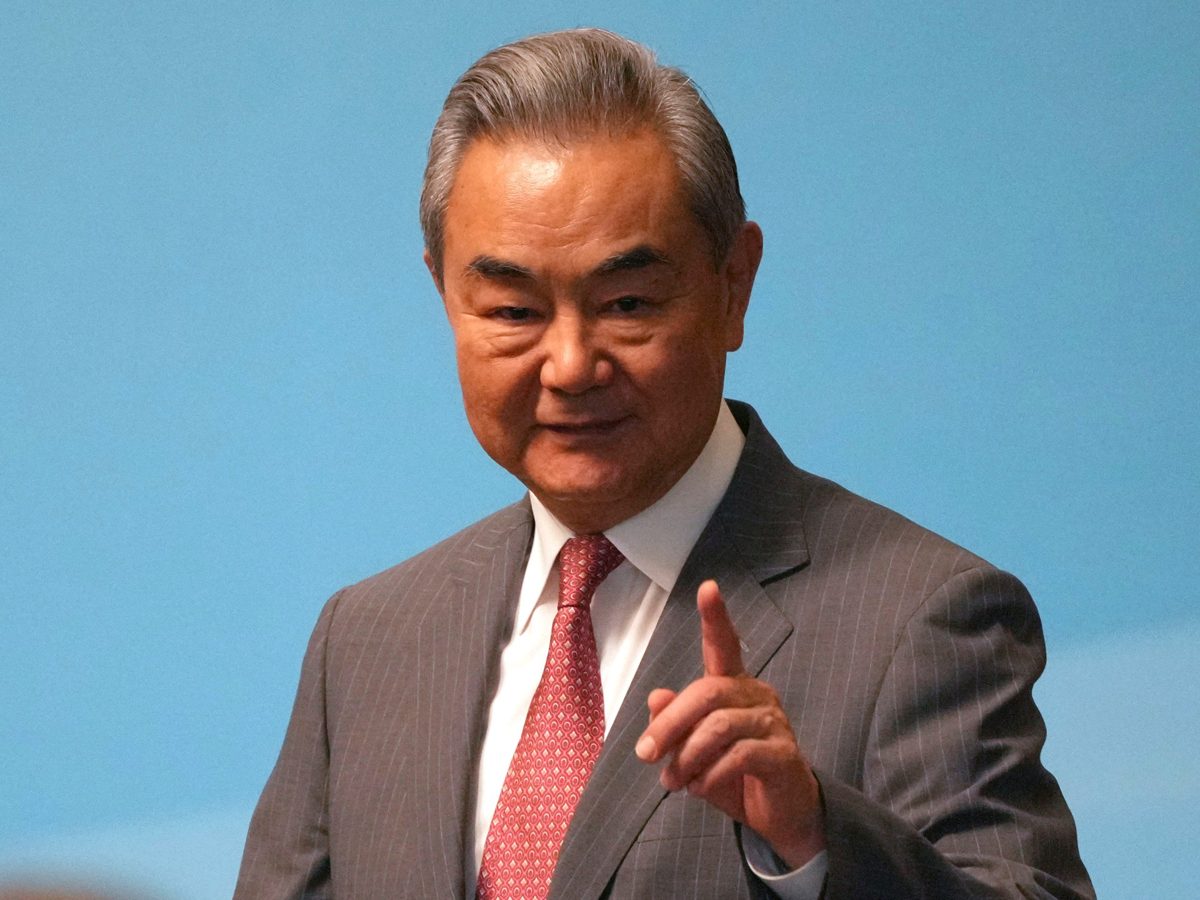
Chinese Foreign Minister Wang Yi met with Israeli President Isaac Herzog in Baku, Azerbaijan, and urged Israel to stop and reverse the "forced establishment" of West Bank settlements. According to a statement from the Chinese Foreign Ministry, Wang emphasized that China consistently views the Palestinian question as the greatest historical injustice of this century.
Wang Yi further stated that the "two-state solution" is the correct path to a resolution and that the immediate priority is to fully open access to the Gaza Strip to prevent a humanitarian "catastrophe" from spreading. China expressed its willingness to work with the international community to encourage all parties to return to dialogue as soon as possible and seek a political settlement.
Highlights
- Chinese Foreign Minister Wang Yi called on Israeli President Isaac Herzog to halt West Bank settlements.
- Wang described the Palestinian issue as "the greatest historical injustice of this century."
- He stressed that the two-state solution is the right path and humanitarian access to Gaza is an urgent priority.
- China stated its readiness to work with the international community to promote dialogue among parties.
Details
These remarks by Chinese Foreign Minister Wang Yi were made while he was in Baku for the Seventh Summit of the Conference on Interaction and Confidence-Building Measures in Asia, attending as the special representative of President Xi Jinping. China has been actively seeking to expand its influence in the Middle East, advocating for a reshaping of the region's security order.
In March, China criticized US and Israeli attacks on Iran, demanding an immediate halt to joint operations. China is Iran's largest trading partner, purchasing up to 90 percent of its oil. In 2021, Beijing signed a 25-year "comprehensive strategic partnership agreement" with Tehran.
Why it matters
China's explicit call to Israel underscores Beijing's growing diplomatic assertiveness in the Middle East and its desire to play a more active role in regional conflicts. This move, in a region where the US has traditionally held strong influence, highlights shifts in global power dynamics and China's efforts to solidify its international standing. Such engagement could introduce a new dimension to the ongoing search for solutions in the region.