COVID-19 Lockdowns Led to a 12.3% Drop in Global Fire Activity
A new study reveals that reduced human mobility during COVID-19 lockdowns resulted in an average 12.3% decrease in global active fire detections.
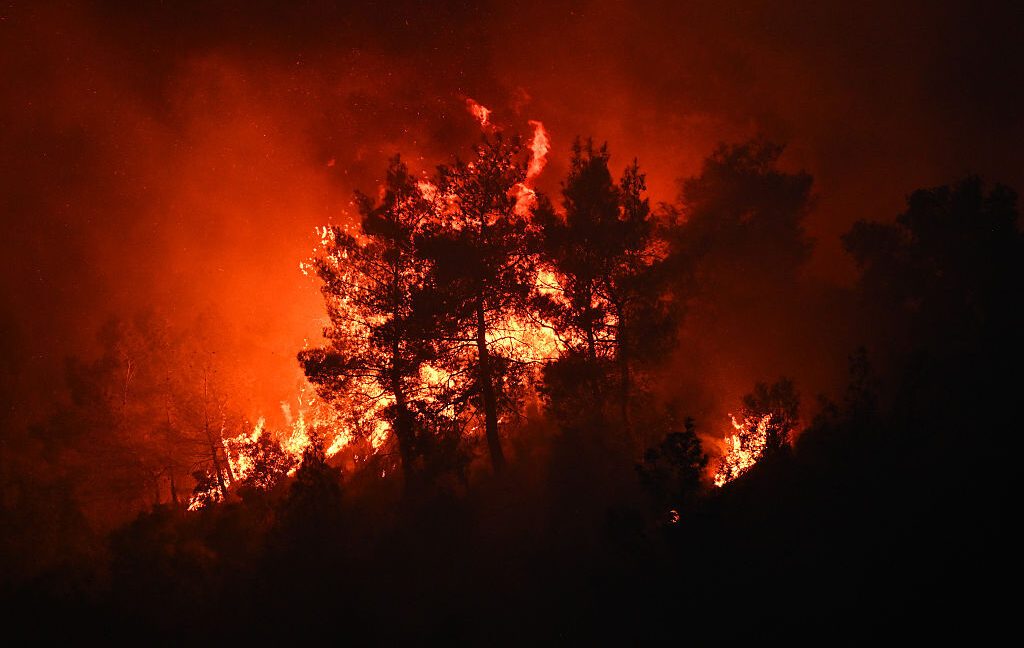
A research team led by Professor Jianghao Wang from the Chinese Academy of Sciences published a study examining the impact of COVID-19 lockdowns on global fire activity. The study, featured in Cell Reports Sustainability, demonstrated how the abrupt decline in human mobility during 2020 restrictions altered fire regimes worldwide.
The researchers treated the COVID-19 period as a "natural experiment" to measure the net effect of human activities on fires. The simultaneous occurrence of stable weather conditions and a large-scale, sudden drop in human mobility provided a unique dataset for their investigation.
Highlights
- During lockdown periods in the first half of 2020, active fire detections decreased by an average of 12.3% compared to previous years.
- This reduction was observed as 27.7% in forests and 8.4% in grasslands.
- Some regions, particularly in South America, southern Africa, and northeast Asia, experienced an increase in fires; notably 31.4% in Colombia, 25.4% in India, and 70.7% in Honduras.
- Researchers suggest that decreases in fires were due to fewer human-caused ignitions, while increases might be attributed to diminished fire suppression capabilities.
- The study emphasizes the need for fire policies to be tailored to local human-fire relationships.
Details
The research team identified periods of restricted mobility using regional lockdown orders and mobile phone location data. Fires were tracked using VIIRS sensor data from NASA and NOAA's Suomi NPP satellite, which detects heat signatures from fires at a 375-meter spatial resolution. Fire detections during the restricted periods in 2020 were compared with averages from the same weeks between 2013 and 2019.
The study highlighted the importance of controlling for weather factors. Without these adjustments, the observed drop in fires was only 5.8%, but after accounting for weather, the estimated decline rose to 12.3%. This 12.3% figure is interpreted as a net effect, resulting from the partial cancellation of opposing changes in human-caused ignitions and suppression efforts.
The increase in fires observed in some regions led researchers to infer a diminished fire suppression capacity. Wang acknowledged that this was an inference, not a direct observation. Furthermore, fire management activities like prescribed burning may have also been disrupted by restrictions; in 12 countries, the area burned by prescribed fires in 2020 decreased by about half compared to the 2013–2019 average.
Why it matters
This research provides a crucial natural experiment for understanding the complex and dual role of human activities in fire regimes. The findings suggest that incorporating human behavior into future fire risk projections and developing localized fire management policies are critical. It underscores that a uniform policy is unlikely to be effective, and strategies should be adapted based on the balance between ignition and suppression capacities in different regions.