Chile's Atacama Desert Blooms Following El Niño Rains
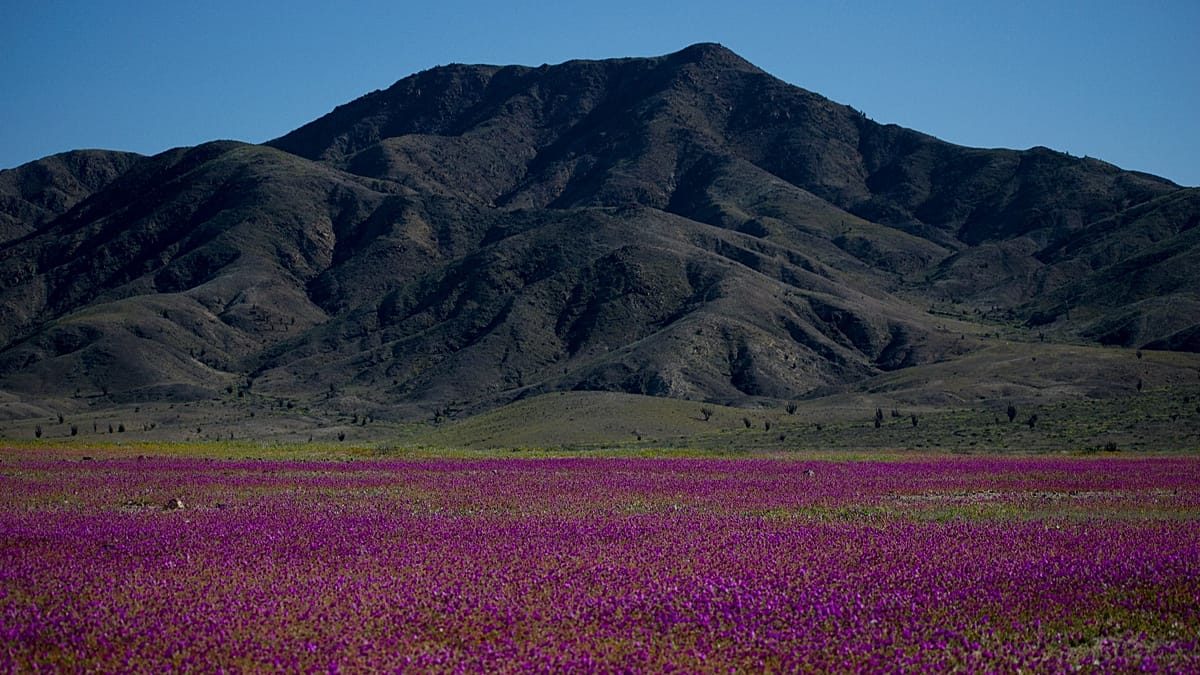
The Atacama Desert, one of the world's driest regions, has transformed into a vibrant landscape of flowers due to heavy rainfall associated with the El Niño climate phenomenon.
Highlights
- Thousands of hectares in Chile's Atacama Desert are now covered in flowers, a direct result of significant rainfall driven by El Niño.
- Approximately 200 distinct species of seeds and bulbs, long dormant beneath the desert surface, have germinated and blossomed.
- Officials from Chile's National Forestry Corporation (Conaf) noted unprecedented rainfall levels, exceeding 180 millimeters in some areas.
- The flowering spectacle is projected to reach its peak in October, potentially blanketing an estimated 15,000 hectares.
- The current El Niño event is believed to be the most powerful recorded in the last four decades.
Details
In a remarkable natural display, vast areas of the Atacama Desert, located about 800 kilometers north of Santiago, have erupted in violet and white blooms. This "flowering desert" phenomenon occurs when heavy precipitation allows long-dormant seeds and bulbs from nearly 200 plant species to sprout. The recent downpours, influenced by El Niño, have saturated the sand more deeply than usual, fostering this extensive vegetation growth. César Pizarro, biodiversity manager for the Atacama region at Conaf, informed AFP that certain areas received over 180 millimeters of rain, a quantity previously unrecorded.
This floral transformation follows a period of substantial precipitation tied to the El Niño climate pattern. El Niño is characterized by a rise in sea surface temperatures across the central and eastern equatorial Pacific Ocean. This warming can alter global atmospheric circulation, impacting wind and precipitation patterns worldwide and leading to extreme weather events. Experts suggest that the current El Niño could be the most intense observed since consistent records began forty years ago.
It is important to note that while the rains brought this unique desert bloom, they also caused severe devastation in Chile in July. The extreme weather resulted in the deaths of at least 13 individuals, and roughly 4,000 residences sustained significant damage or were destroyed.
Why it matters
The blooming of the Atacama Desert vividly illustrates the profound impact global climate events like El Niño can have on local ecosystems. While presenting a rare natural beauty, this event also serves as a stark reminder of the destructive potential of extreme weather conditions. For scientists, it offers a crucial case study for understanding the broader effects of climate change and how different regions respond to such shifts.