Macron Calls for 'Calm and Order' After Widespread Riots Across France
French President Emmanuel Macron has urged for 'calm and order' following widespread riots and looting across France, sparked by protests against rising fuel prices and cost of living.
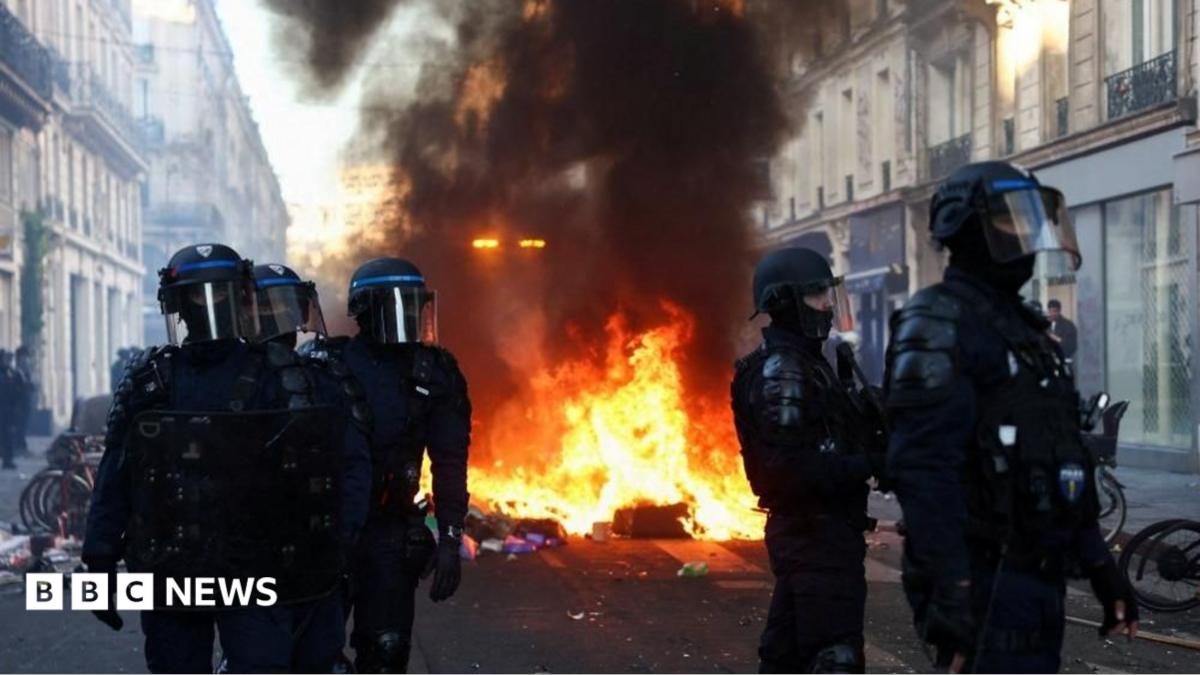
Protests in France, initially against rising fuel prices, the cost of living, and declining public services, escalated into widespread rioting and looting across the country. Following Saturday's demonstrations involving 550,000 people, smaller-scale looting and clashes with police continued in cities like Paris and Lyon on Sunday. President Emmanuel Macron, in a national address from the Élysée Palace, called for "calm and order," urging those involved not to "escalate" the situation.
Highlights
- 550,000 demonstrators took to the streets on Saturday to protest fuel prices and the cost of living.
- Protests quickly turned into riots, looting, and arson, affecting major cities including Paris, Marseille, and Lille.
- According to France's interior ministry, approximately 2,400 people were arrested, and nearly 1,000 police officers were injured.
- President Macron emphasized the need to distinguish between the "legitimate demands" of protesters and those who engaged in "destruction, smashing, and looting."
- The historic 19th-century city hall in Limoges was gutted by fire, sustaining significant damage.
Details
These events mark some of the worst public disorder in modern French history. Prime Minister Sébastien Lecornu is scheduled to hold a crisis cabinet meeting on Monday. During the unrest, some rioters, dressed in black and wearing masks, set cars and buildings ablaze. In Paris, police used tear gas and stun grenades against hundreds of people, while protesters hurled bottles and rocks at officers.
Macron stated that the "unbridled" violence was unjustifiable and that those involved would face justice. He also promised "full transparency" regarding the police response and indicated that local authorities would draft measures to protect shops and civic buildings. The incidents have also highlighted France's deep political divisions, with hard-right and hard-left parties blaming each other for the unrest.
Why it matters
These events underscore the escalating social tensions and political polarization in France ahead of the upcoming April elections. Issues such as fuel prices, the cost of living, and inadequate public services are fueling widespread anger, leading to large-scale violence. The arson of historic buildings and widespread looting raise serious concerns for the country's internal stability and how the government will manage this crisis.