India's 'Cockroach' Party to March Again After Protest Crackdown
India's 'Cockroach Janta Party' (CJP) plans another demonstration in New Delhi to assert the right to protest, following the arrest of two of its leaders.
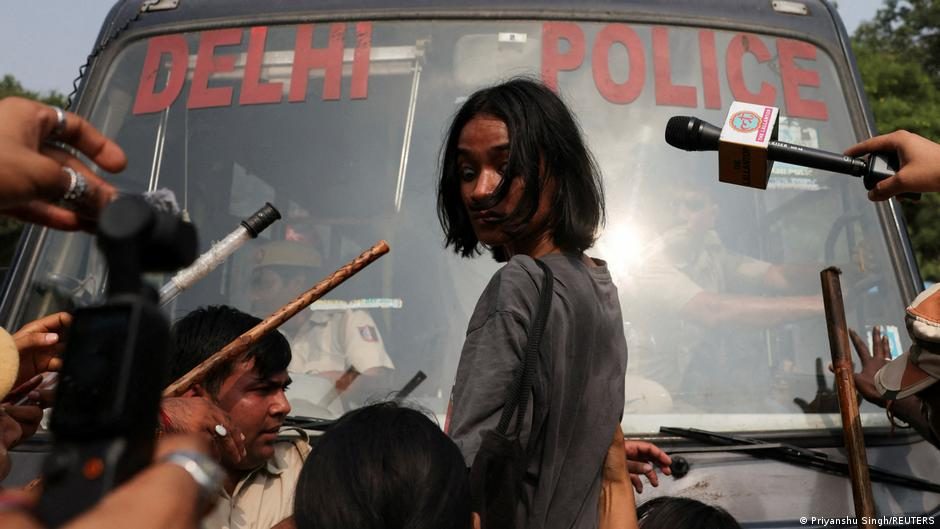
India's youth-led 'Cockroach Janta Party' (CJP) is set to hold another march in central New Delhi, a week after a similar protest rally was thwarted by thousands of security personnel, leading to mass detentions. The party has called on people to gather and wave the national flag in support of its leaders, who were sent to judicial custody for alleged trespassing.
Two CJP leaders, Ashutosh Ranka and Saurav Das, were detained for five days on Wednesday on charges including alleged trespassing, violation of prohibitory orders, and breach of a peace bond. This detention has fueled the party's decision to organize another demonstration.
Highlights
- The Cockroach Janta Party (CJP) will hold a new march in New Delhi, urging people to wave the national flag.
- The rally supports two CJP leaders detained for five days on allegations of trespassing and violating prohibitory orders.
- A previous demonstration in the same area last week saw thousands of protesters detained after police denied permission.
- CJP founder Abhijeet Dipke stated, “Imagine being jailed in your own country for waving your own national flag.”
- Delhi Police reiterated that prohibitory orders are in place and only a select group might be allowed to gather for flag-waving at a suitable location.
Details
The CJP's march on Friday is named "Lehra Do Tiranga," meaning "wave the tricolor," referring to India's national flag. CJP co-conveners Das and Ranka, along with other activists, were seen climbing a police-cordoned gate at Jantar Mantar on Tuesday, holding the Indian flag and shouting slogans against the election chief, before being chased by police officials. This incident occurred a day after Jantar Mantar was removed as the capital's official protest venue.
These demonstrations are part of a wider movement, also supported by opposition parties, demanding the resignation of Chief Election Commissioner Gyanesh Kumar. The calls for resignation stem from the purging of tens of millions of names from India's electoral rolls. Protesters assert that the right to protest is a fundamental right.
Why it matters
These events highlight the ongoing debate in India regarding the limits of the right to protest and civil liberties. The government's efforts to suppress demonstrations and the arrests of activists raise concerns about pressure on democratic processes and freedom of expression. CJP's persistent actions are seen as a significant indicator of the demand for electoral reforms and the public's desire to be heard.