'Cockroach' Party Founder Abhijeet Dipke Detained in India
Abhijeet Dipke, founder of India's 'Cockroach Janta Party', was detained in New Delhi ahead of a planned demonstration and is expected to appear in court today.
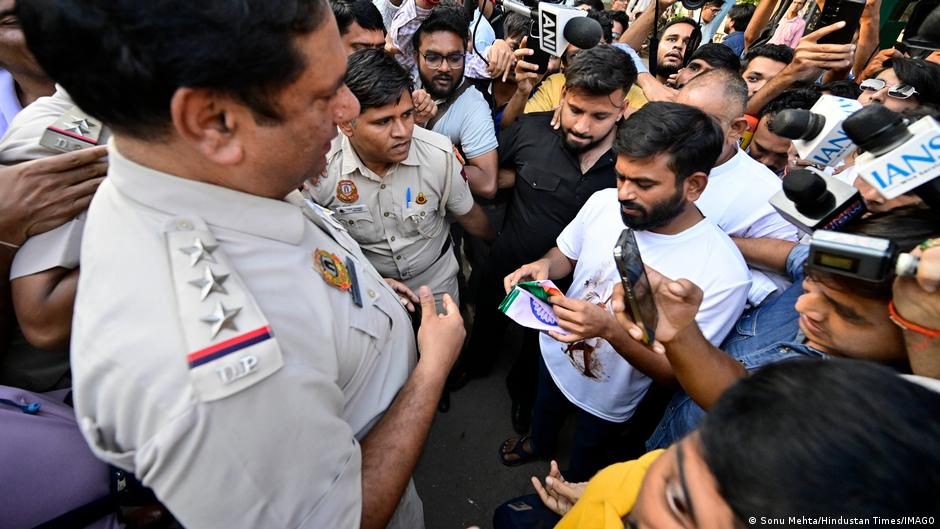
Abhijeet Dipke, the founder of India's opposition 'Cockroach Janta Party' (CJP), was detained on Friday in New Delhi ahead of a planned demonstration. According to media reports, Dipke was arrested to prevent a breach of peace and is expected to appear before a Special Executive Magistrate later today.
Dipke's detention comes amid escalating protests over a review exercise that has removed over 130 million names from India's electoral rolls. Opponents claim this practice disproportionately targets minority voters and benefits Prime Minister Narendra Modi's Hindu nationalist Bharatiya Janata Party (BJP).
Highlights
- CJP founder Abhijeet Dipke was detained in New Delhi before a scheduled rally.
- He was reportedly arrested to prevent a breach of peace and is due in court today.
- The detention is part of widespread protests against India's voter list revision.
- Critics allege the revision removed over 130 million voters and benefits the ruling BJP.
- Police had previously served Dipke a notice banning the protest and enforced assembly restrictions in the Connaught Place area.
Details
Abhijeet Dipke was publicly detained on Friday as he left his residence to participate in the 'Lehra Do Tiranga' (Wave the Tricolor) protest rally. Police officials informed him he was being placed under "preventive detention." Ratna Singh, CJP's head of legal affairs, confirmed Dipke's arrest, stating he would appear before the SEM court in central Delhi's Mandir Marg at noon.
This detention follows the five-day detention of two other CJP co-conveners, Ashutosh Ranka and Saurav Das, for similar reasons. Protesters continued their demonstrations, waving the Indian flag, with hundreds gathering in Connaught Place despite police restrictions. Police reported that approximately 150 protesters were detained during the events.
The Election Commission of India (ECI) defends the voter list revision, stating it removes deceased, relocated, and duplicate voters and prevents the inclusion of "foreign illegal immigrants." However, opposition parties and critics question the ECI's neutrality and accuse the Modi government of undermining democracy.
Why it matters
These events highlight the growing tension in India, the world's largest democracy, over electoral reforms and the right to protest. Changes to voter lists and the detention of opposition leaders deepen political polarization in the country, raising serious concerns about citizens' freedom of expression and assembly rights. Some Democratic lawmakers in the U.S. have also called for alleged wrongful detentions and excessive force during student protests in India to be addressed.