Hong Kong's First Post-Colonial Leader, Tung Chee-hwa, Honored with State Funeral
Hong Kong held a state funeral for Tung Chee-hwa, its first post-colonial leader, a rare honor reflecting his significant role in the city's history.
Highlights
- Tung Chee-hwa, Hong Kong's inaugural Chief Executive after the 1997 handover, received a state funeral.
- This marks only the third time Hong Kong has bestowed such an honor since its return to Chinese sovereignty.
- A high-level committee, led by a senior Chinese Communist Party Politburo member, organized the funeral, indicating Beijing's strong endorsement.
- Numerous top officials from both mainland China and Hong Kong attended the ceremony.
- Tung navigated Hong Kong through critical periods, including the 1997 Asian financial crisis and the 2003 SARS epidemic.
Details
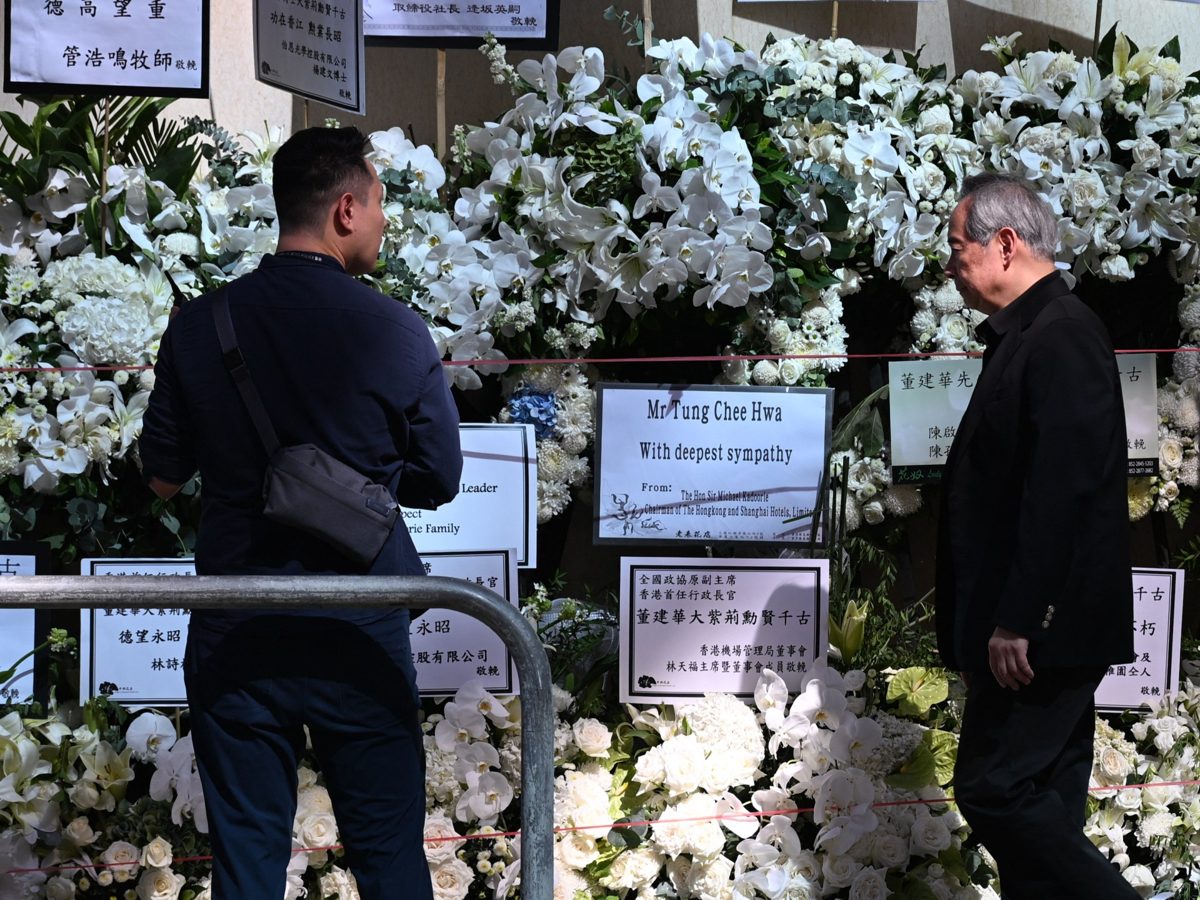
Hong Kong paid its final respects to Tung Chee-hwa, its first leader following the British handover, with a state funeral. This rare distinction, only the third of its kind in the city's post-1997 history, underscores his pivotal role. The ceremony took place on Sunday at the Hong Kong Funeral Home in North Point, attended by prominent figures from China and Hong Kong. A public vigil held the day prior also saw attendance from many political and business leaders. Tung passed away on September 8 at the age of 89.
The funeral preparations were overseen by a committee comprising 87 individuals, chaired by Shi Taifeng, a high-ranking member of the Chinese Communist Party Politburo and vice chairman of the Chinese People's Political Consultative Conference (CPPCC). This leadership highlighted the substantial backing from Beijing. Among the dignitaries present were Xia Baolong, Beijing's senior official for Hong Kong and Macau affairs, current Chief Executive John Lee, and former Chief Executives Leung Chun-ying, Carrie Lam, and Donald Tsang.
Originally a shipping magnate with limited political background, Tung was chosen in 1996 by a Beijing-appointed panel to lead Hong Kong after the 1997 transfer of sovereignty. During his tenure, he guided the city through significant challenges, including the economic downturn of 1997 and the health crisis of 2003. Public protests in 2003 also compelled him to postpone proposed national security legislation. Though he secured re-election without opposition in 2002, he stepped down in 2005, midway through his second term, citing health reasons. This resignation was widely interpreted as a reflection of Beijing's diminishing confidence in his leadership. He subsequently served as a vice chairman of the CPPCC until 2023. Chinese state media lauded Tung as a "renowned patriot," while his successor, Donald Tsang, described him as "an easy-going, gentle and refined man with a broad-minded outlook and far-reaching vision."
Why it matters
The state funeral for Tung Chee-hwa not only honored Hong Kong's initial post-colonial leader but also emphasized Beijing's enduring influence and the political significance of the city. His time in office spanned some of the most tumultuous periods in Hong Kong's modern history, shaping a legacy that draws both commendation and critique. This event serves as a reminder of the complex relationship between Hong Kong and mainland China, and the historical figures who have navigated its evolution.