Israel Demolishes Palestinian-Owned Olive Groves in West Bank Before Harvest
Israeli bulldozers uprooted Palestinian-owned olive groves in a village near Ramallah in the occupied West Bank, just weeks before the annual harvest season.
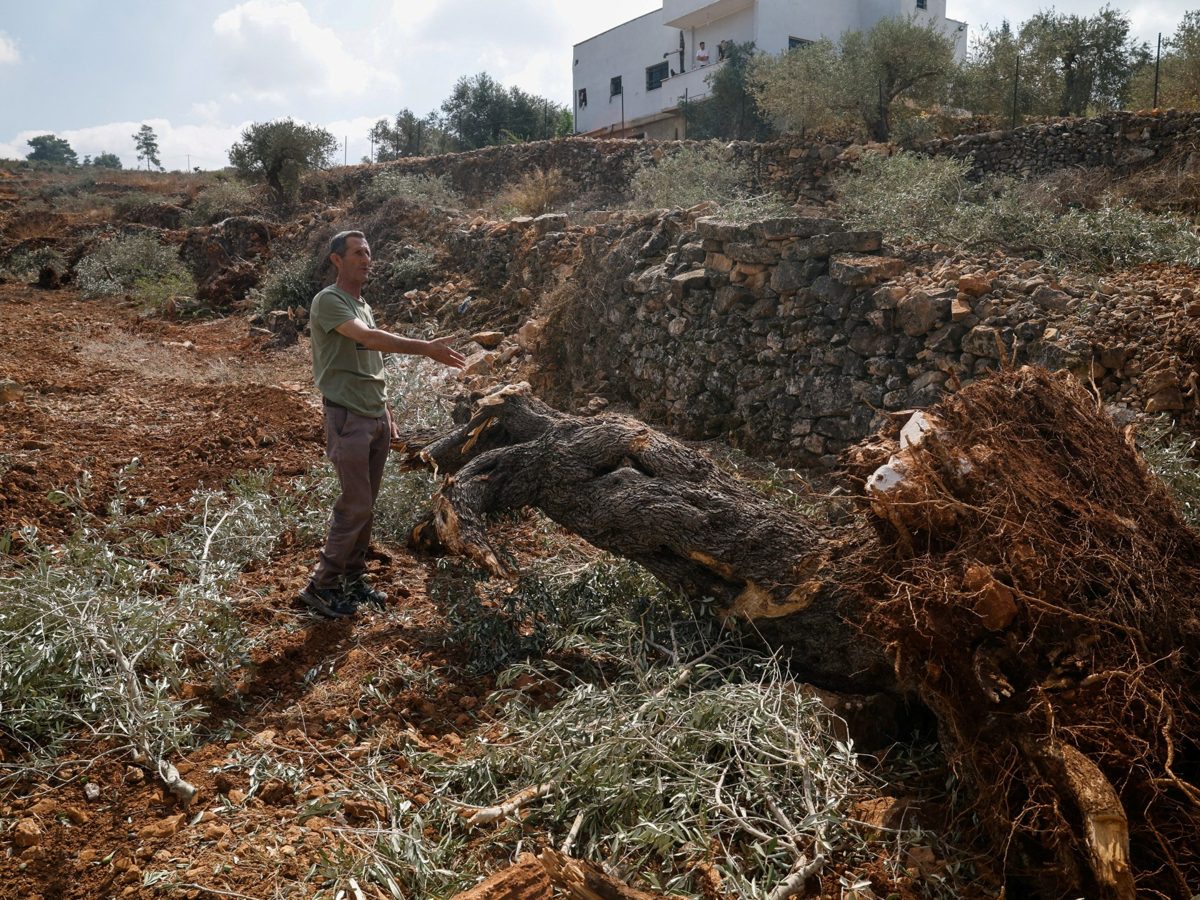
Israeli army bulldozers have reportedly cleared olive groves belonging to Palestinian farmers in the village of Deir Nidham, near Ramallah in the occupied West Bank. This demolition occurred just as farmers were preparing to begin their annual olive harvest.
The destruction, which started on Monday and continued into Tuesday, was reported by the Palestinian news agency Wafa. Residents suggest the timing of the demolition was intended to inflict maximum damage ahead of the harvest season.
Highlights
- Israeli bulldozers uprooted Palestinian-owned olive groves near Ramallah in the village of Deir Nidham.
- The demolition took place weeks before the annual olive harvest season was set to begin.
- Palestinian farmer Abd Alfattah Tamimi stated the army destroyed olive trees on his family's land and his neighbors'.
- Another farmer, Nather Tamimi, mentioned his family typically produced around 120 drums of olive oil from the land annually.
- The Israeli military had not responded to Reuters' request for comment by Wednesday evening.
Details
The demolition in Deir Nidham village represents a significant blow to Palestinian farmers. Nather Tamimi, a local farmer, indicated that the timing of the demolition was calculated to cause the most damage just before the harvest season, which traditionally commences in October. Tamimi also noted that his family typically yielded approximately 120 drums of olive oil from the affected land each year.
In the past, the Israeli military has justified clearing land of olive trees by citing security concerns, such as preventing ambushes on troops. However, Palestinian human rights organizations dispute these claims, arguing that such destruction deprives Palestinian farmers of income from olive and olive oil sales. They also emphasize that uprooting these trees severs a vital symbol of the farmers' connection to their land.
The Palestinian Authority's Colonization and Wall Resistance Commission reported that Israeli attacks on agricultural land in August impacted 21,508 trees, with 19,375 of these being olive trees. The commission estimated this year's olive production at 21,000 tonnes, while local demand stands at approximately 15,000 tonnes.
Why it matters
This incident underscores the economic and cultural dimensions of the Israeli-Palestinian conflict. Olive trees are not merely a source of livelihood for Palestinians but also a powerful symbol of their historical and cultural ties to their land. Demolitions occurring before the harvest season exacerbate existing tensions in the region, further worsening the already challenging living conditions for Palestinian farmers and threatening their economic independence.