Israel's 'Yellow Line' Continues to Squeeze Palestinians in Gaza
A year after a ceasefire, Israel reportedly restricts access to nearly two-thirds of Gaza, confining 2.1 million Palestinians to a shrinking area.
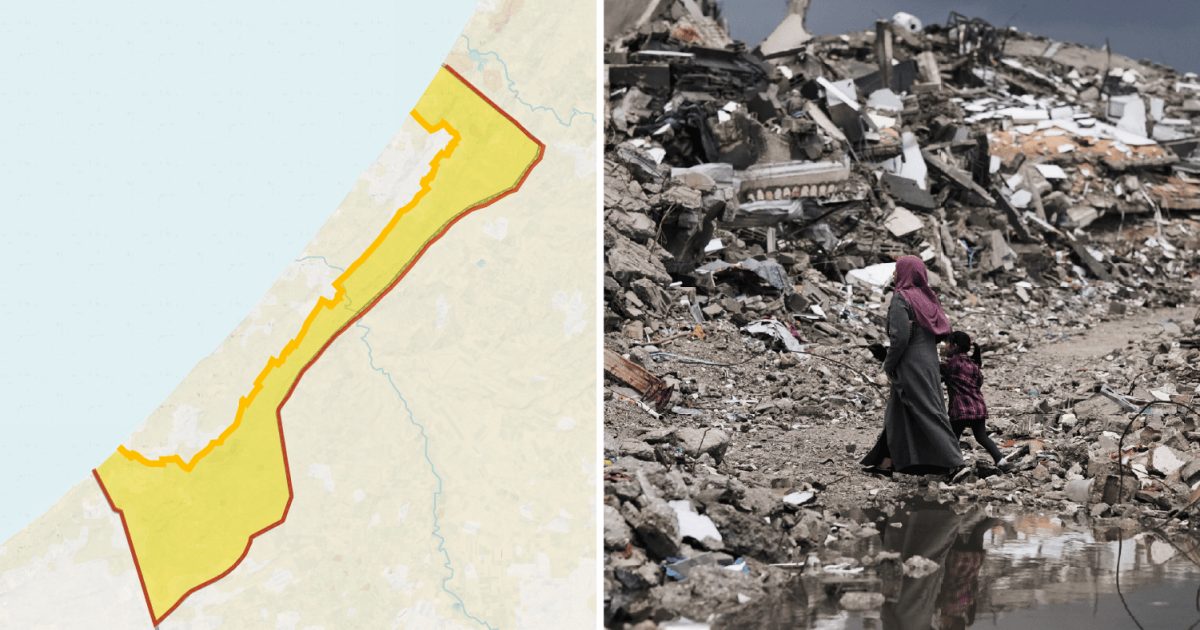
Following a US-brokered ceasefire declared a year ago, Israel is reportedly expanding its military control in the Gaza Strip. This situation is pushing Palestinians into an increasingly smaller portion of the besieged territory. Approximately 65% of Gaza is now under Israeli military control or subject to access restrictions.
Highlights
- Israel is accused of expanding its military occupation in the Gaza Strip, violating a US-brokered ceasefire.
- Nearly 65% of Gaza is under Israeli control or access restrictions, confining 2.1 million Palestinians to the remaining 35%.
- The "Yellow Line," initially marking Israeli withdrawal, is consistently moved westward, contrary to original expectations.
- Gaza's population density has almost tripled since before the war, reaching approximately 16,000 people per square kilometer.
- According to the UN, 82% of structures in Gaza are damaged or destroyed, with over 950,000 people living in displacement sites.
Details
The "Yellow Line," initially established under former US President Donald Trump's plan to end the war, marked the area from which Israeli forces were to withdraw. However, this line has reportedly been continuously shifted westward, with Israel seizing more territory. Most recently, yellow concrete blocks were moved dozens of meters west in the Shujayea neighborhood of southeastern Gaza City, forcing Palestinian families to flee.
Before the war, the Gaza Strip covered an area of approximately 365 square kilometers, with a population density of about 6,000 people per square kilometer. As Israel's controlled area expanded after the ceasefire, the region where Palestinians are forced to live has shrunk. According to the United Nations Office for the Coordination of Humanitarian Affairs (OCHA), restrictions now cover 65% of Gaza. This leaves 2.1 million people in an area of approximately 128 square kilometers.
This compression has nearly tripled the population density since before the war, reaching about 16,000 people per square kilometer, comparable to central Tokyo. However, unlike Tokyo, Gaza has very little space left for its people for shelter, roads, schools, hospitals, and farmland. The UN Satellite Centre (UNOSAT) found that 82% of structures in Gaza are damaged or destroyed.
Why it matters
The continuous expansion of the "Yellow Line" in Gaza exacerbates the humanitarian crisis in the region. The living spaces for Palestinians, already living in overcrowded areas, are shrinking, and their access to basic services is becoming more difficult. This situation poses a significant obstacle for humanitarian aid organizations, especially before the rainy season, as they try to relocate families, and it increases instability in the region.