Netanyahu and Eisenkot Begin Unity Government Talks in Israel
Caretaker Prime Minister Benjamin Netanyahu and opposition leader Gadi Eisenkot have started discussions to potentially form a unity government in Israel.
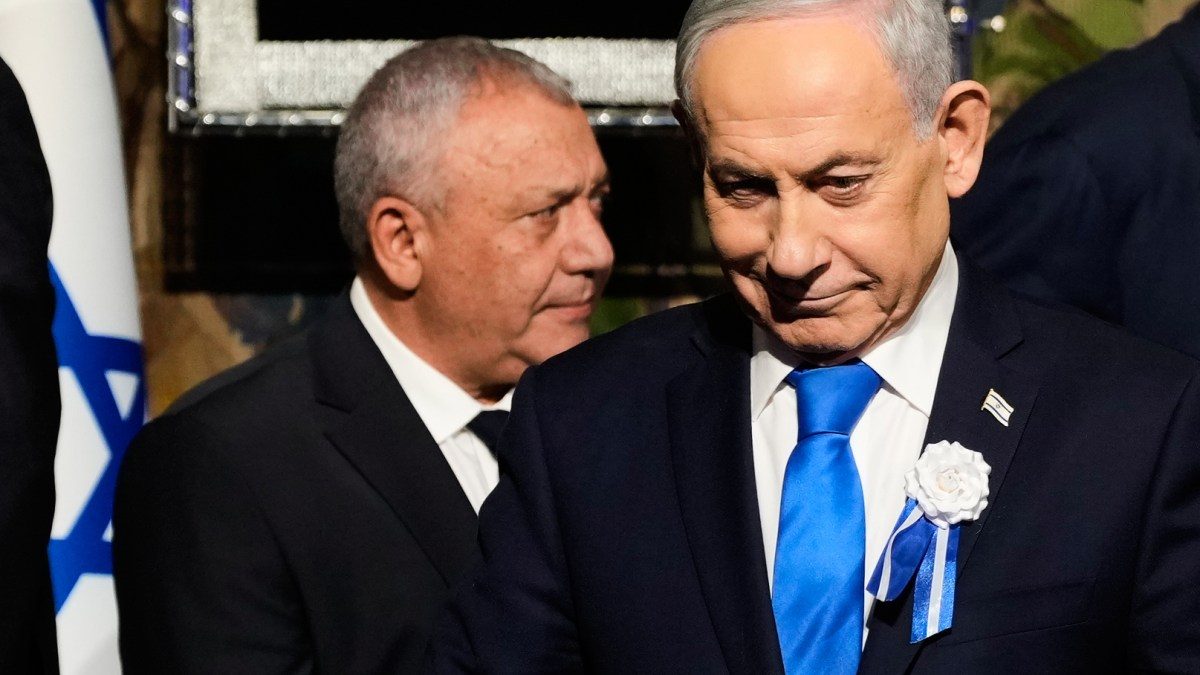
Caretaker Prime Minister Benjamin Netanyahu's Likud party and opposition leader Gadi Eisenkot's Yashar party have commenced talks regarding the possibility of forming a unity government in Israel. Netanyahu has argued that such a coalition is vital for Israel's national security, while Eisenkot has dismissed the appeal as a "bluff." Significant differences between the parties must be overcome for them to work together.
Highlights
- Netanyahu stated that a national unity government is essential to eliminate the Iranian threat.
- Eisenkot called Netanyahu's offer a "bluff" but confirmed that his party is in discussions with Likud.
- In the October elections, Eisenkot's bloc secured 48 seats, while Netanyahu's bloc won 53 seats.
- Eisenkot's mandate to form a government expires on December 6, with a possible extension until December 20.
- The question of who would serve as prime minister remains the primary obstacle to a unity government.
Details
Gadi Eisenkot, tasked by Israeli President Isaac Herzog with forming the next government, leads a four-party bloc that won 48 out of 120 seats in the Knesset (Israel's parliament). Netanyahu's right-wing and religious bloc secured 53 seats. Two Palestinian-led factions collectively won 19 seats.
Eisenkot's bloc demonstrated its influence by approving the composition of the Arrangements Committee, which sets the Knesset's agenda, with a 63-to-50 vote, backed by the Palestinian-led factions. However, some of Eisenkot's potential coalition partners oppose working with Palestinian parties. This stance limits Eisenkot's options and increases the importance of negotiations with ultra-Orthodox parties.
Experts suggest that the most likely scenario is Eisenkot's bloc forming a coalition with the ultra-Orthodox parties from Netanyahu's bloc, Shas and United Torah Judaism, which would bring Eisenkot's bloc to 61 seats. These parties, however, are reportedly seeking a written commitment to pass a law exempting Jewish religious seminary students from military service and to protect it from High Court challenges.
Why it matters
Ongoing political uncertainty in Israel makes the discussions between Netanyahu and Eisenkot crucial for determining the country's future government structure. A unity government could provide political stability, while continued disagreements might lead to another election or a minority government. Despite their relatively similar approaches to national security, particularly concerning the Iranian threat, the trust deficit between the two leaders and the unresolved prime ministerial question remain the most significant hurdles to reaching a consensus.