Swiss Glaciers Lost Nearly 20% of Their Ice Mass in Five Years
Swiss glaciers have rapidly receded, losing about 20% of their ice volume in the last five years and 5.5% this year alone, due to low snowfall and record-high temperatures.
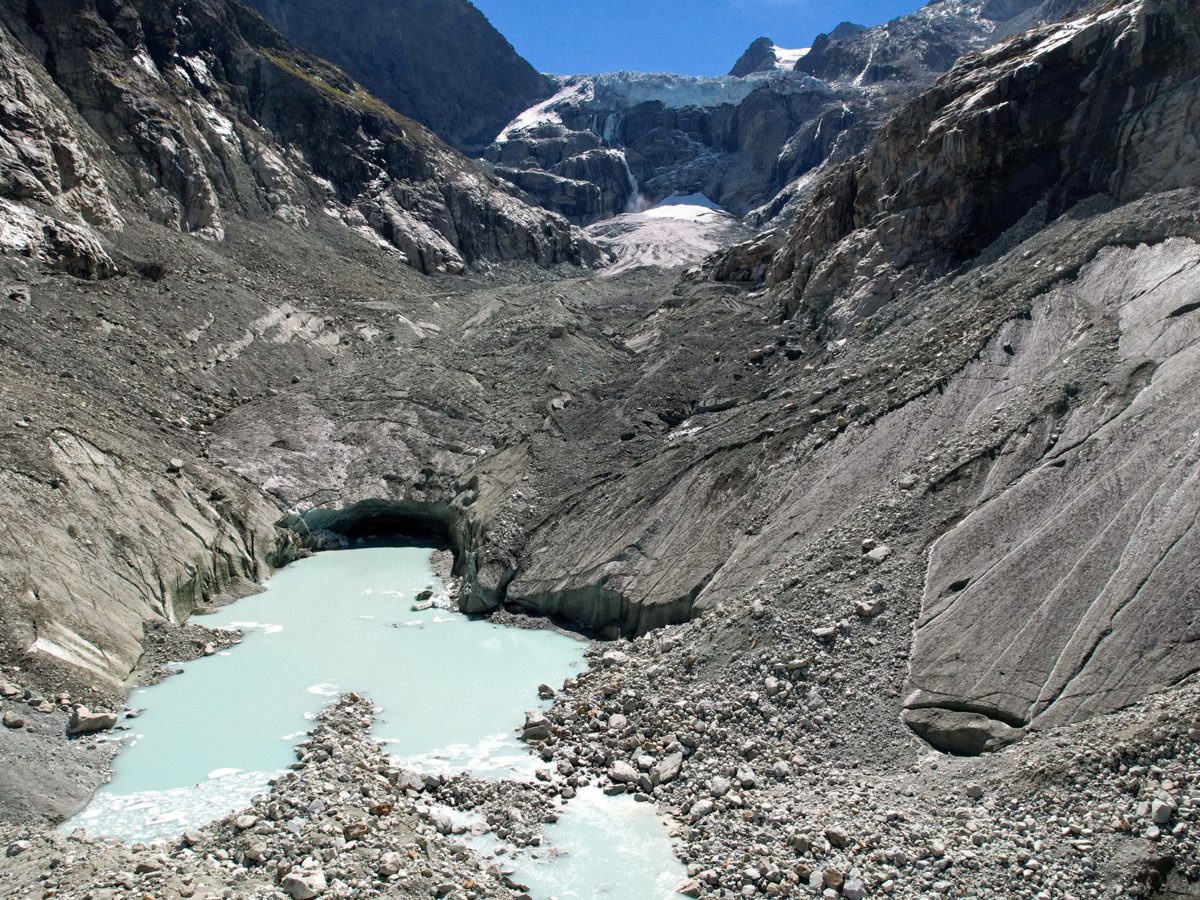
Switzerland's glaciers are shrinking at an alarming rate, having lost nearly one-fifth of their ice volume in the past five years. Scientists attribute this rapid recession to a combination of winters with insufficient snow and record-high temperatures across Europe. This melting trend poses a significant threat to the country's alpine economy and water resources.
Highlights
- Swiss glaciers lost 5.5% of their ice volume during the hydrologic year ending September 30, 2026.
- Cumulatively, nearly 20% of glacial ice has melted since 2021.
- Some glacier tongues saw a reduction in thickness by as much as 10 meters over the summer.
- Between July and September alone, glaciers lost approximately 2.2 trillion liters of water, exceeding four times the annual drinking water consumption of all Swiss households.
- Experts emphasize that this phenomenon is directly linked to human-induced climate change.
Details
According to a report published by the Swiss Glacier Monitoring Network (GLAMOS) and the Swiss Commission for Cryosphere Observation of the Swiss Academy of Sciences (SCNAT), the glacial melt is affecting all Swiss glaciers, though it is most visible on smaller ones. Matthias Huss, head of GLAMOS, noted that during measurements at the Scex Rouge glacier in September, a four-meter measuring pole inserted in July showed a three-meter loss of ice in just August and September. Huss stated, "These conditions that we had this summer, they are just inconsistent with the survival of these small glaciers in the Alps."
The report indicates that the total mean thickness of individual glaciers in Switzerland decreased by between 2.5 and 4 meters in 2026. Huss told Al Jazeera, "We can clearly attribute the massive ice loss to the warming, and thus anthropogenic [caused by humans] climate change. The summer has been the hottest on record in Switzerland. In addition, there was little snow in winter, and therefore the glaciers were poorly protected when the heat started."
Why it matters
The rapid melting of glaciers directly impacts Switzerland's vital winter sports and Alpine tourism sectors. Furthermore, the water supplied by glaciers is crucial for filling hydropower lakes, which produce clean energy, and feeds Europe's largest streams. Experts warn that this water potential could soon be lost, leading to severe issues in future water supply. Even with rapid emission cuts globally, only about one-third of the Swiss glacier ice mass might be saved; otherwise, over 90% could be lost by 2100. Every 0.1 degree Celsius of warming matters for the long-term survival of these critical natural resources.