Italy to Ban Face Coverings in Schools, Limit Non-Italian Speaking Students
The Italian government has approved new school regulations that ban face coverings and cap the number of students who do not speak fluent Italian per classroom.
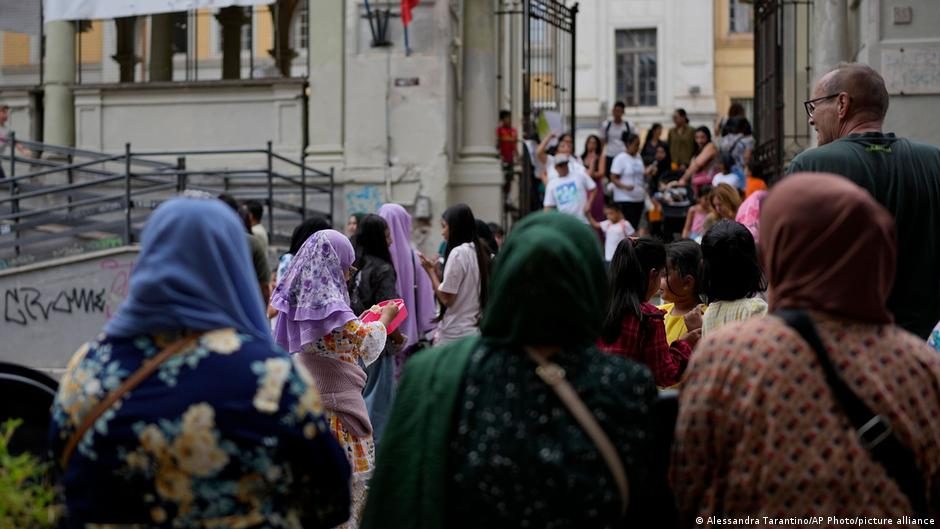
The government led by Italian Prime Minister Giorgia Meloni has approved new school rules that prohibit face coverings and limit the number of students who do not speak fluent Italian in each classroom. The decree, approved on Thursday, bans Islamic face veils like burqas and niqabs in schools, but will continue to allow hijabs.
Meloni stated that these measures are "common sense tools that do not divide" and will aid integration by preventing what she called "ghetto classes." Opposition parties have criticized the move, with some calling it a "witch hunt" and accusing the government of politicizing immigration ahead of next year's general election.
Highlights
- Italy's government has banned burqas and niqabs in schools.
- New rules will cap the number of students who lack fluent Italian in classrooms.
- Prime Minister Meloni argues these steps will boost integration and prevent "ghetto classes."
- Opposition critics denounce the move as a "witch hunt," while child rights groups warn of discrimination.
- The measures require parliamentary approval within 60 days to become permanent.
Details
According to Italian Education Minister Giuseppe Valditara, the new decree will affect approximately 1,000 classrooms, representing 0.3% of the nationwide total. Official data from 2022-2023 showed that students without Italian citizenship comprised 11.2% of Italy's school population, while classes with over 30% foreign students accounted for 7.6% of the total.
Meloni was quoted saying, "When a woman – or worse, a young girl – is forced to cover her face, she is being denied fundamental rights and the very integration that is so often loudly championed." Opposition leader Elly Schlein accused Meloni's government of "a new witch hunt at the expense of children." The independent child rights organization Save the Children had urged the government to consider the measure "with the utmost political responsibility," warning it risked creating discriminatory effects and "first-class" and "second-class" students.
Why it matters
These regulations have reignited debates in Italy surrounding immigrant integration and cultural identity. While the government asserts that the measures promote integration and equal opportunities, critics express concerns that they could lead to discrimination and potentially force some students to attend schools far from their homes. The decision, made by Italy's most right-wing government since World War II, signals a significant shift in the country's social policies.