Kashmir Friday Sermon Unification Proposal Sparks Backlash
A proposal to introduce uniform Friday sermons in mosques across Indian-administered Kashmir has drawn significant criticism from religious leaders and politicians, who accuse the government of curbin
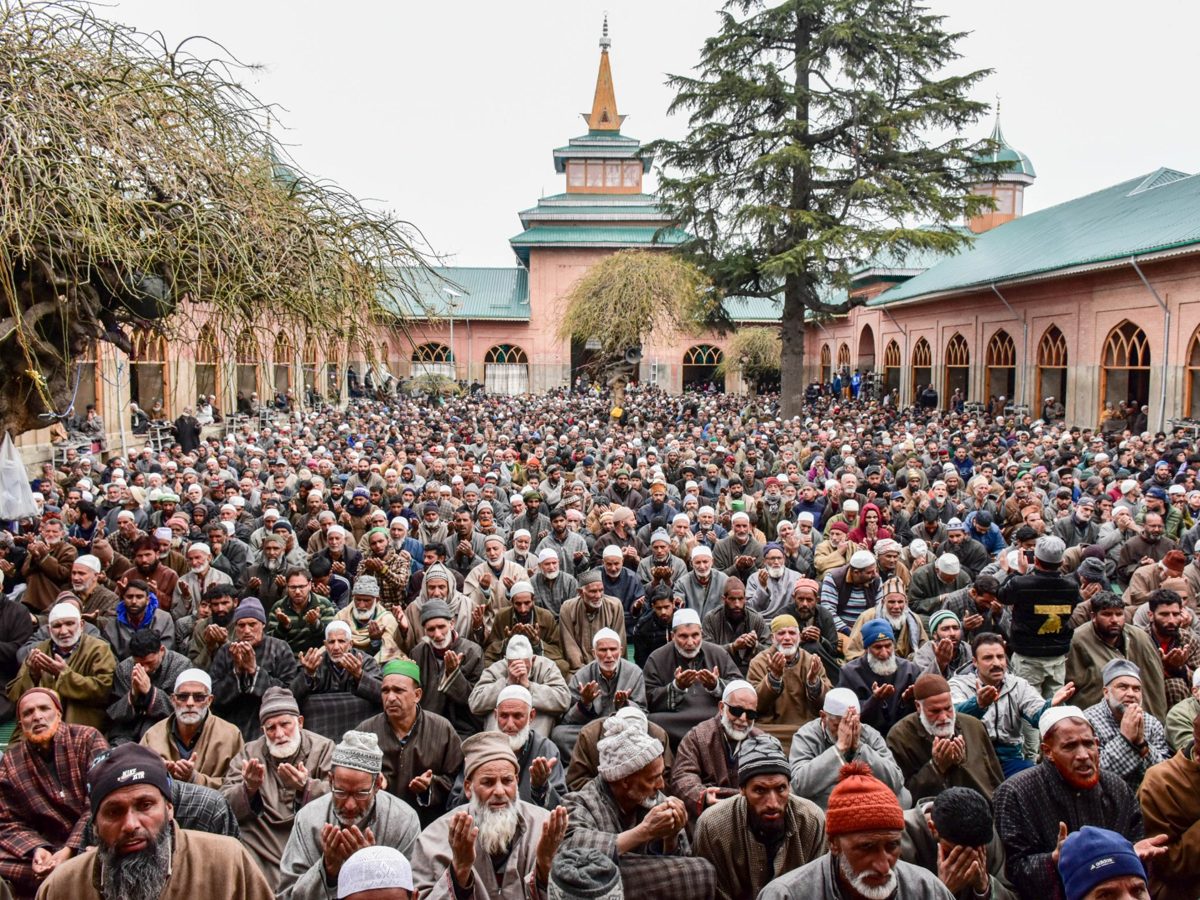
A proposal to introduce uniform Friday sermons in mosques across Indian-administered Kashmir has ignited widespread criticism from politicians and religious leaders. Critics accuse the Indian government of attempting to curb Kashmir's freedom of religion and expression.
Highlights
- Uniform Sermons Proposal: The plan suggests that Friday sermons in mosques would be drafted and approved by a single committee.
- Waqf Board's Role: The Jammu and Kashmir Waqf Board, headed by Darakshan Andrabi, who is associated with India's ruling Bharatiya Janata Party (BJP), made the controversial announcement.
- Religious Leaders' Opposition: Prominent Muslim scholars in the region condemned the proposal as "irresponsible interference into the religious affairs of Kashmiri Muslims."
- Accusations of Government Control: Opponents argue that this move is an attempt by the government to assert control over Muslim religious spaces.
- Statement Retracted: Following the backlash, Waqf Board head Andrabi retracted her statement, clarifying that sermon content would be left to the discretion of independent scholars.
Details
The Jammu and Kashmir Waqf Board announced the controversial move to implement uniform Friday sermons last weekend. Darakshan Andrabi, the board's head, defended the decision, stating it was necessary to address social issues like drug abuse in the region. However, during a meeting attended by approximately 1500 scholars and preachers, some objected, stating they would not comply if the sermons violated Islamic teachings. One scholar, speaking anonymously, claimed Andrabi dismissed their concerns, asserting the decision was final.
Politicians like Nayeem Akhtar, Kashmir's former education minister, argued that while centralized sermons existed in medieval times under sultans or caliphs, a secular state should guarantee every cleric the freedom to speak. Akhtar criticized the instructions coming from a BJP-affiliated official, suggesting the board was overstepping its managerial remit by dictating to clerics. Mirwaiz Umar Farooq, the region's top Muslim religious leader, also warned that such a move would constitute "direct interference."
Why it matters
This controversy highlights growing concerns over the Indian government's influence on religious and cultural identity in Kashmir, especially since its semi-autonomous status was revoked in 2019. Local leaders have repeatedly accused the Waqf Board of undermining religious freedoms and interfering with traditional religious practices. Such initiatives have the potential to escalate political tensions due to perceived encroachments on the religious practices of the Muslim community in Kashmir.