Nearly Half of Russia's Schools Closed, Remaining Ones Filled with War Propaganda
Since 2000, nearly half of Russia's schools have closed, while remaining institutions now feature mandatory weekly classes promoting the Kremlin's narrative on the Ukraine war.
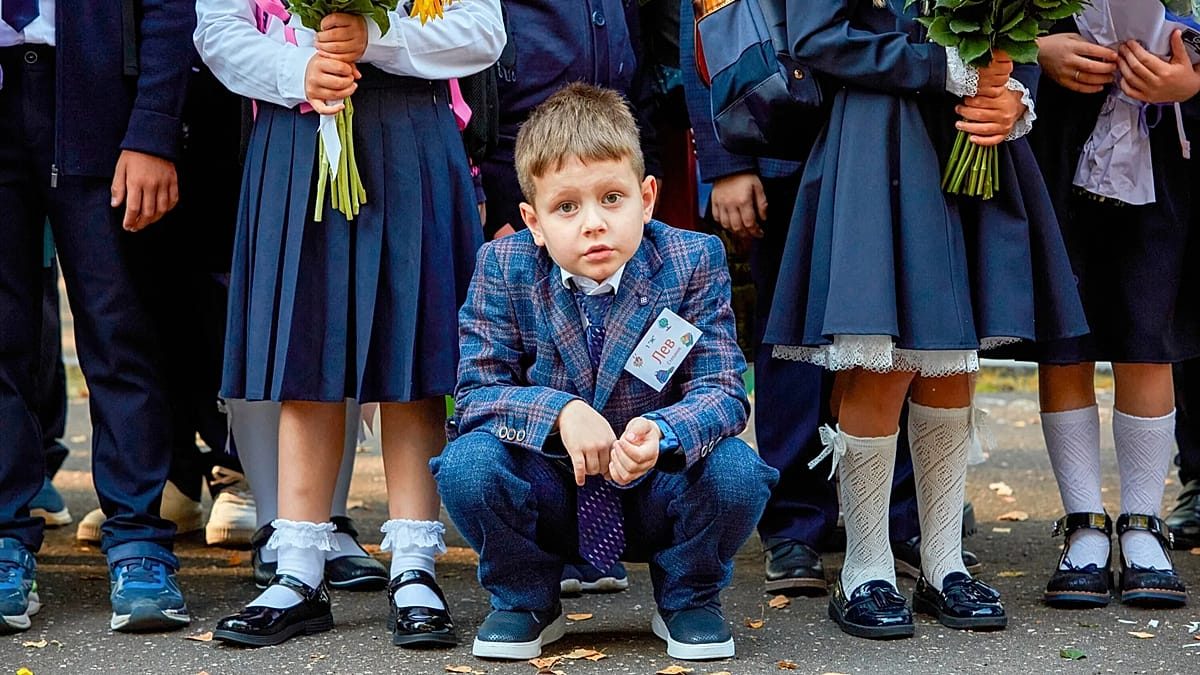
Russia has seen a significant reduction in its school network, with approximately 45% of schools closing since the year 2000. A report by the Higher School of Economics indicates that rural areas have been particularly affected by these closures. Concurrently, since 2022, the remaining schools have introduced compulsory weekly classes, known as 'Conversations about What Matters,' which disseminate the Kremlin's perspective on the Ukraine war and Russian traditional values.
Highlights
- The number of secondary schools in Russia decreased from 68,800 in 2000 to just under 38,000 in 2026.
- This decline far outpaces the 13.5% drop in the school-age population over the same period.
- Rural state schools saw their numbers more than halve, falling from over 45,000 to approximately 21,000.
- Since September 2022, all Russian schools have been required to hold weekly 'Conversations about What Matters' classes, with lesson plans provided by the Ministry of Education.
- These lessons cover topics such as Russian traditional values, Russia's global role, and the official narrative of the "special military operation" in Ukraine.
Details
The primary driver behind these school closures is an optimization program launched in 2001, which is still ongoing. The shift to a per-pupil funding model rendered smaller schools financially unviable, as they received less state money for fewer children. This led to schools being merged or shut down entirely. By 2010, 26% of Russia's schools had closed, with over 10,000 more closing in the 2010s and an additional 2,300 since the early 2020s.
Sociologists have linked school closures to rural depopulation, noting that when a village school closes, families often split, leading to permanent separations and harm to local economies. Communist Party MP Dmitry Novikov has advocated for rural schools to be funded as strategic social infrastructure rather than on a per-pupil basis.
In addition to these structural changes, new unified history textbooks were introduced for senior pupils in 2023 and for middle schoolers from 2024-2025. These textbooks describe Ukraine as an "aggressive anti-Russian bridgehead" and portray the 2014 annexation of Crimea as the rectification of a "historical injustice." Anna Wright, Amnesty International's researcher for Eastern Europe and Central Asia, stated that these books "hide the truth and distort the facts about serious human rights violations and crimes under international law committed by Russian troops against Ukrainians."
Why it matters
The extensive school closures and changes in the educational curriculum in Russia have profound implications for the country's demographic and social fabric. The closure of schools in rural areas accelerates urban migration, while the dissemination of the state's ideological narrative through new textbooks and mandatory classes is critical for shaping the future societal and political orientations of younger generations.