Somalia's Supreme Court Invalidates Presidential Term Extension Amidst Political Turmoil
Somalia's highest court has ruled against President Hassan Sheikh Mohamud's term extension, intensifying a political crisis and judicial dispute.
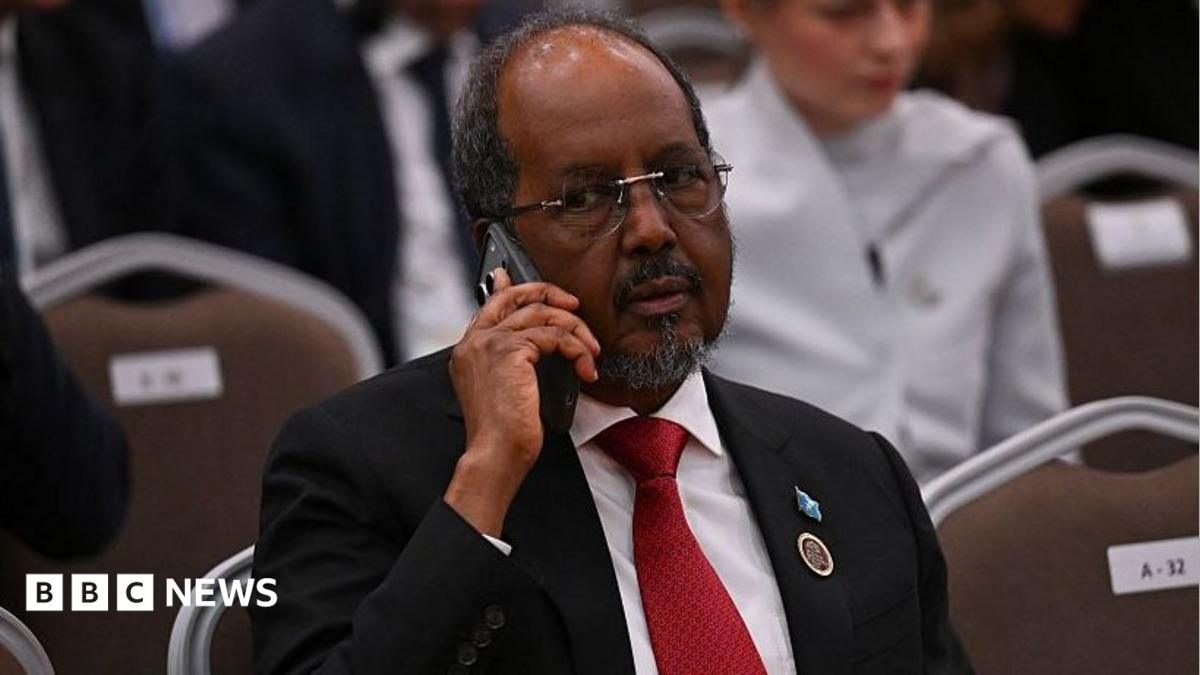
Highlights
- Somalia's Supreme Court deemed President Hassan Sheikh Mohamud's term extension unlawful, escalating a national political crisis.
- The court also declared the President's dismissal of Chief Justice Bashe Yusuf Ahmed as invalid, citing a lack of presidential authority.
- Political leaders have been mandated to finalize an electoral framework within 30 days and conduct elections within 90 days.
- Opposition factions accuse the President of utilizing constitutional amendments to prolong his time in office.
- Former Prime Minister Hassan Ali Khaire alleged that the President deployed security personnel to the Supreme Court.
Details
President Mohamud's original four-year term concluded in May. However, his administration sought to prolong his tenure by one year through legislative changes endorsed by parliament in March. While opposition groups contend that these constitutional adjustments were a deliberate attempt to extend his leadership, the President maintains that such reforms are vital for transitioning Somalia towards fully democratic elections, moving away from the existing clan-based representative system.
The Supreme Court's ruling explicitly stated that the constitutional modifications could not be retroactively applied to the President's current term. Furthermore, in a distinct decision, the court invalidated the Chief Justice's removal, asserting that the presidency had overstepped its bounds and interfered with the judiciary's autonomy. The presidency claimed the Chief Justice's dismissal was a response to complaints regarding judicial administration, aimed at fostering a fair and transparent legal system. Nevertheless, the court rejected this rationale, emphasizing that the Chief Justice could only be removed through established constitutional protocols.
The confrontation intensified when former Prime Minister Hassan Ali Khaire accused the President of positioning security forces at the Supreme Court and attempting to apprehend its Chief Justice. Citing AFP, Khaire characterized this as an "assault on the Supreme Court," warning that "Somalia stands at a dangerous juncture. The dismantling of our judiciary is a direct threat to the rule of law." While AFP could not independently confirm the alleged security deployment, images circulating in Somali media appeared to depict armed individuals within the court complex.
Why it matters
These judicial decisions introduce considerable uncertainty into Somalia's electoral timeline. The electoral commission had previously scheduled parliamentary elections for April 15, 2027, with a presidential vote following a month later. However, various opposition groups and the regional administrations of Puntland and Jubaland have rejected this schedule. This political instability unfolds as Somalia continues its struggle against the al-Shabaab militant group, which maintains control over significant rural areas despite years of military efforts. The situation is further complicated by Uganda's announcement of its intention to withdraw its troops, a major contributor to the African Union mission, by the end of the year, raising additional concerns about Somalia's overall security landscape.