Udi Christians Worship at Historic Karabakh Monasteries
Udi Christians in Azerbaijan held a religious service at the historic Gandzasar Monastery in Karabakh, drawing attention to the region's contested Christian heritage.
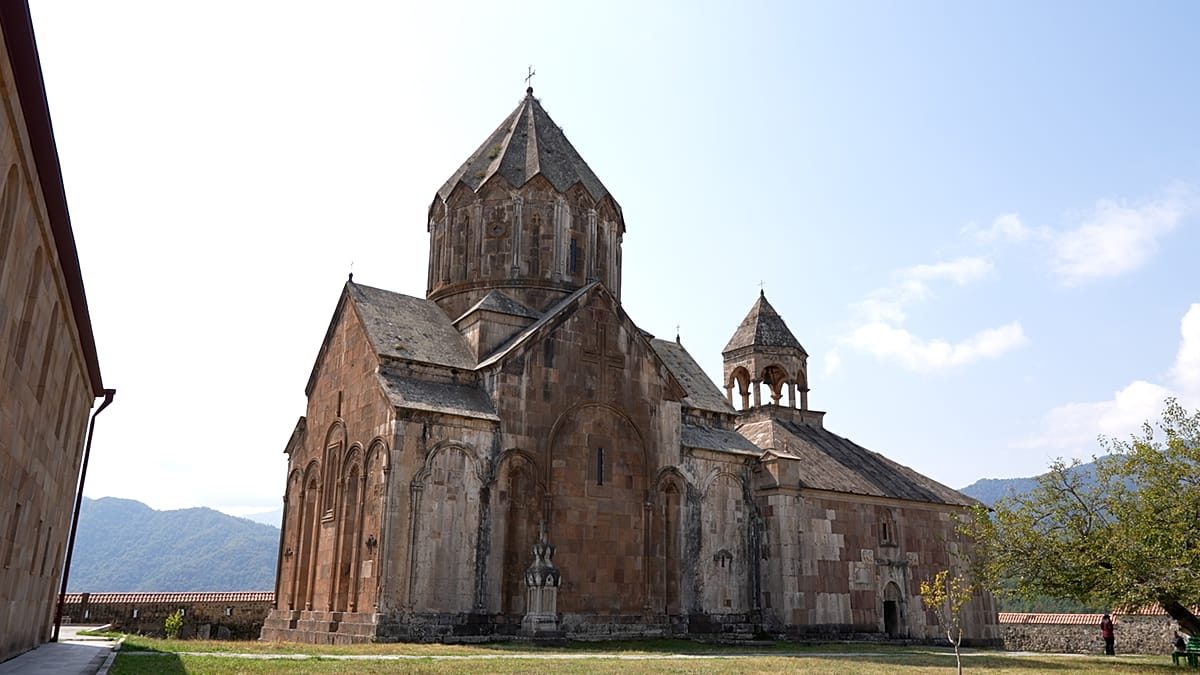
Udi Christians from Azerbaijan recently held a religious service at the historic Gandzasar Monastery, located near Vangli village in Karabakh's Aghdara district. This event aims to highlight Azerbaijan's efforts in preserving the region's Christian heritage and underscore the significance of religious sites in the ongoing peace process.
The service at the monastery holds profound meaning for both local communities and officials, symbolizing the safeguarding of Christian identity in the region. Such visits are part of Azerbaijan's program to explore and promote its Christian heritage.
Highlights
- Udi Christians conducted a religious service at the historic Gandzasar Monastery in Karabakh.
- Azerbaijan emphasizes its commitment to preserving Christian heritage in the region through such events.
- The identity of Gandzasar Monastery is a point of contention in ongoing historical disputes between Azerbaijan and Armenia.
- The Udi people are an indigenous, predominantly Christian ethnic group in Azerbaijan.
- A diplomatic delegation recently visited Gandzasar and Khudavang monasteries.
Details
The main church of Gandzasar Monastery was constructed between 1216 and 1238 by Prince Hasan-Jalal Dawla. Azerbaijan identifies it with the Caucasian Albanian Christian tradition, while Armenia attributes it to the Armenian Apostolic tradition. These differing interpretations continue to challenge the historic peace process between the two nations.
The Udi people are an indigenous, primarily Christian ethnic group in Azerbaijan, predominantly based in the village of Nij. Danakari Rafiq Arami, Deputy Chairman of the Alban-Udi Christian Community, stated that returning to Gandzasar represents restoring a deep historical link. "Today, thanks to the acquisition of independence, we are in the monastery built by our holy fathers. We are proud of our history," he remarked.
Beyond Gandzasar, the Udi community undertakes pilgrimages to other historic Christian sites in the Karabakh region, including Khudavang, Aghoglan, and Amaras, which Azerbaijan identifies as part of its preservation program. Magdalena Grono, the EU Special Representative for the South Caucasus, who participated in a recent diplomatic visit, noted that there are still "deeply divergent views and narratives" concerning the origins of some sites. She stressed the importance of addressing these unresolved historical disputes as part of the broader reconciliation process.
Why it matters
This religious service and associated visits are crucial for Azerbaijan to showcase its efforts in preserving cultural and religious heritage in Karabakh on an international stage. Concurrently, they bring to light the complex historical and religious identity debates in the region, illustrating the delicate nature of peace negotiations between Azerbaijan and Armenia. The presence of Udi Christians at these historical sites also serves as a testament to the multi-layered cultural fabric of the region.