Ukraine's Reliance on Starlink and Potential Impact of Restrictions
Ukraine's critical reliance on the Starlink satellite internet service in the war has come under scrutiny following recent warnings of restrictions, posing significant implications for military operat
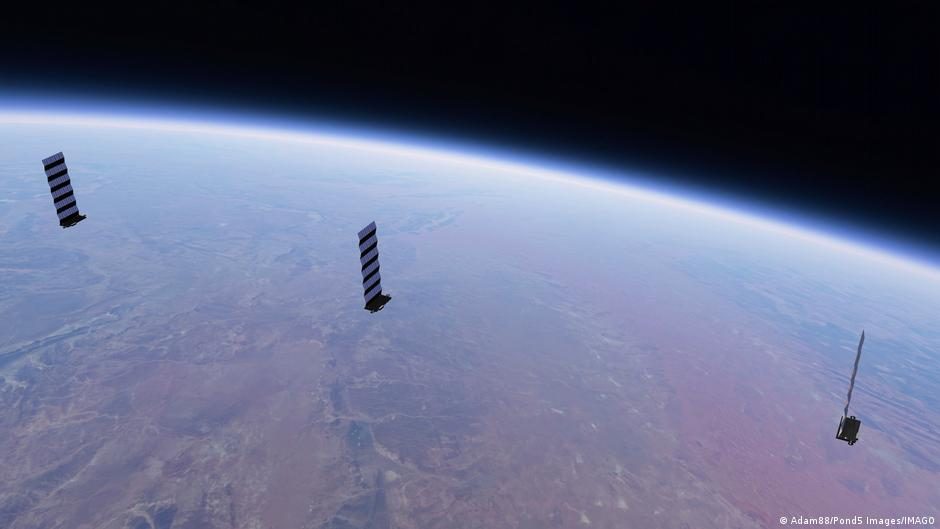
Ukraine heavily relies on SpaceX's Starlink satellite internet service for communication, reconnaissance, and drone operations in its ongoing war with Russia. Recent warnings from Kyiv about potential restrictions or shutdowns of the Starlink system have raised concerns, which could have severe consequences for the country's military activities.
Highlights
- The Ukrainian military extensively uses Starlink for communication, reconnaissance, and drone operations.
- According to the Center for Security Studies (CSS) at ETH Zurich, approximately 50,000 Starlink terminals were in use in Ukraine in 2025.
- Starlink quickly became a vital alternative after the KA-SAT system, previously favored by Ukraine, was targeted in a Russian cyberattack early in the war.
- Recent reports of restrictions seem to primarily affect Starshield systems, designed for military use, rather than commercial Starlink.
- Speed limitations could significantly hinder real-time control and video transmission for high-speed Ukrainian drones.
Details
Since the full-scale invasion by Russia in 2022, Ukraine has made extensive use of Starlink to maintain communication despite destroyed infrastructure and cellular network outages. These terminals are crucial for tasks such as relaying orders between command levels and receiving drone footage. The importance of Starlink became particularly evident early in the war when Ukraine's previously used KA-SAT satellite system was disabled by a Russian cyberattack.
According to Elon Musk, Starlink is a commercial service, while Starshield is specifically designed for governmental and military use. The latest reports of restrictions appear to primarily concern systems used for military purposes. Ukrainian media reports indicate that SpaceX temporarily introduced a speed restriction for Starlink terminals in motion, limiting them to about 160 kilometers per hour. This could disrupt real-time video transmission and control for Ukrainian drones, some of which travel at speeds up to 300 kilometers per hour, effectively forcing them to continue missions 'flying blind'.
Why it matters
Restricting or shutting down the Starlink network would not only complicate Ukraine's communication but also severely impact its drone operations and other military activities. This situation highlights the increasing dependence of modern armed forces on private technology companies and marks a fundamental shift in the nature of warfare. The combination of reconnaissance data from Western partners and Starlink connectivity is vital for Ukraine's long-range drone operations.