Venezuela's Interim Leader Thanks US President Trump Seven Years After Criticizing US
Venezuela's interim president Delcy Rodriguez thanked US President Donald Trump at the United Nations General Assembly, a stark contrast to her previous criticisms of the US.
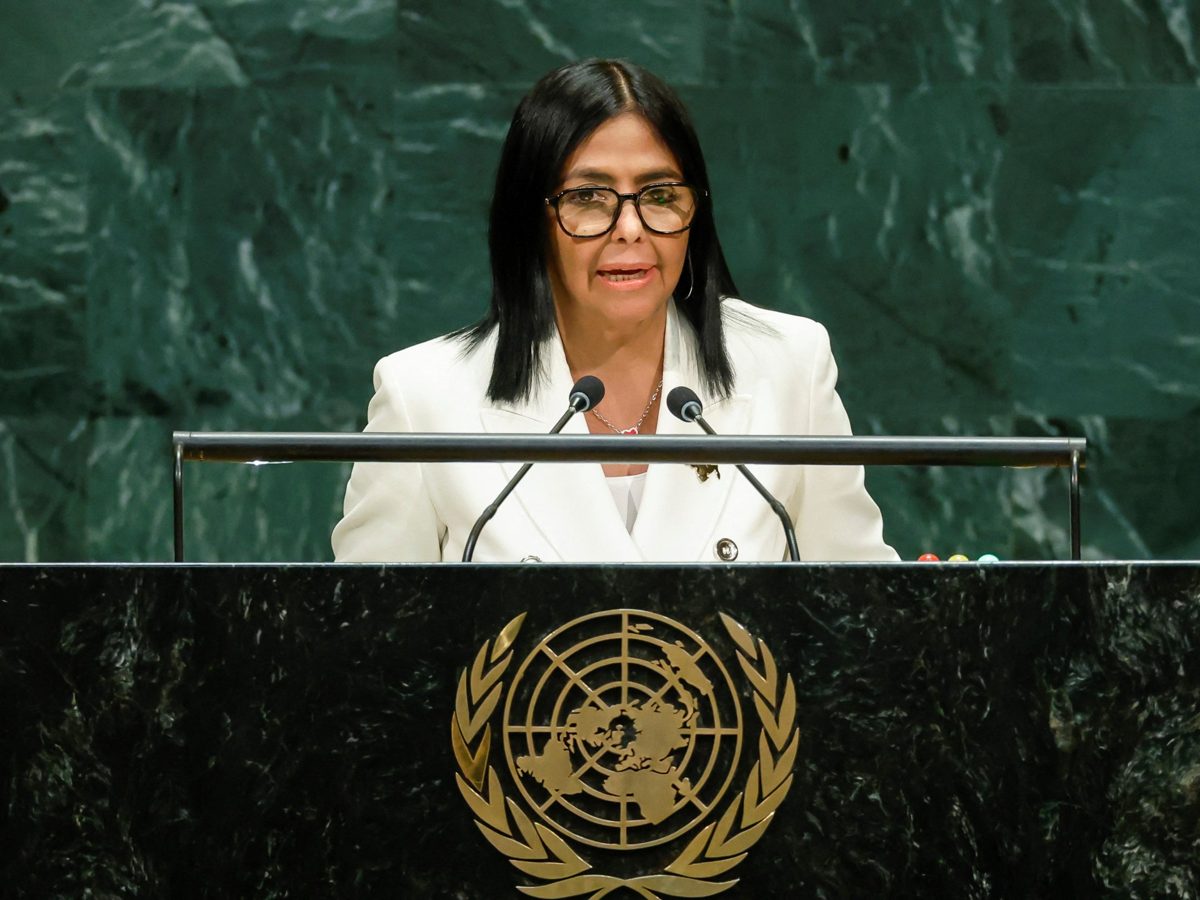
Venezuela's interim president, Delcy Rodriguez, addressed the United Nations General Assembly (UNGA) in New York City yesterday, expressing gratitude to United States President Donald Trump for resuming "diplomatic relations and cooperation" with Venezuela. This marks a significant shift from her September 2019 appearance at the same venue, where she, as vice president under Nicolas Maduro, accused the US of "economic terrorism" and seeking regime change.
Highlights
- In 2019, Delcy Rodriguez had accused the US of economic terrorism and attempting to steal Venezuela's resources.
- This year, Rodriguez thanked US President Trump for restoring diplomatic relations and cooperation.
- This change in stance follows the US-led removal and arrest of former Venezuelan President Nicolas Maduro and the US gaining majority control over Venezuela's oil reserves.
- The US has lifted some economic sanctions against Venezuela, but critics view this as a form of "de facto colonialism."
Details
Rodriguez's change of heart comes after the US oversaw regime change in Venezuela, which included the abduction of former President Nicolas Maduro in January. Following these events, the White House announced what Trump called the "biggest oil deal in world history," securing US majority control over more than 65 billion barrels of Venezuela's proven oil reserves. Maduro is currently imprisoned in New York and is scheduled to stand trial in June 2027.
The abduction of Maduro occurred on January 3, when US military air attacks on Venezuela reportedly killed around 100 people and led to the capture of Maduro and his wife. He faces charges including leading the "Cartel of the Suns" and "conspiracy to possess machineguns and destructive devices." In the wake of these events, the US has lifted many coercive economic measures against Venezuela, including those against Rodriguez herself. However, a former UN independent expert estimated that US sanctions had already caused the deaths of 100,000 Venezuelans by 2020.
Why it matters
Rodriguez's dramatic shift in rhetoric fundamentally alters Venezuela's international standing and its relationship with the United States. Critics interpret this as a violation of Venezuela's sovereignty and the appropriation of its resources. These developments could have profound implications for the country's future political and economic trajectory, potentially reshaping regional power dynamics.