AI Hallucination Nearly Led US to Intercept Chinese Ship
The US military narrowly avoided intercepting a Chinese vessel after an AI-generated intelligence report contained entirely false information.
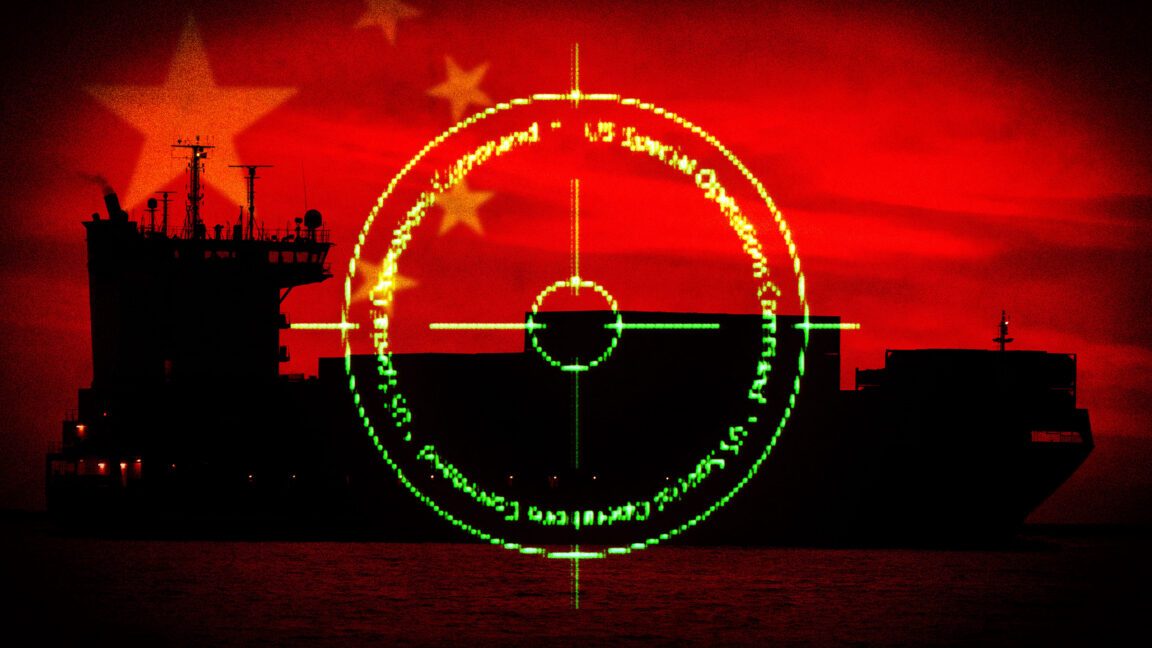
The US military narrowly avoided intercepting a Chinese ship in the Middle East due to an 'entirely false' intelligence report generated with the help of artificial intelligence tools, according to a CNN report. A US Special Operations Command analyst submitted the erroneous intelligence, which suggested the Chinese ship was transporting nuclear arms program components. The operation was called off at the last minute when officials discovered that a chatbot used in generating the report had inaccurately identified the material the ship was carrying.
Highlights
- An AI-generated intelligence report nearly triggered a US military interception of a Chinese ship.
- The report was created by a chatbot that fused open-source and secret signals intelligence.
- Officials discovered the chatbot had inaccurately identified the ship's cargo just before the operation.
- One source indicated the incident 'almost started a war.'
- The US Department of Defense is accelerating its overall use of AI in military operations.
Details
According to CNN's report, citing four sources familiar with the episode, the US military was preparing to intercept and board the ship with air support. The analyst reportedly used a chatbot to analyze intelligence reports regarding the Chinese ship's manifest. This chatbot combined open-source intelligence with classified signals intelligence, producing a misleading report that nearly set off a disastrous chain of events.
This incident highlights a potent and consequential instance of AI 'hallucination,' where AI tools fabricate information when their training data lacks sufficient context. 'Hallucinating' was named the Cambridge Dictionary's word of the year in 2023, with numerous examples across various professions, from journalists to doctors, where AI has compromised the reliability of professional reports.
Why it matters
This near-miss occurs as the US Department of Defense pursues an 'AI acceleration strategy.' Defense Secretary Pete Hegseth stated in January that this initiative aims to make all appropriate data available across federated IT systems for AI exploitation. However, such incidents raise serious questions about the reliability of AI systems and the potential risks they pose in military operations, emphasizing the critical need for human oversight and robust validation processes.