US Secretary of State Rubio Engages Central Asia with a New Pragmatic Approach
US Secretary of State Marco Rubio is meeting with Central Asian nations in Samarkand as part of the 'C5+1' summit, adopting a new foreign policy approach focused on pragmatic and transactional coopera
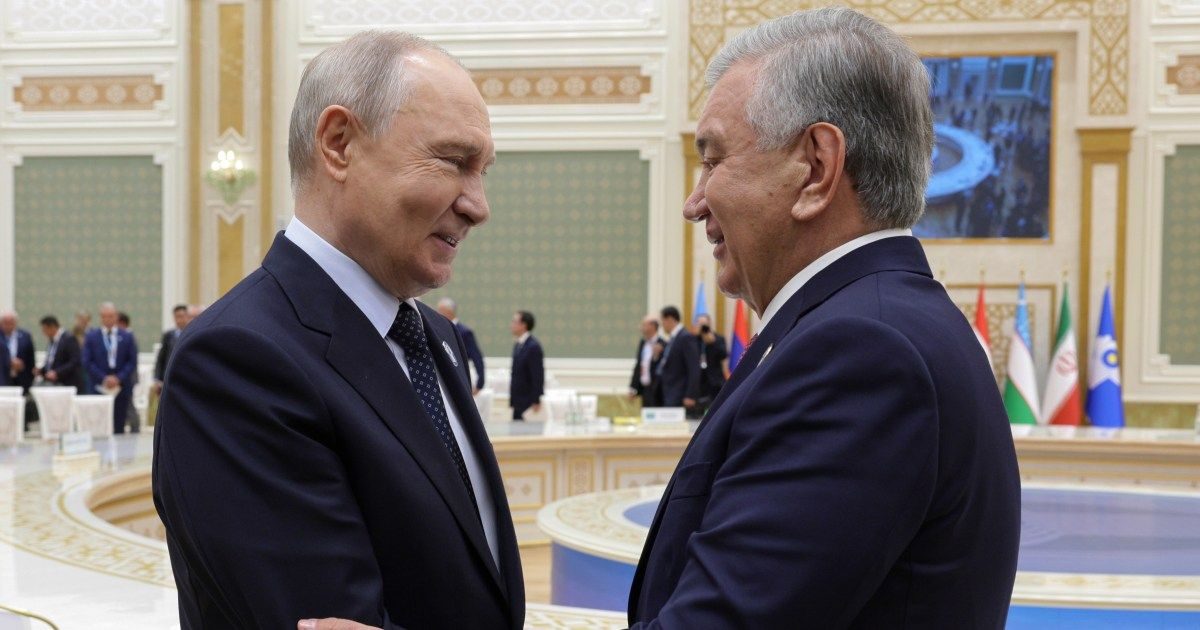
US Secretary of State Marco Rubio has arrived in Samarkand, Uzbekistan, for crucial talks with Central Asian nations within the C5+1 format. The summit, scheduled from Saturday to Tuesday, marks a shift in Washington's foreign policy towards the former Soviet region, emphasizing pragmatic and transactional relationships over traditional rhetoric on democratization and human rights.
Highlights
- US Secretary of State Marco Rubio is holding meetings with Central Asian countries in Samarkand.
- The discussions reflect a new US approach to the region, prioritizing commercial and pragmatic cooperation over human rights and democracy advocacy.
- This policy shift is linked to changing geopolitical dynamics following Russia's invasion of Ukraine.
- Key US interests in the region include rare-earth minerals and its military-strategic location.
- Experts suggest that this new US strategy aims to prevent Central Asian nations from exclusively aligning with China and Russia.
Details
In the early years of Central Asian independence, the US often lectured the region on democracy and human rights, demanding reforms in exchange for investment and technology. However, many Central Asian nations subsequently turned towards China and Russia, perceiving the 'moralizing' as counterproductive. Uzbekistan, with its 37 million people, serves as a prime example; it hosted a US military base in 2001 but expelled it in 2005 following US criticism of human rights abuses. Expert Galiya Ibragimova noted, "When the West began moralizing, teaching them about democracy, human rights, they immediately turned towards China or Russia."
Since Russia's full-scale invasion of Ukraine in 2022, roles appear to have reversed. Moscow maintains significant cultural and economic influence in the region, while Central Asian migrant workers are reportedly being coerced or tricked into fighting in Ukraine. Russia is also said to be using Central Asian companies to circumvent sanctions. According to Ibragimova, "These days, the US and Russia have switched roles. Today, it's Russia that began building ties through moralizing."
The administration of US President Donald Trump has largely abandoned a pro-democracy stance in foreign policy, favoring a utilitarian and transactional approach. This was evident earlier this month when Trump hosted Saida Mirziyoyeva, daughter of Uzbek President Shavkat Mirziyoyev, and Mirziyoyev pledged to invest up to $100 billion in the US economy. Washington has remained silent on Mirziyoyev's crackdown on critics or his daughter's growing domestic influence during this period.
Why it matters
The US re-engagement with Central Asia is significant due to the region's geopolitical and military-strategic location within the spheres of interest of Russia and China. Alisher Ilkhamov, head of the London-based Central Asia Due Diligence think tank, suggests that Washington may eventually seek a military base in the region as a deterrent against China. Economic interests, particularly in rare-earth minerals crucial for technology manufacturing, also drive this renewed focus. While the US's silence on human rights issues has drawn some criticism, it is seen as part of a strategy to foster quicker and more results-oriented collaborations with regional governments.