Clashes Erupt During Argentine Student Protests Over University Funding Cuts
Students and university staff in Argentina protested President Milei's austerity measures, leading to clashes with police and arrests.
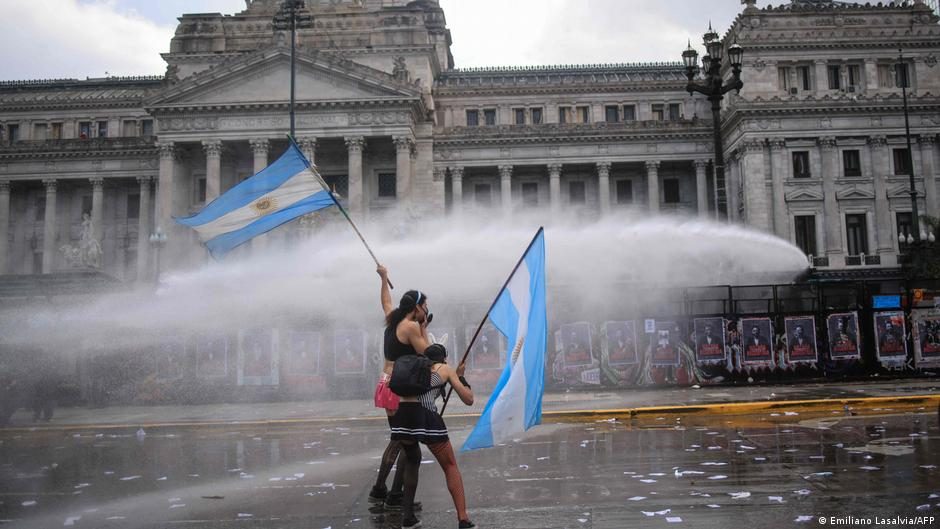
Highlights
- Thousands, including students, faculty, union members, and opposition supporters, gathered outside parliament in Buenos Aires to demand adherence to a university funding law.
- While largely peaceful, some individuals reportedly threw stones at police, resulting in at least eight officers injured and 25 arrests.
- Authorities deployed water cannons and tear gas to disperse the demonstrators.
- This marks the fifth protest against the Milei administration's education spending policies since he took office in 2023.
Details
The protests were sparked by President Javier Milei's decision to withhold funds from public universities, despite a law passed by Congress in 2025 that mandated increased investment in these institutions. This legislation called for employee salaries to be adjusted for inflation as of December 2023, the reinstatement of student scholarships, and greater operational funding for universities. Although Congress overturned Milei's veto of this law, and multiple court decisions have directed the government to release the necessary funds, the administration has so far not complied.
President Milei, who campaigned on a platform of extensive cost-cutting, justified his veto by stating a lack of funds for inflation-linked spending increases. A government spokesperson indicated that the law had been "suspended" due to ongoing legal challenges initiated by the government. Data from the University of Buenos Aires's Center for National Economic Research shows that public spending on universities decreased by 41% in real terms during the first half of 2026.
Why it matters
Argentina's public university system, which offers free education, is widely regarded as one of South America's best, attracting students from across the region. The current cuts to university funding pose a significant threat to the future of this well-established educational framework, potentially leading to substantial social and economic repercussions for the country.