French Government Accused of Using 'Riots' Narrative to Avoid Student Demands
Student protests in France, sparked by deteriorating living conditions and education system issues, are being overshadowed by the government's security-focused approach and 'riots' narrative.
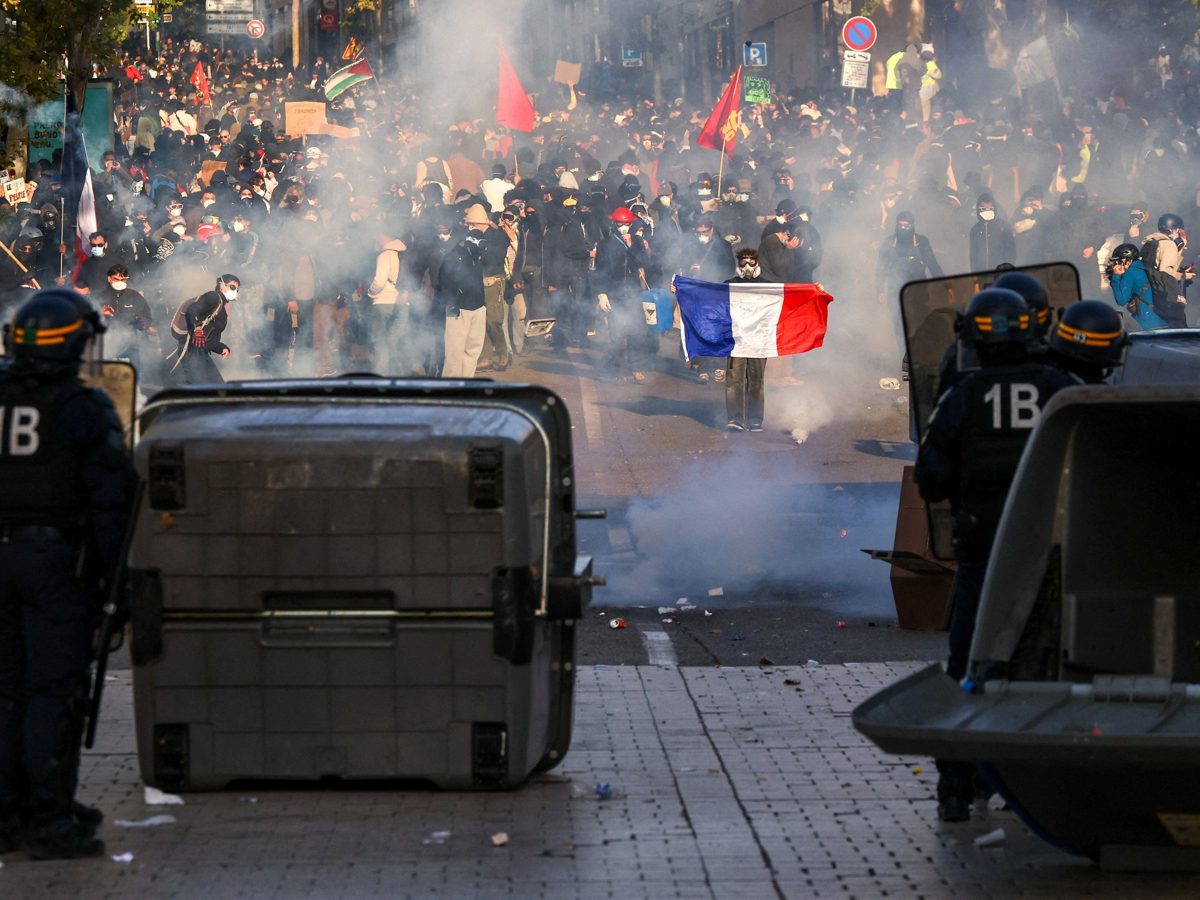
Student protests in France, which began in September in response to worsening living conditions and problems within the education system, are ongoing. The government is reportedly using violent incidents during the demonstrations to delegitimize the protests and avoid addressing students' core demands.
The protests stem from structural issues such as rising poverty and severe deficiencies in educational infrastructure. However, the government has responded with harsh security measures and framed the events as a 'riot' narrative, attempting to divert public attention from these underlying problems.
Highlights
- Student protests erupted in France in September due to deteriorating living conditions and issues within the education system.
- The government is accused of using violent acts during the protests to delegitimize them and ignore student demands.
- As of October 14, 7,950 people have been taken into police custody since the protests began, with 85 percent being minors.
- Students have suffered severe injuries from police interventions, including fractured jaws, loss of an eye, and a hand blown off.
- Poverty rates in the country are the highest since the 1990s, with 9.8 million people living below the official poverty line.
Details
Across France, increasing poverty and worsening socioeconomic conditions are profoundly impacting the education system. For instance, a secondary school in Acoua, on the island of Mayotte, designed for 900 students, accommodates 2,300, leading to cramped, poorly ventilated classrooms and issues with water supply and sanitation. Similar problems, such as water leaks, mold, unusable toilets, and shortages of furniture, are observed in schools within Parisian suburbs.
According to the Ministry of Education's own figures, 20.2 million teaching hours were not delivered in state secondary schools during the 2024-25 academic year, excluding Mayotte, accounting for almost one in ten scheduled hours. 15 million of these losses were due to absent teachers not being replaced. Economist Lucas Chancel notes that government spending per student has decreased by 20 percent since Emmanuel Macron came to power in 2017.
Instead of addressing these structural issues, the government has adopted a security-focused approach, deploying 70,000 police officers and pledging to ban protests. President Macron stated he understood the students but did not express support for them in the same way he did for police officers. While he promised university entrance platform reform, he did not address the students' key demands. Prime Minister Sebastien Lecornu called on the left to 'choose a side': the Republic (equated with the police) or the 'rioters'.
Why it matters
These protests in France highlight not only student demands but also the country's deepening social inequalities and the deterioration of public services. The government's security-focused and repressive approach risks exacerbating social tensions rather than addressing the root causes of the problems. This situation could pave the way for new and larger social movements in the long run. The failure to meet student demands poses a significant risk to France's future stability.