Gaza Healthcare Workers Grapple with War Trauma
Doctors and nurses in Gaza are struggling with severe psychological issues due to losses, overwork, and trauma experienced during the war.
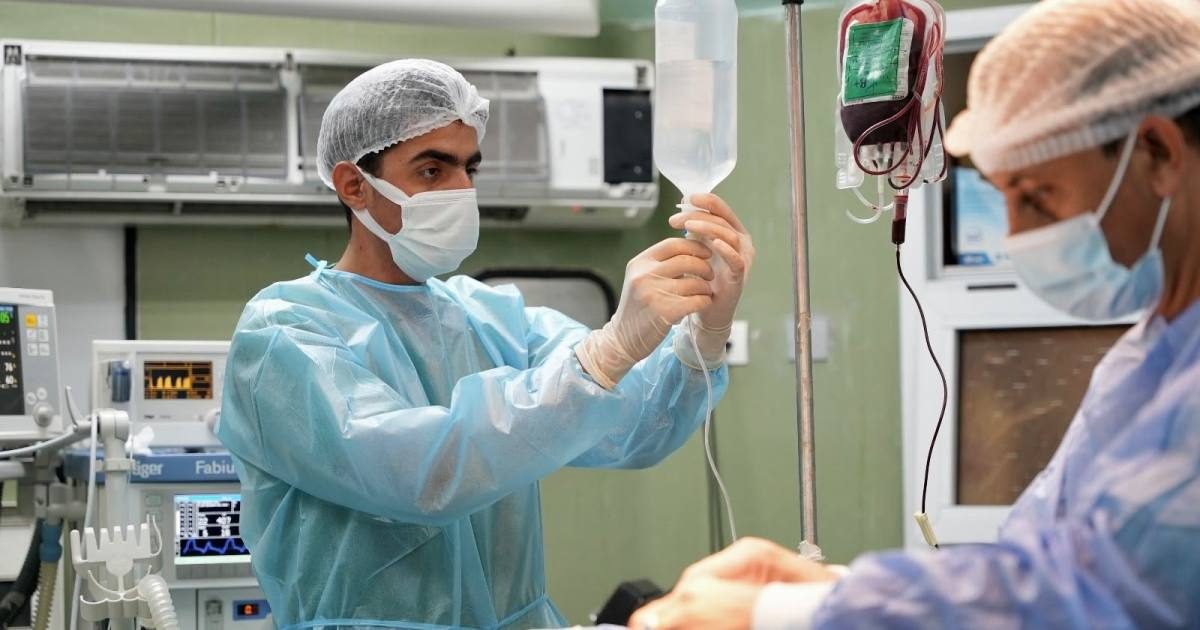
Healthcare workers in the Gaza Strip are battling profound psychological trauma caused by the ongoing war. According to the UN's humanitarian coordination office OCHA, the conflicts since October 2023 have severely impacted the region's healthcare system and its personnel.
Manar Fayyad, a 29-year-old anaesthesiologist at Al-Aqsa Martyrs Hospital, experienced immense shock when he discovered his own brother, Shadi, lifeless on the operating table. This incident led Fayyad to end his professional career and withdraw from social life. Similarly, Khaled Raafat, an emergency department nurse, had to take an extended leave from work after losing his entire family in an airstrike.
Highlights
- Gaza's healthcare workers are enduring the loss of family members, friends, and colleagues, alongside constant displacement and extreme overwork due to the war.
- Manar Fayyad from Al-Aqsa Martyrs Hospital was forced to quit his profession after learning of his brother's death on the operating table.
- Emergency nurse Khaled Raafat, despite losing his entire family, eventually returned to work and tried to rebuild his life.
- According to Gaza's Government Media Office, at least 1,700 medical personnel have been killed in the war, and 83 healthcare workers remain in Israeli detention.
- A study indicates that 78% of healthcare workers lack access to mental health services, highlighting a significant gap between trauma and treatment.
Details
The healthcare system in Gaza is grappling with the devastation and loss of human resources caused by the war. Many doctors and nurses find themselves facing their own personal losses while simultaneously being tasked with saving the lives of others. This situation has a devastating impact on the psychological well-being of healthcare workers.
According to a report published in the Public Library of Science, 41% of healthcare workers reported losing family members, and 46% experienced both personal bereavement and displacement from their workplaces. These figures underscore the scale of trauma experienced by medical personnel in the region. Munir al-Bursh, director general of Gaza's Ministry of Health, stated, "They are caught between their professional duty to save lives and the pain of losing the people closest to them."
This intense trauma experienced by healthcare workers leads to professional burnout, making it difficult to retain staff in Gaza's already fragile healthcare system. Intensive care nurse Hiba al-Tawil had to transfer to another department after losing her brother in the hospital where she worked. Psychological support clinics in hospitals are attempting to help healthcare workers struggling with these traumas through methods like cognitive behavioral therapy.
Why it matters
The profound psychological trauma experienced by healthcare workers in Gaza threatens not only their individual lives but also the future of the region's healthcare system. Staff attrition and mental health issues among current employees could lead to a further deterioration of already inadequate health services. This situation reveals that the human cost of war is not limited to physical injuries but also manifests in long-term psychological effects.