Caspian Sea Green Energy Corridor to Boost Eastern Europe's Renewable Supply
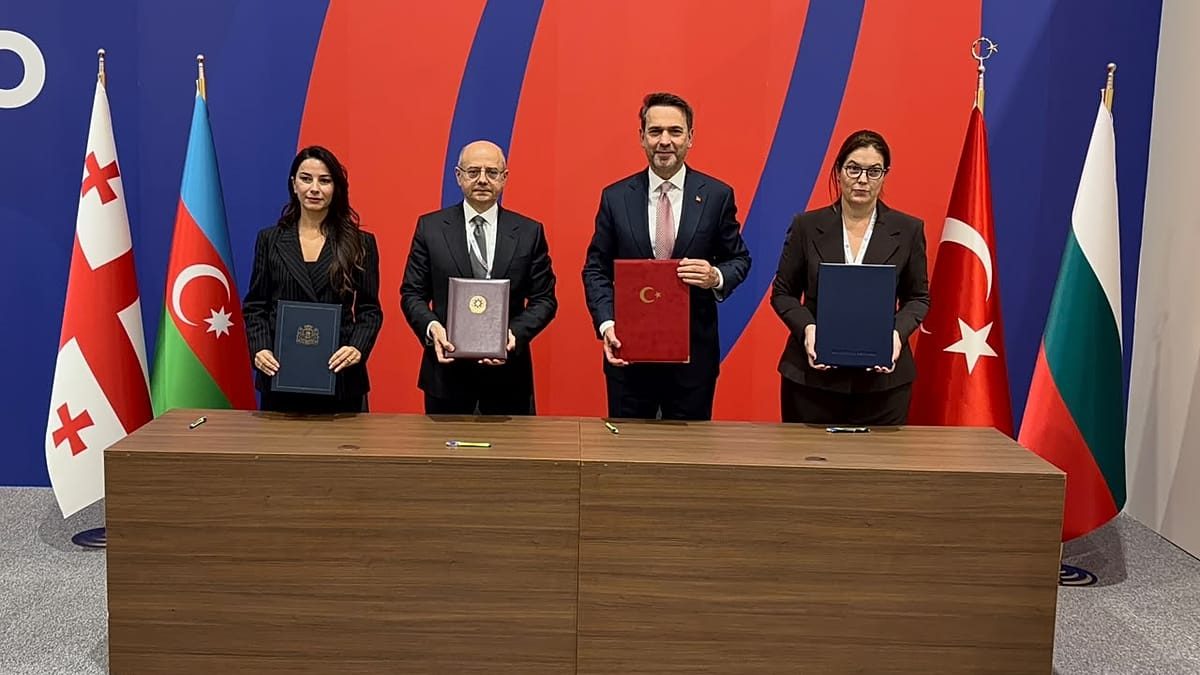
Azerbaijan, Turkey, Georgia, and Bulgaria have signed a pact to create a "Green Energy Corridor," aiming to transmit renewable energy from the Caspian Sea to Eastern and Central European markets.
Highlights
- Four-Nation Alliance: Azerbaijan, Turkey, Georgia, and Bulgaria have partnered to establish a new green energy transmission route.
- Renewable Energy Export: The initiative focuses on exporting wind and solar power generated in the Caspian region directly to Eastern and Central European consumers.
- Enhanced Energy Security: This project aims to diversify energy imports for Eastern Europe, lessening its dependence on traditional fossil fuels.
- Infrastructure Expansion: The plan involves upgrading existing high-voltage overland lines and integrating advanced fiber-optic communication along the route.
- Investment Facilitation: A multilateral framework is expected to reduce logistical risks, attracting funding from international investors and financial institutions.
Details
The "Strategic Partnership Agreement in Clean Energy" was formally signed on November 10, 2026, during the COP31 climate summit in Antalya. Signatories included Azerbaijan's Energy Minister Parviz Shahbazov, Turkey's Minister of Energy and Natural Resources Alparslan Bayraktar, Georgia's Vice Prime Minister and Minister of Economy and Sustainable Development Mariam Kvrivishvili, and Bulgaria's Energy Minister Iva Petrova. This agreement transforms years of conceptual discussions into concrete commitments for infrastructure development.
The core objective is to create a high-capacity transmission network that will deliver wind and solar power from the Caspian basin to markets in Eastern and Central Europe. The infrastructure will leverage and expand existing high-voltage power lines through the South Caucasus and Turkey. Concurrently, fiber-optic communication systems will be upgraded along the route to ensure secure, continuous transmission and modern grid management, positioning Azerbaijan as a key interregional electricity hub.
Bulgaria's participation as a signatory is crucial for the project's access to European markets. This collaboration directly supports Eastern Europe's critical need to diversify its energy sources and decrease reliance on conventional fossil fuel channels. Azerbaijani Energy Minister Shahbazov remarked that this agreement aligns with his country's long-standing energy strategy, moving previous climate conference grid proposals into tangible projects that connect energy producers with consumer markets.
Why it matters
This green energy corridor is poised to provide Eastern Europe with a stable and carbon-free electricity supply, significantly enhancing the region's energy autonomy. By distributing the substantial financial and technical demands of grid modernization across four national economies, the project creates an attractive environment for international investors. Furthermore, it establishes the necessary export-oriented infrastructure to make large-scale renewable energy investments in the Caspian Sea, particularly in wind projects, economically viable.