India: 'Cockroaches' Movement Demands Election Chief's Resignation Amid Tight Security
India's 'Cockroaches' movement is planning a protest in Delhi to demand the resignation of the Chief Election Commissioner, prompting extensive security measures from authorities.
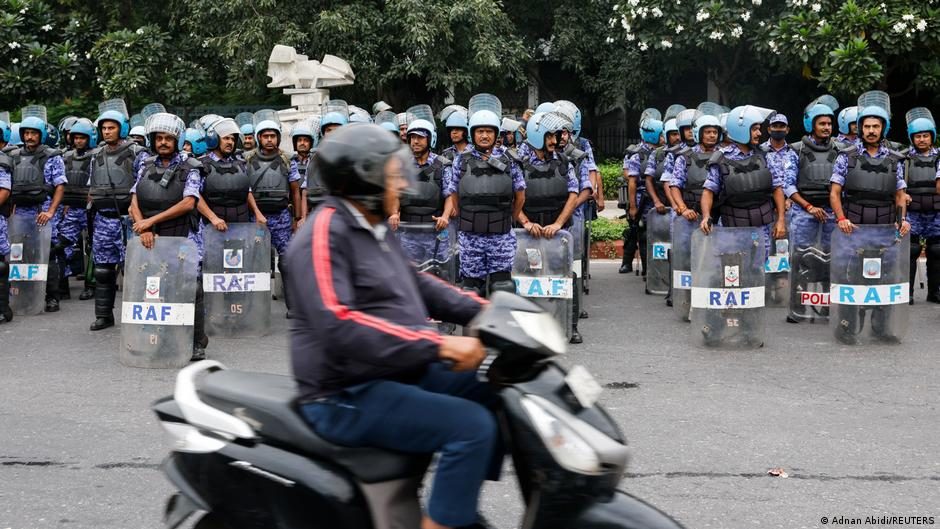
A movement known as the 'Cockroaches' is preparing to stage a major protest in Delhi, India, demanding the resignation of the country's Chief Election Commissioner. Despite police denying permission for the demonstration, nearly 43,000 security personnel have been deployed across the capital, and extensive security arrangements are in place.
The movement's founder, Abhijeet Dipke, is calling for the commissioner to step down over widespread revisions to voter rolls. This protest is seen as a second wave of the 'Cockroaches' movement, which previously led to the resignation of the education minister due to exam irregularities.
Highlights
- The 'Cockroaches' movement is demanding the resignation of Chief Election Commissioner Gyanesh Kumar.
- Delhi police denied protest permission, deploying 43,000 security personnel in the city.
- The Supreme Court ruled against a complete halt of metro services and train operations.
- Opposition parties are also campaigning against Commissioner Kumar over alleged voter list issues.
- Movement leader Abhijeet Dipke described the restrictions as a sign of the Modi government's weakness.
Details
Abhijeet Dipke, founder of the Cockroach Janta Party (CJP), decided to proceed with the protest in Delhi despite police refusal. Authorities blocked roads leading to the Jantar Mantar protest site with yellow metal barricades and ordered the closure of over 50 metro stations and cancellation of numerous train services. However, India's Supreme Court deemed these measures disproportionate, instructing the government not to completely halt transportation services.
Dipke reacted to the restrictions, stating, "Modi has accepted defeat even before our protest has begun." The anger directed at Gyanesh Kumar, head of India's independent Election Commission, is becoming one of the biggest public and political challenges for Prime Minister Narendra Modi in his three-term rule. The opposition and critics allege that the mass deletion of millions of voters from India's electoral rolls benefits Modi's Bharatiya Janata Party (BJP); the party denies these allegations.
Why it matters
These protests raise serious concerns about the transparency and fairness of India's electoral processes. The alleged irregularities in voter lists have the potential to erode trust in the country's democratic structure. Furthermore, the government's stringent measures against the protests and the Supreme Court's intervention fuel debates on freedom of expression and civil rights. This situation represents a significant political test for the Modi government.