India's 'Million Mutinies' Challenge Modi's Aura of Invincibility
Across India, students and opposition parties are uniting disparate grievances into a broader reckoning with Prime Minister Narendra Modi's government, challenging his perceived invincibility.
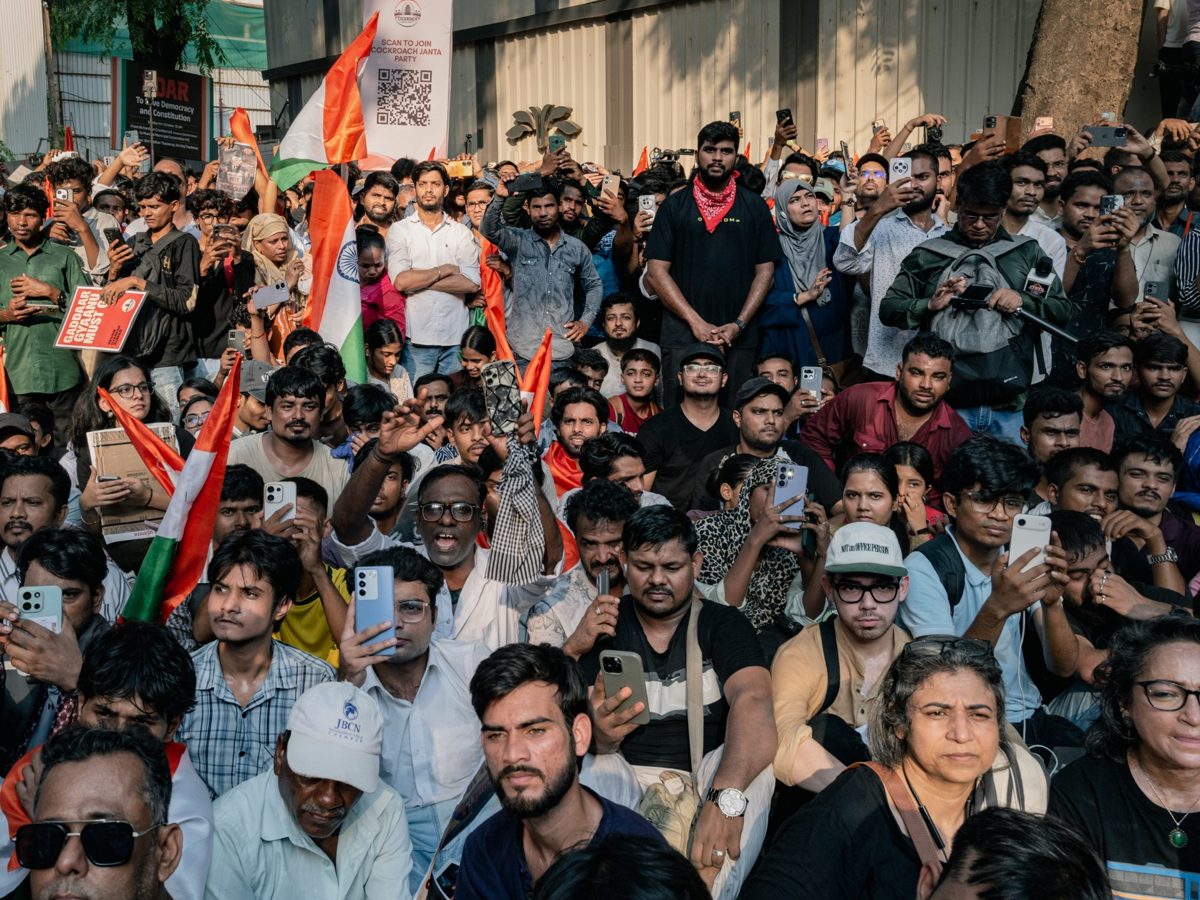
In October, India is witnessing a surge of protests as students and opposition parties nationwide transform various grievances into a collective challenge against Prime Minister Narendra Modi's government. These actions are puncturing Modi's aura of invincibility and reflecting a significant public discontent.
Coinciding with Mahatma Gandhi's 157th birth anniversary, these protests address issues ranging from alleged electoral irregularities and women's safety to caste-based discrimination. The government finds itself in a precarious position amidst this converging wave of opposition.
Highlights
- CEC resignation demanded: Protesters are calling for the resignation of Chief Election Commissioner Gyanesh Kumar, accusing him of manipulating voter rolls in favor of Modi's party.
- Women's safety concerns: A sexual assault on a teenage girl in Delhi has sparked widespread protests regarding women's safety.
- Caste discrimination allegations: In Mumbai, parents of a student who died by suicide are demanding the arrest of teachers, alleging severe caste-based harassment.
- Examination irregularities: Aspirants for the Maharashtra Public Service Commission in Pune are protesting over alleged examination irregularities and lack of transparency.
- Opposition unity: Disparate grievances are unifying Gen Z and opposition parties, transforming them into a national force.
Details
The protests have effectively caught the Modi government in a pincer movement of domestic unrest. The alleged gang-rape of a 17-year-old girl in Delhi by men posing as police officers has ignited widespread outrage over women's safety. Concurrently, in Mumbai, the parents of Sahil Wakode, a second-year engineering student at IIT Bombay who died by suicide, have launched an indefinite hunger strike, accusing his teachers of caste-based harassment. These incidents highlight deep-seated social tensions in India.
Opposition leader Rahul Gandhi has accused Chief Election Commissioner Kumar of 'high treason,' while opposition parties plan five major rallies across the nation. Demands include a return to ballot papers instead of Electronic Voting Machines (EVMs), which are alleged to be vulnerable to manipulation. The government has responded with heavy security lockdowns and mass detentions in Delhi and Mumbai to suppress the gatherings.
Why it matters
This wave of protests represents a significant challenge to Modi's long-standing and seemingly unshakeable rule. The convergence of grievances from various segments of society is questioning the government's legitimacy and eroding trust in the independence of institutions. Modi's recourse to repressive measures, in stark contrast to Gandhi's philosophy of non-violence, underscores the fragility of his power and the growing dissent within the country.