Ship Attacks Near Strait of Hormuz Reach Record High as Oil Exports Slow
Data from a UK maritime agency shows 12 vessels were attacked in a week near the Strait of Hormuz, leading to a slowdown in oil shipments.
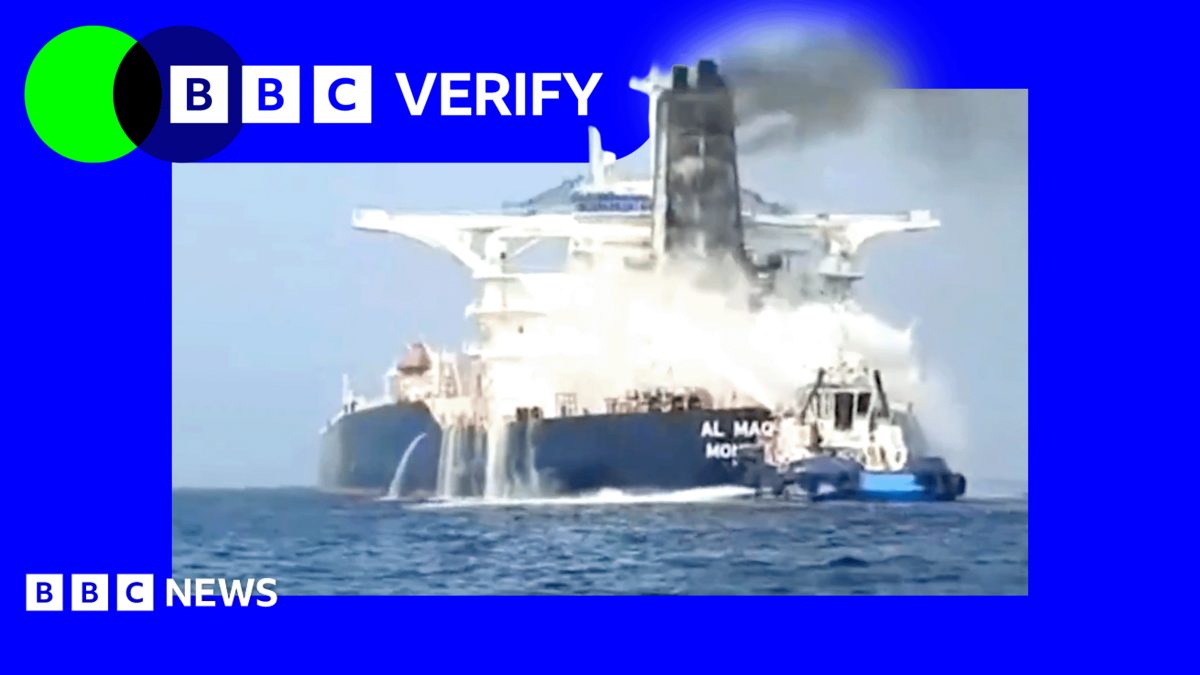
The number of reported ship attacks in and around the Strait of Hormuz has reached an unprecedented level, with 12 vessels struck between October 5 and 11. This marks the highest weekly total reported to the UK's Maritime Trade Operations (UKMTO) agency since the US-Israeli war with Iran began. The previous week saw 10 reported attacks.
Highlights
- A record 12 vessels were attacked in and around the Strait of Hormuz between October 5 and 11.
- Last Sunday alone, six ships were hit, marking a single-day high for reported incidents.
- The surge in attacks has coincided with a slowdown in the recovery of oil shipments through the crucial waterway.
- Experts suggest Iran is increasing attacks to assert greater control over the strait, particularly as the U.S. military escorts more tankers.
- Attacks are also expanding beyond the Strait, targeting ships near the coasts of Gulf Arab states and in the Gulf of Oman.
Details
BBC Verify's analysis of UKMTO data indicates that as the number of strikes has risen, the recovery in oil shipments through the strait has slowed. According to trade intelligence firm Kpler, approximately 12.6 million barrels per day passed through the strait on October 13, down from 15 million at the end of September and a pre-war baseline of around 17 million barrels per day.
U.S. military officials state that despite the attacks, "commercial traffic continues to flow through the Strait of Hormuz with co-ordinated protection from US forces and regional partners." However, experts like Martin Kelly, CEO of Orbital Risk Intelligence, suggest Iran has "evolved its strategy" in response to perceived loosening of its control, conducting "near daily or multiple attacks every single day."
The Islamic Revolutionary Guard Corps (IRGC) navy has declared that strikes would not be "limited to the Strait of Hormuz" and announced a "new deployment formation" across the region. This week, the container ship GFS Pride sank on Tuesday after being hit by an unknown projectile in the strait, with all 21 crew safely evacuated. Additionally, the Nicaragua-flagged tanker Petro Dolphin caught fire after a drone strike near Oman; 11 Indian seafarers were rescued, but two remain missing.
Why it matters
The Strait of Hormuz is a critical chokepoint for global oil shipments. The escalating number of attacks in this region could introduce significant uncertainty into global energy markets and potentially impact oil prices. Furthermore, the deterioration of maritime security poses a threat to international trade and supply chains, with far-reaching economic consequences.