Japanese Space Agency Launches Mission to Retrieve Sample from Mars' Moon Phobos
The Japanese Space Agency (JAXA) is preparing for an ambitious space mission to collect samples from Mars' moon Phobos and bring them back to Earth.
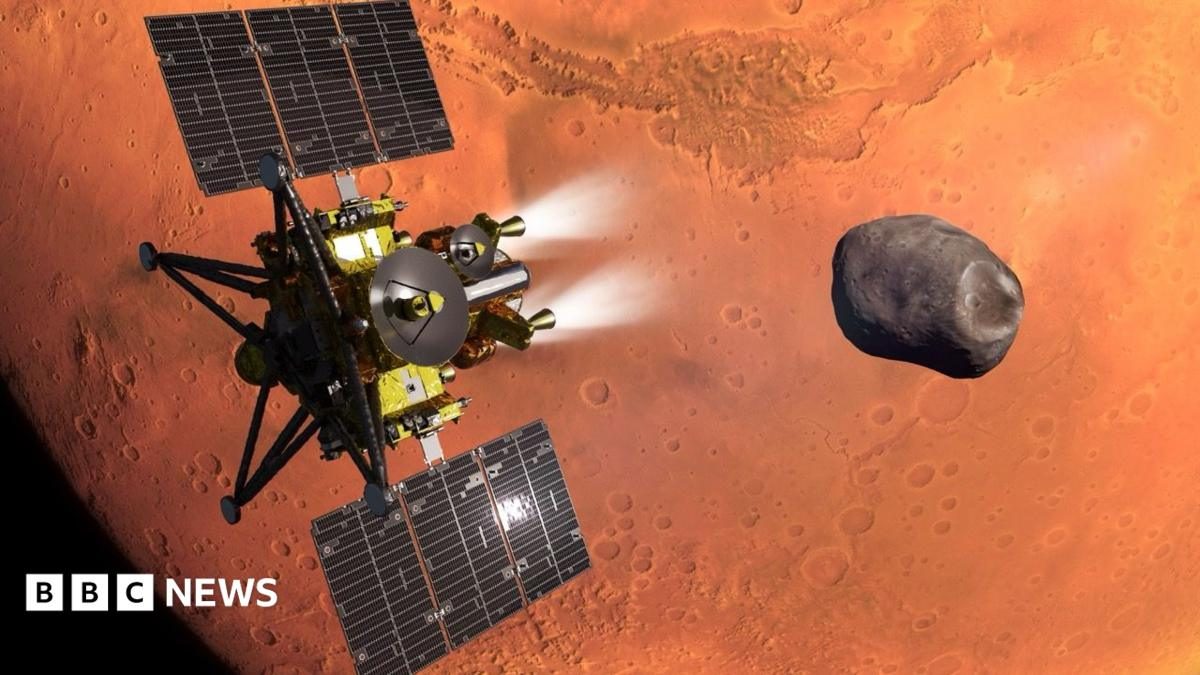
The Mars Moons eXploration (MMX) mission, led by the Japanese Space Agency (JAXA), is set to launch on October 20 to collect samples from Mars' moon Phobos and return them to Earth. If successful, this will mark the first time a sample has been returned from Mars or its moons for analysis. Scientists hope these samples will finally solve the mystery of how Mars' moons formed.
Highlights
- The MMX mission aims to collect 10 grams of surface material from Phobos, Mars' moon.
- The collected samples are scheduled to return to Earth in 2031, landing in Australia's Woomera desert.
- The mission seeks to determine whether Mars' moons were formed from a collision or are captured asteroids.
- The spacecraft will deploy a small rover on Phobos, marking the first rover landing on such a small moon.
- It is anticipated that the samples might also contain particles originating from Mars itself.
Details
After launching from Japan, the MMX spacecraft is expected to arrive in Mars' orbit in August 2027. It will initially study Deimos before focusing on Phobos. A small rover will be deployed to scout a landing site on Phobos. Professor Sara Russell from the Natural History Museum highlighted the challenge of landing a rover on a small moon with low gravity, especially near a massive planet. "The moon itself doesn't have very much of its own gravity," she explained, "But it's next to an enormous planet that's got a much higher gravity, and that makes it much harder to get a rover onto the surface."
Once on the surface, the spacecraft will use a robotic arm and two samplers to collect moon dust. This material will be sealed in a small capsule set to return to Earth in 2031. Dr. Chrysa Avdellidou from Leicester University noted that while 10 grams may seem small, it is sufficient for detailed scientific studies.
Why it matters
The origin of Mars' moons, Phobos and Deimos, which formed about 4.5 billion years ago, remains a puzzle. Scientists are keen to understand whether these moons were created from debris following an impact with Mars, or if they are asteroids from the outer Solar System captured by Mars' gravity. The samples retrieved by the MMX mission are expected to provide definitive answers, offering crucial insights into the formation history of Mars.