Latvia Holds Parliamentary Election Amid Rising Costs and Security Concerns
Latvia's parliamentary election saw approximately 1.5 million voters cast their ballots, with national security and increasing living costs dominating the political discourse.
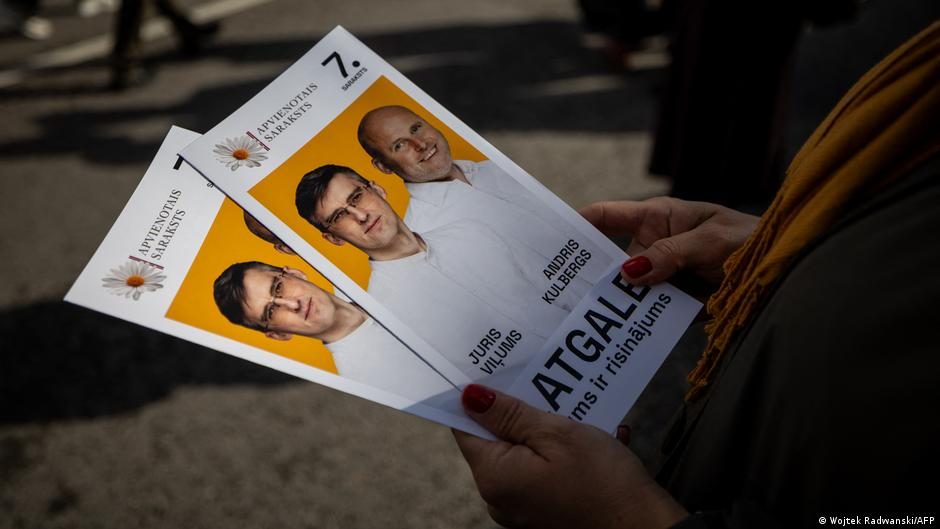
Around 1.5 million eligible voters in Latvia participated in the country's 11th parliamentary election since gaining independence from the Soviet Union in 1991. The election campaign was largely shaped by concerns over national security and the rising cost of living. Four NATO Eurofighter jets were deployed to patrol Latvian airspace during the polling period, highlighting regional tensions with neighboring Russia and Belarus.
Highlights
- Approximately 1.5 million Latvians voted for 100 seats in the Saeima (parliament).
- The election was dominated by discussions on national security and increasing living costs.
- Four German Eurofighter jets were deployed by NATO to secure Latvian airspace during the election.
- The ruling center-right coalition led by Prime Minister Andris Kulbergs is expected to emerge weakened.
- Russia's ongoing invasion of Ukraine is perceived as a direct threat to Latvia's national security.
Details
Andris Kulbergs, Latvia's current Prime Minister, took office in May after the previous government collapsed over a dispute concerning Ukrainian drones. While Kulbergs' center-right, conservative United List alliance led in pre-election polls, his coalition is anticipated to be weakened as populist parties gain ground. 14 parties competed for the 100 parliamentary seats under a proportional representation system.
The ongoing conflict in Ukraine is seen as a direct threat to Latvia's national security, given its shared history as a former Soviet state and its significant ethnic Russian and Russian-speaking minority. However, unlike Ukraine, Latvia is a member of both the European Union and NATO. Riga has become one of Kyiv's strongest allies, legally committing to spend at least 5% of its GDP on defense, which limits spending in other areas.
Voters' primary concerns included a sluggish economy, high prices, low wages, strain on the healthcare system, emigration, and an aging population. Populist movements, such as the Sovereign Power/Young Latvians Alliance and the Latvia First party, attempted to capitalize on public discontent by advocating for a less stringent approach towards Moscow and arguing that a complete economic decoupling from Russia is detrimental. Despite this, no major party proposed a significant deviation from Latvia's established foreign policy alignment with the EU and NATO.
Why it matters
These elections are crucial for Latvia as the country navigates both internal economic challenges and external security threats. The formation of the new government will determine the nation's future approach to its relationship with Russia, defense spending, and economic stability. These decisions will have implications for the future of the Baltic region and the broader European security architecture. Coalition negotiations are expected to be lengthy and complex.