Nvidia CEO Jensen Huang Navigates US-China Chip Rivalry Amid National Security Debates
Nvidia CEO Jensen Huang's efforts to lift US export bans on AI chips to China and his views on national security concerns are drawing significant attention.
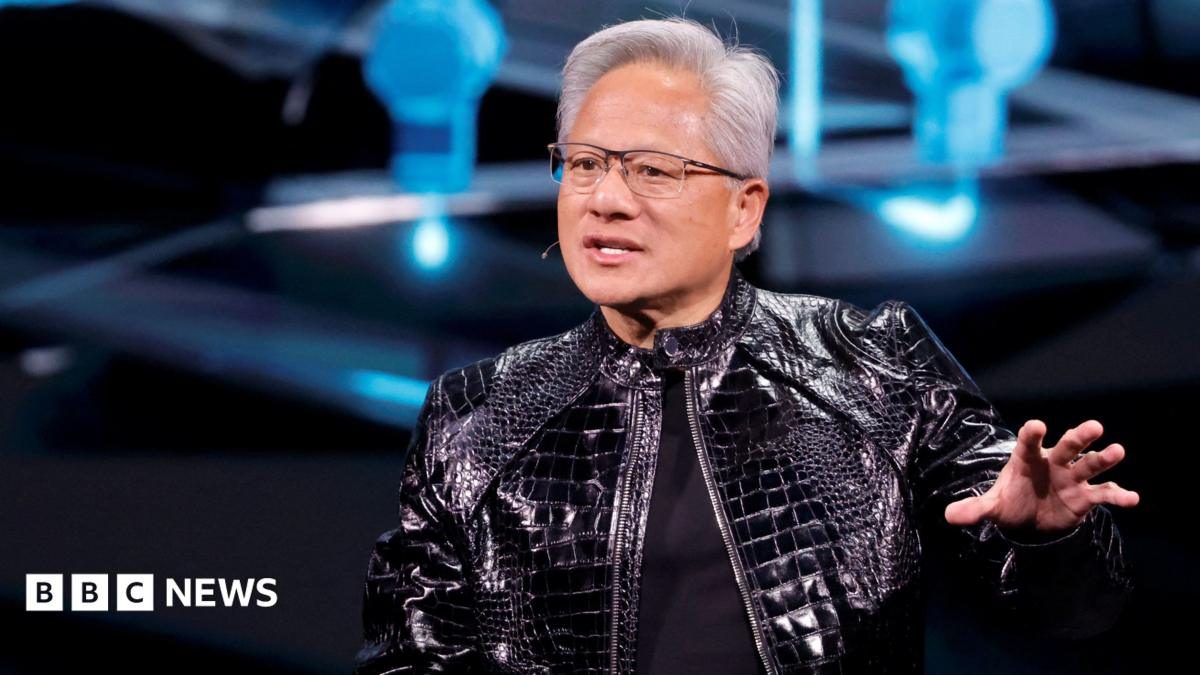
Jensen Huang, CEO of Nvidia, stands as one of the most influential figures in the technology world, largely due to his company's leading position in artificial intelligence (AI) chips. Last year, during former US President Donald Trump's visit to the UK, Huang reportedly attempted to persuade the US to lift export bans on high-performance AI chips to China. These efforts are in direct contrast with the concerns raised by national security circles.
Highlights
- Jensen Huang is the CEO of Nvidia, a key player in the global supply of AI chips.
- Huang engaged with former President Trump to lift some US export bans on high-performance AI chips to China.
- He claims to have persuaded Trump on the matter, arguing that AI development is not a "zero-sum game."
- National security circles, however, believe the AI race is entirely zero-sum and that hindering China's progress is critical.
- Huang is currently under investigation for an alleged affair with a suspected Chinese spy, further complicating the discussions.
Details
Jensen Huang has positioned Nvidia as a global leader in producing powerful microchips, which are vital for developing advanced AI models. The company's chips, such as Gracehopper, Vera, and Rubin, are powering the AI revolution. Huang argued to former President Trump that it would be better for US national security if the world, including China, became dependent on American technology systems, with Nvidia chips at their core. He also suggested that militaries are smart enough to build on their own indigenous technology rather than relying on an adversary's.
Huang's perspective clashes with that of national security experts. These experts contend that the race for the most advanced forms of AI is entirely zero-sum. They advocate for the West, particularly the US, to take critical actions to curb Chinese advancement. The prevailing view is that the country that develops the most powerful AI systems, based on the most powerful chips, will gain an advantage in scientific development, encryption cracking, economic growth, and cyber-weapons.
Nvidia is projected to have revenues of approximately $400 billion this year, with the company's valuation exceeding $4 trillion. However, the ongoing investigation into Huang's alleged affair with a suspected Chinese spy has led to drops in the company's stock value, highlighting the extraordinary risks at the intersection of technology and global politics.
Why it matters
Jensen Huang's dual role as the head of tech giant Nvidia and an active participant in the sensitive US-China chip rivalry holds significant importance for global power dynamics. The differing views on the future of AI technology and its implications for national security will continue to shape the policies of both technology leaders and governments. The investigation into Huang adds another layer of complexity to this scenario, once again underscoring the deep connection between technology and geopolitics.