Prague Honors Roma Resistance Fighters Against Hitler
A new exhibition in Prague highlights the stories of over 1,400 Roma resistance fighters who fought against the Nazi occupation in Czechoslovakia, a chapter long overlooked.
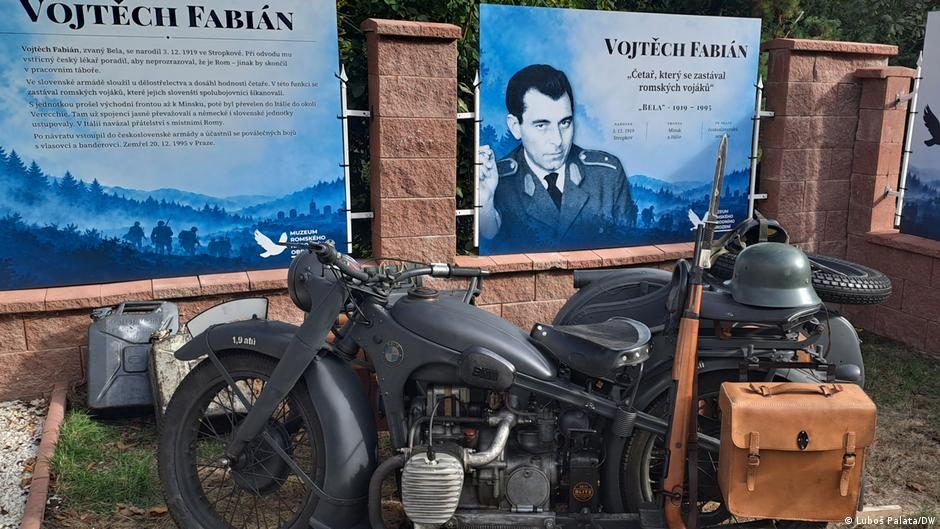
A new exhibition opened at the Museum of the Romani National Revival in Prague on October 15, 2026, shedding light on the stories of over 1,400 Roma resistance fighters who actively opposed the Nazi occupation in Czechoslovakia. This groundbreaking exhibition aims to reshape the historical perception of the Roma's role during World War II, moving beyond their portrayal solely as victims of the Holocaust.
For decades, the historical narrative primarily focused on the Roma as victims of the Holocaust. However, this exhibition emphasizes their active involvement in fighting against the Nazis. Emil Scuka, the museum director, stated, "We were not only victims; we were also heroes," underscoring the importance of this fact being recognized by both the Roma community and the wider public.
Highlights
- The Museum of the Romani National Revival in Prague is hosting an exhibition honoring Roma resistance fighters against the Nazi occupation.
- The exhibition documents the stories of over 1,400 Roma who fought against the Nazis in Czechoslovakia.
- This initiative seeks to change the historical perception of the Roma's role in World War II.
- Museum director Emil Scuka emphasizes that Roma were not only victims but also heroes of the resistance.
- The exhibition features detailed life stories of 100 significant Roma combatants, including Anton Facuna, a sergeant in the American intelligence agency OSS, and Josef Serinek, a partisan unit commander.
Details
During the Nazi German occupation and the dismantling of Czechoslovakia from 1938 to 1945, Czech and Slovak Roma fought as partisans in resistance groups and as soldiers in the Czechoslovak Underground Army. Approximately 90% of Czech Roma were murdered by Nazi Germany in the Protectorate of Bohemia and Moravia during this period. Yet, this significant aspect of their resistance had been largely ignored for many years.
Exhibition curator Radoslav Scuka revealed that they found over 1,400 Romani fighters in the archives, selecting the 100 most compelling stories for the exhibition. Notable figures include Anton Facuna, a sergeant in the American intelligence agency Office of Strategic Services (OSS), who was flown to Slovakia on a secret mission in October 1944. Another is Josef Serinek, known as the "Black Partisan from Vysocina," who escaped from a Nazi concentration camp and subsequently founded and commanded a large partisan unit. Serinek was posthumously awarded the Medal for Heroism by Czech President Milos Zeman in 2022.
Prokop Tomek, a historian at the Military History Institute in Prague, stated that the number of 1,400 Roma who participated in the fight against Nazism is not an exaggeration and corresponds to the proportion of the Roma population in Czechoslovakia. This exhibition marks a crucial turning point, addressing a topic that has been marginalized in Czech and Slovak historical writing for decades.
Why it matters
This exhibition enriches the historical narrative of the Roma's role in World War II, demonstrating that they were not only victims of the Holocaust but also active resistors and heroes. This recognition strengthens identity and heritage awareness within the Roma community and encourages the broader public to view historical events more comprehensively. Furthermore, in a context where many Roma in Czechia and Slovakia still hesitate to openly acknowledge their ethnic identity, such an acknowledgment is seen as a vital step towards social integration and equality.