Russia Aims for a 'Historic Return' to Africa Following Ukraine War
Russia has declared its intention to make a 'historic return' to the African continent following its invasion of Ukraine and the resulting rift with the West, intensifying its diplomatic, economic, an
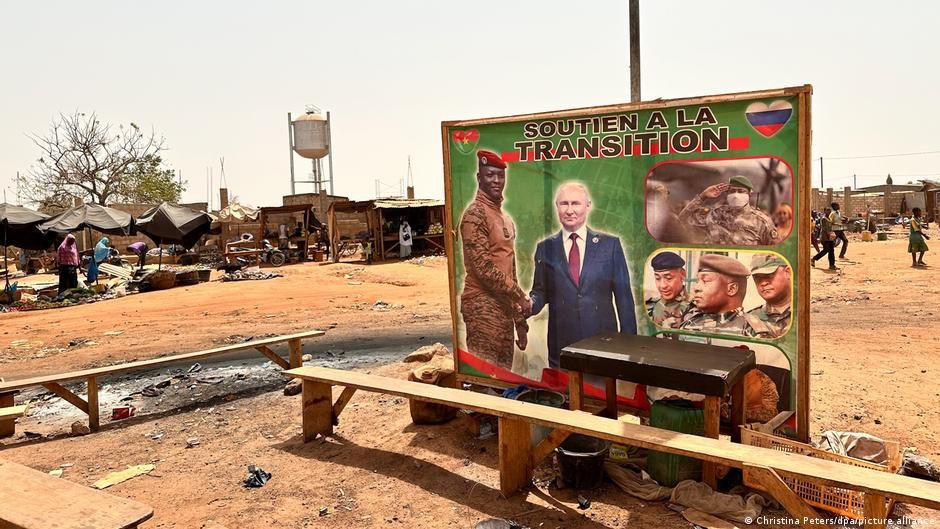
Following its full-scale invasion of Ukraine and the subsequent strained relations with the West, Russia is increasingly focusing its attention on the African continent. Maria Zakharova, spokesperson for the Russian Foreign Ministry, described this as a "historic return," asserting that nothing could compare to Russia's contributions to Africa in the 20th century.
Russia has been holding Russia-Africa summits approximately every three years since 2019. The third such summit is scheduled for October 28-29 in Moscow, with a primary focus on economic cooperation. However, Russia's commercial footprint in Africa remains limited compared to other major global powers.
Highlights
- Russia is seeking new allies and support in Africa due to its conflict with the West following the Ukraine war.
- Diplomatic visits and summits aim to foster cooperation in economic, political, security, scientific, and cultural spheres.
- Russia's total trade volume with Africa was approximately $27 billion in 2025, representing a small fraction of Africa's overall foreign trade.
- Egypt is Russia's most significant African trade partner, with $10.5 billion in bilateral trade, and Russia is constructing a $25 billion nuclear power plant in Egypt.
- Russia's presence in Africa is more pronounced in the military sector, with the "Africa Corps" (formerly the Wagner Group) operating in unstable Sahel countries.
Details
Russia's trade relations in Africa are primarily concentrated with North African countries like Egypt and Algeria. Egypt stands as Russia's largest trade partner in Africa, with bilateral trade reaching $10.5 billion in 2025. This trade largely consists of Russian grain and metal products, while Egypt exports fruits and vegetables. Additionally, Russia is financing the construction of a $25 billion nuclear power plant in Egypt's El-Dabaa region. Experts suggest that Egypt could become a long-term gateway for Moscow into Africa.
However, Russia's total trade volume with Africa, around $27 billion in 2025, constitutes only a small portion of Africa's foreign trade. Africa's leading trade partners include the European Union ($385 billion), China ($348 billion), and the United States ($105 billion). Even emerging powers like Turkey and the UAE have reportedly outperformed Russia in recent times regarding trade and investment.
Russia's most visible presence in Africa is in the military sector. Operations previously conducted by the Wagner Group have been taken over by the "Africa Corps," established and controlled by the Russian Ministry of Defense. Thousands of Russian mercenaries are present in countries such as the Central African Republic, Mali, and Libya. In exchange for this military support, Russia gains access to critical mineral resources like gold and uranium. According to the Stockholm International Peace Research Institute (SIPRI), Russia ranked third in arms supplies to Africa between 2021 and 2025, with a 15% market share, behind the US and China.
Why it matters
Russia's increased diplomatic, economic, and military activities in Africa are seen as part of a broader strategy to overcome international isolation following the Ukraine war and to garner support from the Global South. Africa's significant voting power in the United Nations General Assembly and its rich natural resources make it an attractive region for Russia. By engaging with African nations through an "anti-colonial" narrative, Russia aims to strengthen its position against Western influence on the continent. This shift could have notable implications for global power dynamics.