Tesla Semi Electric Truck Launched Amidst Major Infrastructure Challenge
Tesla has begun high-volume production of its long-awaited Semi electric truck, but the lack of widespread charging infrastructure remains a significant hurdle for electric trucking adoption.
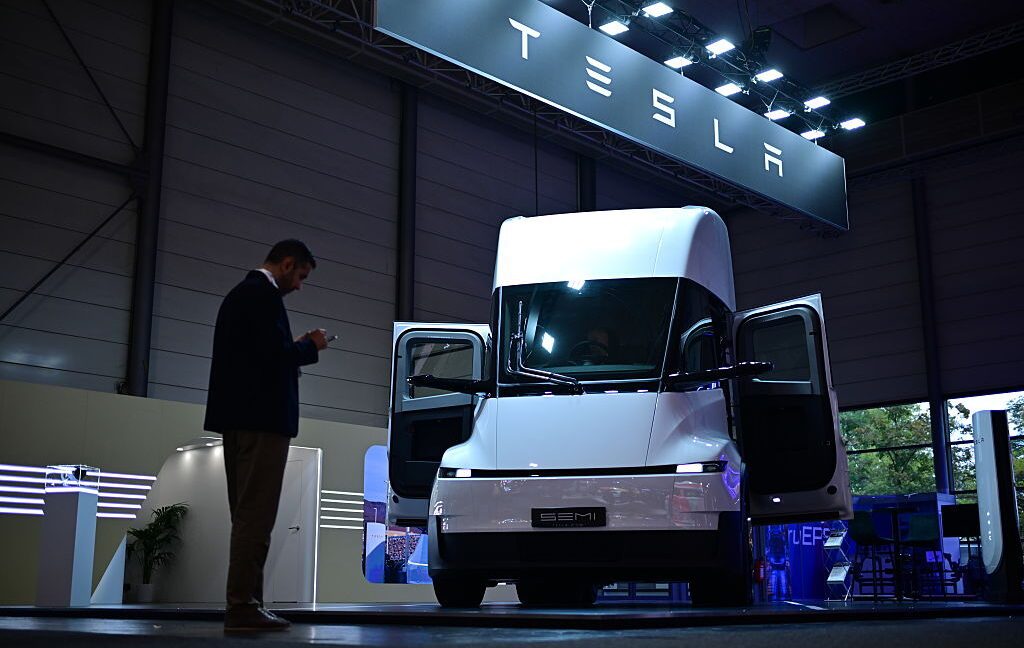
Tesla has officially commenced high-volume production of its long-awaited electric truck, the Semi. The company is targeting large, cost-conscious trucking fleets with its 500-mile range long-haul version. However, a major challenge for the widespread adoption of electric trucks is the need for a nationwide network of specialized megawatt charging stations capable of replenishing large batteries within hours.
Highlights
- The long-range version of the Tesla Semi can travel an estimated 500 miles on a single charge, comparable to the average daily mileage of US long-haul truckers.
- Electric trucks can have an upfront cost two to three times higher than their traditional diesel counterparts.
- Currently, only two public Tesla Semi megawatt chargers are operational in the US, with plans to open 30 by year-end.
- An alliance of shippers, including Microsoft and PepsiCo, has placed a record-setting order for 2,500 Tesla Semis.
- US diesel prices have hit record highs due to ongoing geopolitical events, increasing the economic appeal of electric trucks.
Details
Tesla launched high-volume production of the Semi, first introduced in 2017, at its factory in Sparks, Nevada. Lars Moravy, Tesla's Vice President of Vehicle Engineering, confirmed at the event that the long-range version would offer an estimated 500 miles per charge, while the standard version would achieve 325 miles. Competitor electric trucks advertise ranges between 155 and 430 miles.
While electric heavy-duty trucks account for nearly 30 percent of sales in China, their adoption has been slow in the US. A primary obstacle is the requirement for a countrywide network of specialized megawatt chargers that can rapidly charge large batteries. Dan Priestley, who leads Tesla's Semi program, stated that the company plans to open 30 such chargers by the end of the year.
Why it matters
The launch of the Tesla Semi demonstrates the potential for electrification in the heavy-duty trucking sector. However, high upfront costs and, critically, the underdeveloped charging infrastructure pose significant challenges to widespread adoption. Rising diesel prices could enhance the operational cost advantage of electric trucks, potentially accelerating the industry's transition, but substantial infrastructure investment remains crucial.