ULA's Vulcan Rocket Set for Return to Flight After Booster Issues
United Launch Alliance (ULA) announced its Vulcan rocket is scheduled to return to service in November, after a nine-month hiatus due to solid rocket booster anomalies, marking its first launch with a
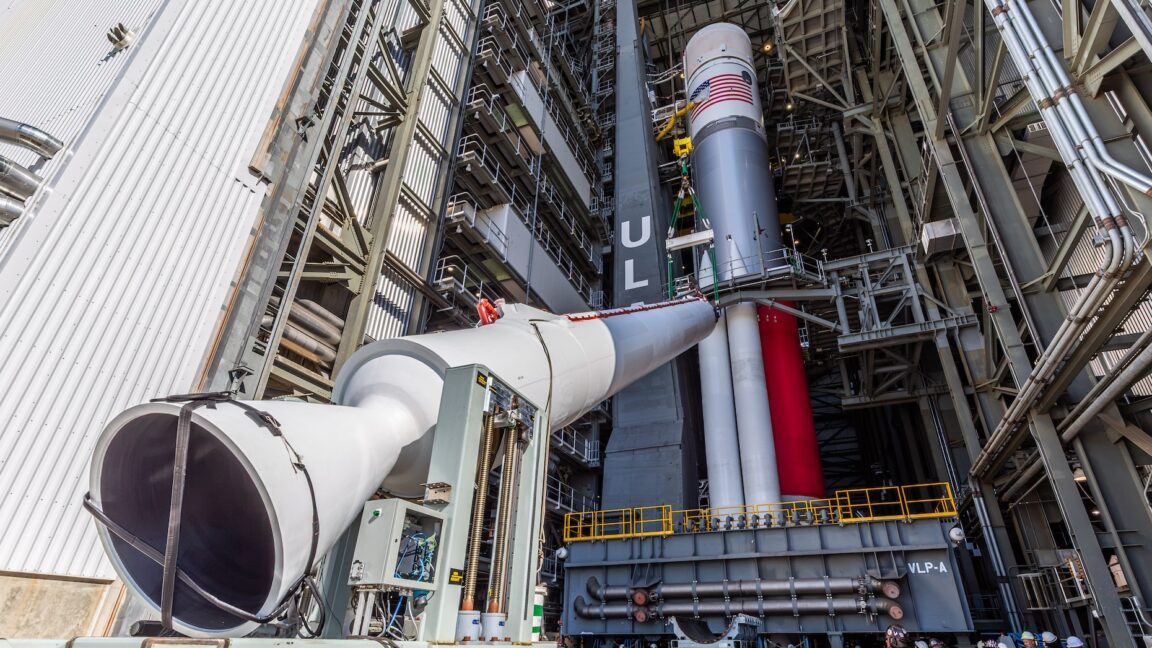
United Launch Alliance (ULA) has announced plans for its Vulcan rocket to return to service on November 13, nine months after a solid rocket booster anomaly disrupted the company's 2026 launch schedule. This return-to-flight mission will deploy 40 satellites for Amazon's Kuiper broadband constellation, marking the first of 38 Vulcan flights Amazon has booked to establish its network. The launch will be the first to utilize a full complement of six solid rocket boosters.
Highlights
- ULA's Vulcan rocket is scheduled to launch on November 13, following a nine-month grounding due to booster issues.
- The mission will carry 40 satellites for Amazon's Kuiper broadband constellation.
- This launch will be the first to use a full complement of six solid rocket boosters.
- ULA states that engineers have made design and process improvements to mitigate nozzle anomalies.
- The U.S. Space Force is awaiting data from commercial Vulcan flights before clearing the rocket for national security missions.
Details
ULA and Northrop Grumman, the booster manufacturer, have not publicly identified the root cause of the February nozzle malfunction. However, the first occurrence of the nozzle problem in 2024 was attributed to a manufacturing defect in an insulator designed to protect the nozzle's metallic structure from superheated exhaust. ULA stated that engineers "made great strides" in understanding the anomaly and have implemented "design and process improvements to the nozzle," which will be used in the upcoming launch to gather valuable flight data.
Despite the previous successes in completing missions despite nozzle failures, officials at the U.S. Space Force, ULA's primary customer, expressed a loss of confidence in Vulcan. The Space Force relies on Vulcan for roughly half of its major launches through the early 2030s. Due to ULA's delays, the Space Force has transferred six missions from Vulcan to SpaceX's Falcon 9 and Falcon Heavy rockets, while ULA received six future missions originally assigned to SpaceX. These swaps have not altered the total number of missions awarded to ULA and SpaceX.
Brigadier General Eric Zarybnisky, the chief rocket buyer at Space Systems Command, indicated that the military requires data from commercial Vulcan flights before approving the rocket for national security launches. At least two Amazon Kuiper missions are scheduled to fly on Vulcan before it undertakes another national security mission, potentially in early next year.
Why it matters
The successful return to flight for the Vulcan rocket is crucial for ULA. As a joint venture between Boeing and Lockheed Martin, ULA plays a significant role in launching critical military satellites for communications, navigation, missile warning, and surveillance. Furthermore, Amazon's Kuiper broadband constellation, a potential competitor to SpaceX's Starlink, also relies on Vulcan for the deployment of its satellites. This launch is vital for ULA to re-establish its reliability and for the broader U.S. space access capabilities.