European Auto Giants Seek Salvation in Defense Industry Amid Crisis
Facing fierce competition from Chinese rivals and slow EV adoption, European carmakers are turning to the booming defense sector and military vehicle production to overcome their current crisis.
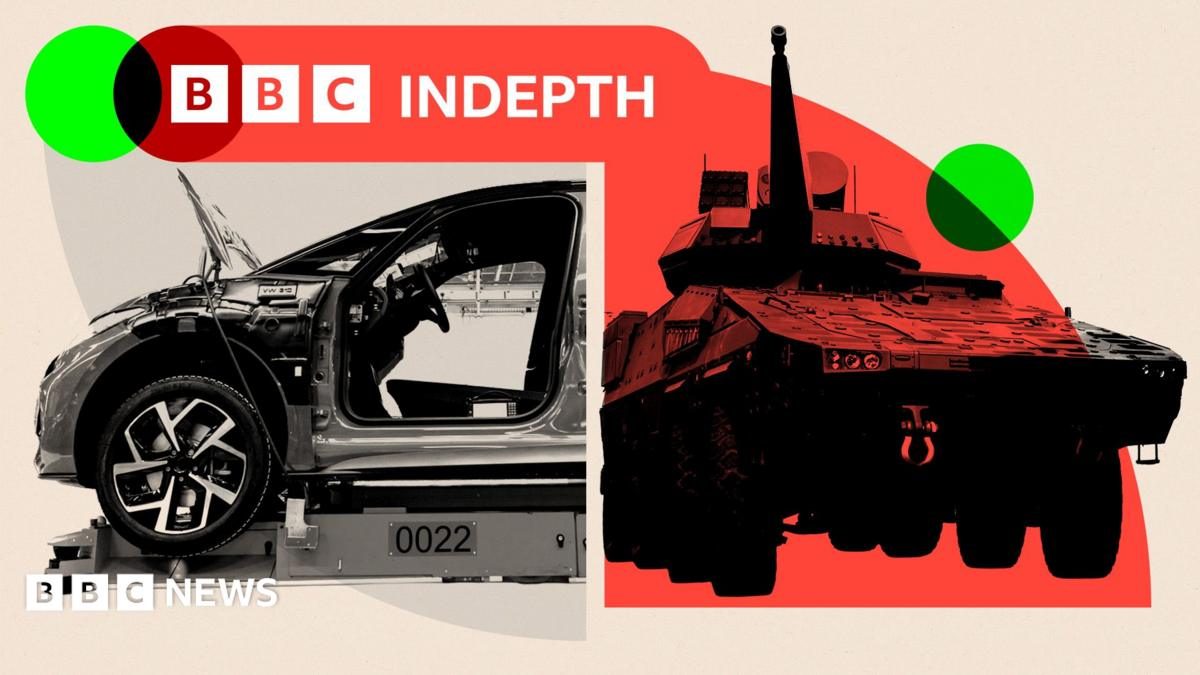
Leading European car manufacturers are increasingly looking to the defense industry as a lifeline amidst a deepening crisis in the automotive sector. Grappling with intense competition from Chinese rivals and slower-than-expected sales of electric vehicles (EVs), these firms hope to capitalize on Europe's rising defense budgets.
Giants like Ford, Renault, and Volkswagen are pivoting towards military vehicle and technology production to utilize their idle capacities and generate new revenue streams. This strategic shift is seen as a critical juncture for the future of the automotive industry.
Highlights
- Ford is part of a joint bid with General Dynamics and Ricardo for the British Army's Light Mobility Vehicle (LMV) program, aiming to replace the Army's aging Land Rover-based fleet.
- Renault has signed a strategic agreement with French defense giant Thales to produce military drones, targeting an output of up to 1,000 units per month.
- Volkswagen has agreed to sell an under-utilized factory in Osnabruck, Germany, which will become a military manufacturing hub in a joint venture with an Israeli-based defense investor.
- UK automotive suppliers have urged the government to help the sector transition into aerospace and defense, warning of long-term decline in large-scale car production.
- The European auto industry faces a "perfect storm" due to billions invested in EVs, consumer demand lagging government sales targets, and aggressive market entry by Chinese competitors.
Details
The European automotive industry has experienced significant production declines over the past decade. For instance, Ford's Dagenham engine plant has seen its annual output cut by half from 90,000 engines. This has led to substantial overcapacity across the sector, with estimates indicating Western European car plants have roughly 2.5 million vehicles worth of annual spare capacity.
In this crisis environment, European nations are committing hundreds of billions to ramp up defense spending, driven by the perceived threat from Russia and US reluctance to act as Europe's sole protector. Automakers aim to leverage these increased budgets by producing for military needs, hoping to navigate the crisis. Mike Hawes, head of the Society for Motor Manufacturers and Traders (SMMT) in the UK, suggests it makes sense for under-utilized auto manufacturing capacity to switch to defense.
Major manufacturers like Jaguar Land Rover (JLR) are also taking similar steps. JLR has established a new dedicated business unit to support its global military ambitions and is bidding for the same British Army contract as Ford. However, JLR's decision to cut 4,000 jobs has raised concerns within the supply chain, with industry leaders arguing the UK automotive supply chain is "in the wrong market."
Why it matters
The European automotive industry's pivot towards the defense sector carries significant economic and geopolitical implications. While this transition offers the potential to alleviate job losses and address overcapacity issues, it could also bolster Europe's defense capabilities. However, the success of this strategy will depend on automakers' ability to adapt to military standards and remain competitive. This situation will undoubtedly spark new debates regarding Europe's industrial policies and international relations.