China Allegedly Seeks to Restrict Taiwan's Cultural and Political Presence
Beijing is reportedly making efforts to limit Taiwan's international cultural and political influence, from coffee competitions to literary awards.
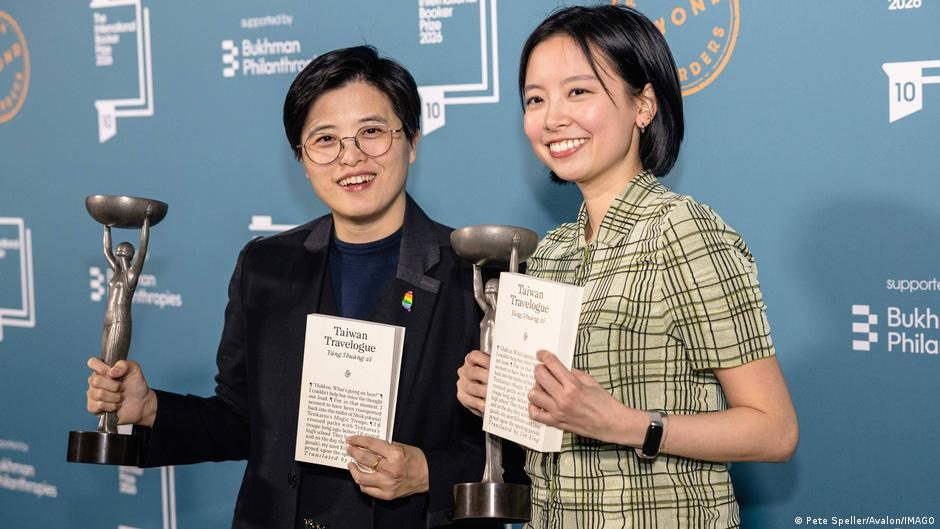
Beijing is reportedly attempting to restrict Taiwan's international cultural and political visibility across various domains, including coffee competitions and literary awards. This situation became more pronounced after Taiwanese author Yang Shuang-zi won the 2026 International Booker Prize.
Lin King, the book's English translator, emphasized in her acceptance speech that Taiwan's sovereignty should not be viewed as a provocation. Author Yang stated that literature and politics are directly connected, with politics determining resource allocation, which in turn influences which works are highlighted.
Highlights
- 2026 International Booker Prize: Taiwanese author Yang Shuang-zi's "Taiwan Travelogue" won the award, drawing a reaction from China.
- Barista Championship: Following Taiwanese barista Lin Shao-hsing's victory at the 2026 World Latte Art Championship, the official website replaced "Taiwan" with "Chinese Taipei."
- Espionage Allegations: The U.S. Department of Justice claimed China instructed a woman to monitor the son of Taiwan's president.
- Incident in Prague: Czech intelligence officials alleged China planned a "car collision" during Taiwanese Vice President Hsiao Bi-khim's 2024 visit to Prague.
- Cultural Identity: A poll in Taiwan showed that the vast majority of people identify as "Taiwanese," with only 2.5% identifying as "Chinese."
Details
Yang Shuang-zi's award-winning book explores Taiwan's multi-layered history, including indigenous, Japanese colonial, and local Han influences. This narrative highlights Taiwan's distinct culture, contrasting with Beijing's preferred "Greater China" framework. China's Taiwan Affairs Office reacted to the award, stating that writers on both sides of the Taiwan Strait should "firmly uphold a national standpoint."
Dr. Yan-ho Lai, a senior fellow at the Georgetown Center for Asian Law, noted that the People's Republic of China (PRC) views such groups as a threat to regime security. Dr. Lai also suggested that the PRC's use of "soft power" to restrict Taiwan's visibility might not directly fall under international law due to the ambiguities and limitations of international recognition for Taiwan as a sovereign state.
Why it matters
These developments illustrate China's ongoing efforts to exert political and cultural pressure on Taiwan in international forums. Taiwan's endeavors to promote its identity and sovereignty globally are in constant conflict with Beijing's "one China" policy. This situation escalates regional tensions and highlights the complexities of Taiwan's struggle for international recognition.