Hundreds of Seagrass Shoots Discovered in Fowey Estuary, Boosting Restoration Hopes
Over 430 new seagrass shoots have been found in Cornwall's Fowey Estuary, providing significant encouragement for marine habitat restoration efforts.
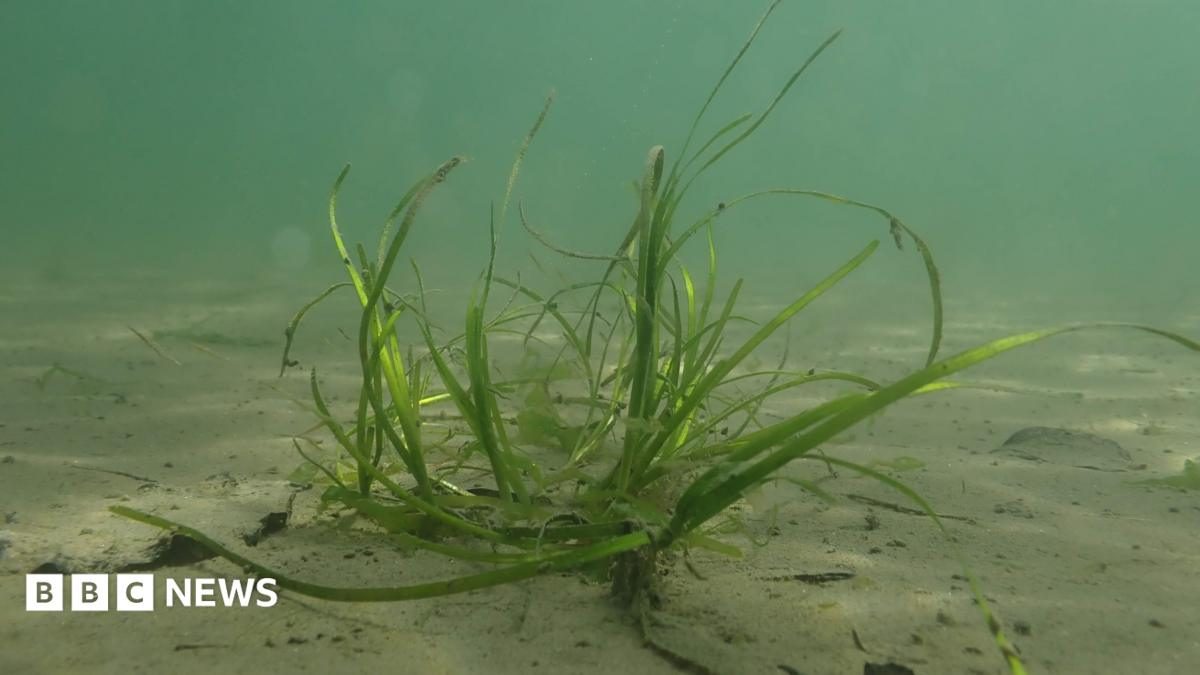
Highlights
- More than 430 new seagrass shoots have been identified within the Fowey Estuary.
- This growth was observed across 50 distinct areas of the seafloor.
- The discovery provides a hopeful outlook for a restoration project that initially faced concerns after a slow start.
- The initiative is a collaborative effort between Cornwall Wildlife Trust and Seasalt Cornwall.
- Seagrass offers vital ecological benefits, including enhancing water quality, sequestering carbon, and mitigating coastal erosion.
Details
During summer surveys conducted by the Cornwall Wildlife Trust, over 430 new seagrass shoots were documented in the Fowey Estuary. This significant growth was spread across 50 different seabed locations. The findings are particularly encouraging given earlier anxieties in April, when only six seedlings had emerged, raising doubts about the restoration trial's success.
Chloe James of the Cornwall Wildlife Trust expressed that the new shoots were "hugely encouraging" following an "uncertain start to the spring." Volunteers had gathered seagrass seeds from a source area in Torpoint in the autumn of 2025, subsequently planting them in the estuary. The seeds remained dormant through winter before growth commenced in the spring. James highlighted that this new development underscores why restoration projects demand patience, persistence, and a willingness to continuously learn. The project, named Seeding Change Together, commenced in 2022 as a partnership between Cornwall Wildlife Trust and Seasalt Cornwall. Previous efforts involved the Trust's initial attempts to re-establish seagrass beds in Cornwall's estuaries, with volunteers collecting and planting many thousands of seeds while researchers explored various restoration techniques.
Seagrass, often likened to underwater forests, plays a crucial role in marine ecosystems. It offers refuge and breeding areas for various fish and other aquatic creatures, improves water clarity, stores carbon, and helps protect coastlines from erosion. The Trust notes that Britain's mainland has experienced a loss of up to 92% of its seagrass meadows over the last century. Research supported by the project indicates that seagrass can absorb carbon at a rate up to 35 times greater than tropical rainforests. While the restoration work has encountered obstacles, such as algal overgrowth impacting planted seedlings in the Helford Estuary, surviving plants have since been observed to spread. Further planting of seeds is planned for both the Fowey and Helford Estuaries, with additional monitoring scheduled for spring 2027.
Why it matters
Seagrass is often described as the ocean's counterpart to a forest, providing essential habitat and nursery grounds for marine life. It also contributes significantly to improving water quality, capturing carbon, and reducing coastal erosion. These successful restoration efforts are critically important for the health of the UK's marine ecosystems and in the broader fight against climate change, demonstrating the potential for ecological recovery through dedicated conservation initiatives.