Rare Bird Species Thrives in Restored UK Wetland, Reaching Record Numbers
Woolston Eyes, a restored wetland in Cheshire, UK, is now home to the largest population of black-necked grebes in the country.
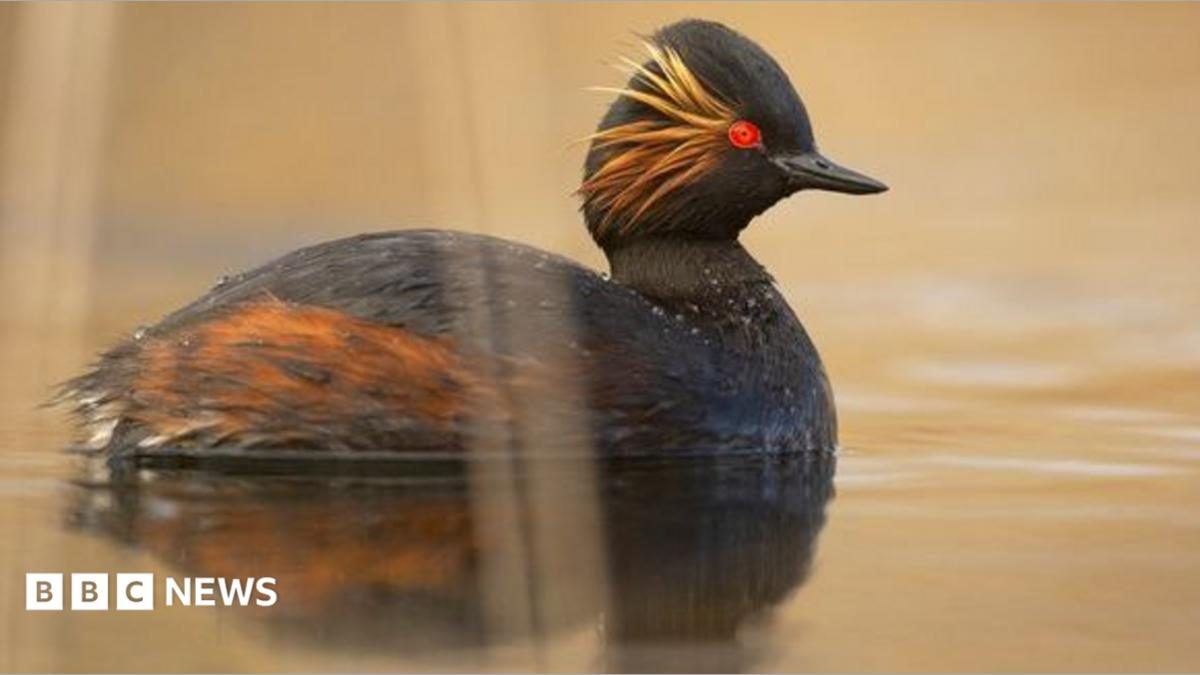
A restored wetland in Cheshire, UK, known as Woolston Eyes, has become a vital sanctuary for one of the country's rarest breeding birds, the black-necked grebe. This site, near Warrington, which was once a dumping ground for dredging material from the Manchester Ship Canal, now hosts the largest colony of this species in the UK.
Highlights
- Woolston Eyes supports the largest breeding colony of black-necked grebes in the UK.
- The site was transformed from a former dredging ground into a network of freshwater pools and reedbeds since 2021.
- Starting with four pairs nesting in 2023, the population grew to 35 breeding pairs by 2025.
- This success demonstrates the effectiveness of targeted conservation efforts.
Details
According to the Royal Society for the Protection of Birds (RSPB), black-necked grebes typically have around 55 breeding pairs in the UK annually and are recognized by their distinctive golden facial tufts. Since 2021, Woolston Eyes has been converted from a former dredging site into a network of freshwater pools and reedbeds. The species' presence at the newly restored site began in 2023 when four pairs nested there, successfully raising 15 young.
By 2025, the RSPB recorded 35 breeding pairs across the reserve, with 29 of them nesting in the newly restored wetland area. RSPB ecologist Gavin Thomas stated, "It is fantastic to see black-necked grebe numbers increasing at Woolston Eyes," highlighting how the rapid growth demonstrates the effectiveness of targeted conservation action. Robin Horner from the RSPB described the presence of over 60 birds on site as "pretty amazing," considering how scarce the species is in the UK, calling it a true success story where industry and wildlife can collaborate.
Why it matters
This development serves as a compelling example of how industrially utilized sites can be transformed into crucial wildlife habitats through appropriate conservation and restoration efforts. It underscores the critical role that targeted initiatives play in increasing populations of rare species and preserving biodiversity.