Seabirds Experience Jet Lag: Long Flights Between Dusk and Dawn Disrupt Internal Clocks
Scientists have discovered that Manx shearwaters flying hundreds of kilometers across the North Atlantic experience jet lag, affecting their navigation abilities.
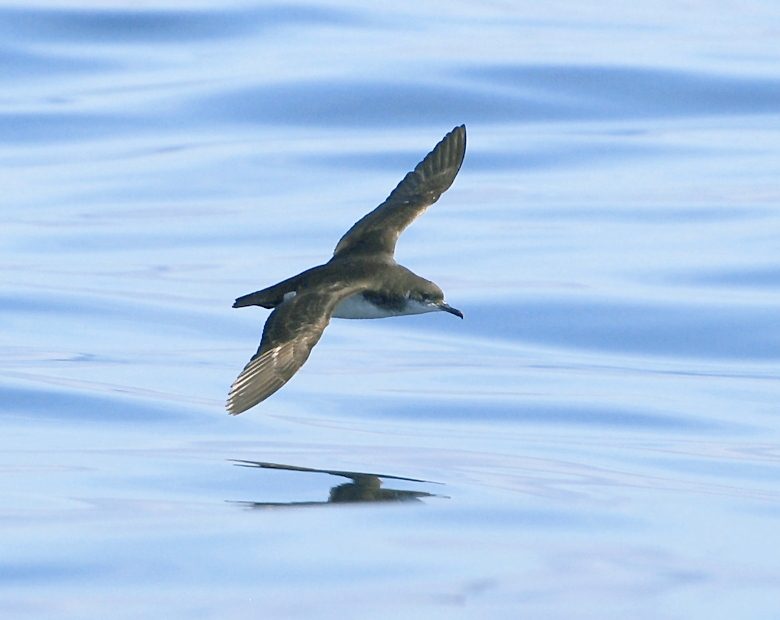
Scientists at the University of Oxford have discovered that Manx shearwaters, seabirds that fly vast distances across the North Atlantic, also experience jet lag, which impacts their navigational skills. This phenomenon occurs when the birds' internal clocks fall out of sync with local time.
The research reveals that the birds' ability to use the sun as a compass is skewed by time shifts experienced during their long flights. This is a similar sensation to the jet lag humans experience when traveling across multiple time zones.
Highlights
- Manx shearwaters can fly hundreds of kilometers daily between feeding grounds and their nests.
- Their internal clocks fall out of sync with local time by four minutes for every degree of longitude covered between sunrise and sunset.
- This desynchronization can lead to navigational errors of up to 15 degrees when using the sun as a compass.
- Despite these errors, the birds' homing journeys are only extended by a few kilometers.
- This study provides some of the clearest evidence of jet lag in wild animals moving independently.
Details
Patrick Lewin, the lead author of the study, explains that Manx shearwaters use the sun as a compass, but their internal clocks are not perfect. The birds recalibrate their internal clocks at every dusk and dawn. However, when they cover long distances, this recalibration becomes desynchronized with the local time.
Scientists analyzed 3,688 foraging trips made by 1,045 birds from 2004 onwards. This extensive dataset confirmed the predicted deviations in the birds' homing flights. While time shifts were typically around 10-15 minutes, they could sometimes reach up to an hour. Even these seemingly small time differences had a detectable effect on their compass orientation.
Lewin's team considered other factors like crosswinds or the Coriolis effect that might cause navigational errors, but found that the observed biases best matched those expected from sun compass desynchronization. Because the birds possess a 'map sense' to check their position and correct for drift, these errors only added approximately five kilometers to their journey.
Why it matters
This research offers significant insights into animal navigation systems and the intricacies of their internal clocks. It suggests that lessons could be learned from animals that routinely experience jet lag, potentially informing human strategies for mitigating its effects. Furthermore, the findings are valuable for engineers designing bio-inspired autonomous navigation systems. Future research will explore whether these time shifts impact the birds' foraging patterns, the amount of food they bring home, and their breeding success.