Japan Launches Mission to Bring Samples from Martian Moon Phobos
Japan Aerospace Exploration Agency (JAXA) has launched the MMX mission, aiming to collect samples from Phobos, Mars' largest moon, and return them to Earth.
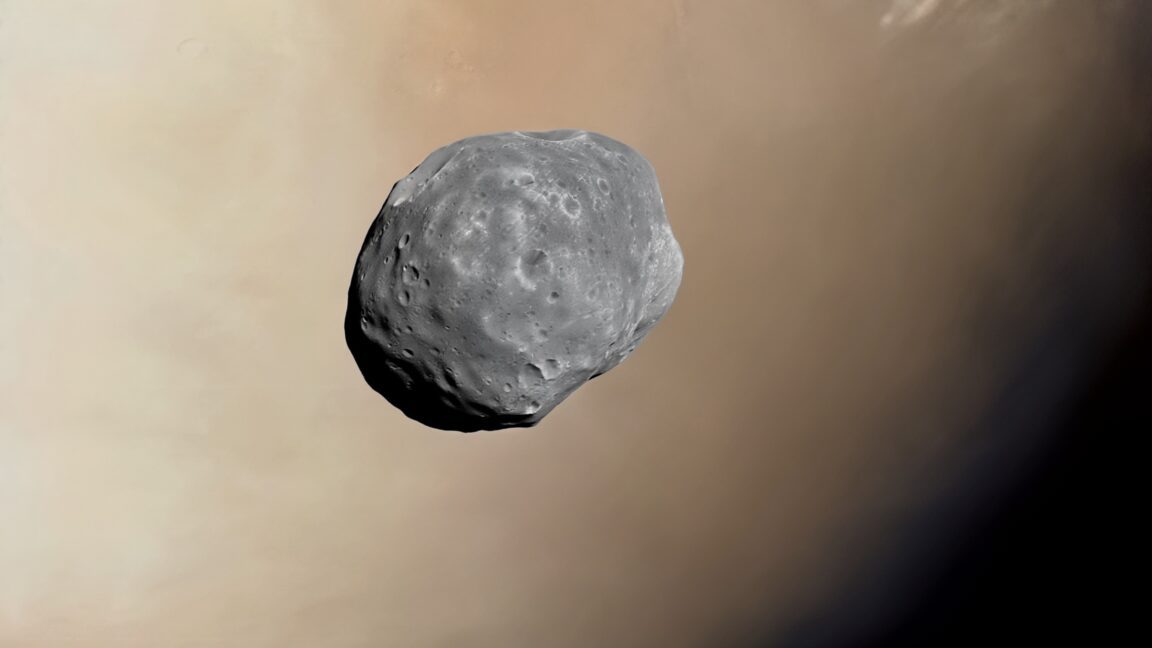
Japan has launched an ambitious $578 million mission to collect samples from Phobos, the largest moon of Mars, and return them to Earth. This robotic Martian Moons eXploration (MMX) mission aims to provide new insights into the formation of the Solar System.
The five-year expedition, led by the Japan Aerospace Exploration Agency (JAXA), lifted off from the Tanegashima Space Center aboard an H3 rocket. The most critical phase of the mission will involve up to two landing attempts on Phobos in 2029.
Highlights
- MMX Mission: Japan launched a $578 million spacecraft to collect samples from Phobos, a moon of Mars.
- Target 2029: The spacecraft will attempt up to two landings on Phobos in 2029 to gather samples.
- International Collaboration: NASA and European space agencies are significant contributors to the mission.
- Solar System Insights: The collected samples are expected to offer crucial information about the origins of the Solar System and Mars' moons.
- Proven Track Record: Japan has demonstrated expertise in this field with successful Hayabusa and Hayabusa 2 asteroid sample return missions.
Details
The MMX spacecraft was launched into orbit on Monday by Japan's flagship H3 rocket. Weighing nearly 4.5 metric tons, the spacecraft will embark on a 10-month journey, arriving at Mars next August. JAXA President Hiroshi Yamakawa declared the launch a success, stating, "A long journey of five years has just started."
The mission will spend approximately three years in the vicinity of Mars, conducting a series of encounters with its moons, Phobos and Deimos. Phobos, with an average diameter of about 22 kilometers, has an irregular, potato-like shape and a surface area comparable to the city of Houston. Due to Phobos' weak gravity, the spacecraft will not enter a stable orbit around it but will instead use a "quasi-satellite orbit," remaining bound to Mars while maneuvering around Phobos.
In late 2028 or early 2029, the MMX mothership will deploy a small rover named Idefix, a contribution from the French and German space agencies, onto Phobos. This shoebox-sized robot will attempt to traverse Phobos' surface for up to 100 days, collecting samples. The main spacecraft will then attempt two landings on Phobos in 2029, using a coring drill and a NASA-provided pneumatic sampler to retrieve at least 10 grams of material. These samples will be returned to Earth in 2031, landing in Australia, for laboratory analysis.
Why it matters
The MMX mission aims to answer decades-old questions about the origin of Phobos and Deimos. Scientists hope to determine whether these moons are captured asteroids or remnants of a giant impact early in Mars' history. Tom Statler from NASA stated, "By going to the Martian moons, studying them up close, and bringing samples back to Earth, we'll be able to determine whether Phobos material is more consistent with an asteroid composition or with debris created by a collision involving Mars." Furthermore, the reconnaissance of Phobos could help future mission planners assess its suitability as a potential stopover for human exploration between Earth and Mars, marking a significant step for future Mars missions.