Nintendo Switch 2 Security Breach: 'Homebrew' Access Achieved Through Software Exploit
A security researcher has demonstrated a software-only exploit on the Nintendo Switch 2 console, gaining 'userland' access that allows for the execution of homebrew applications.
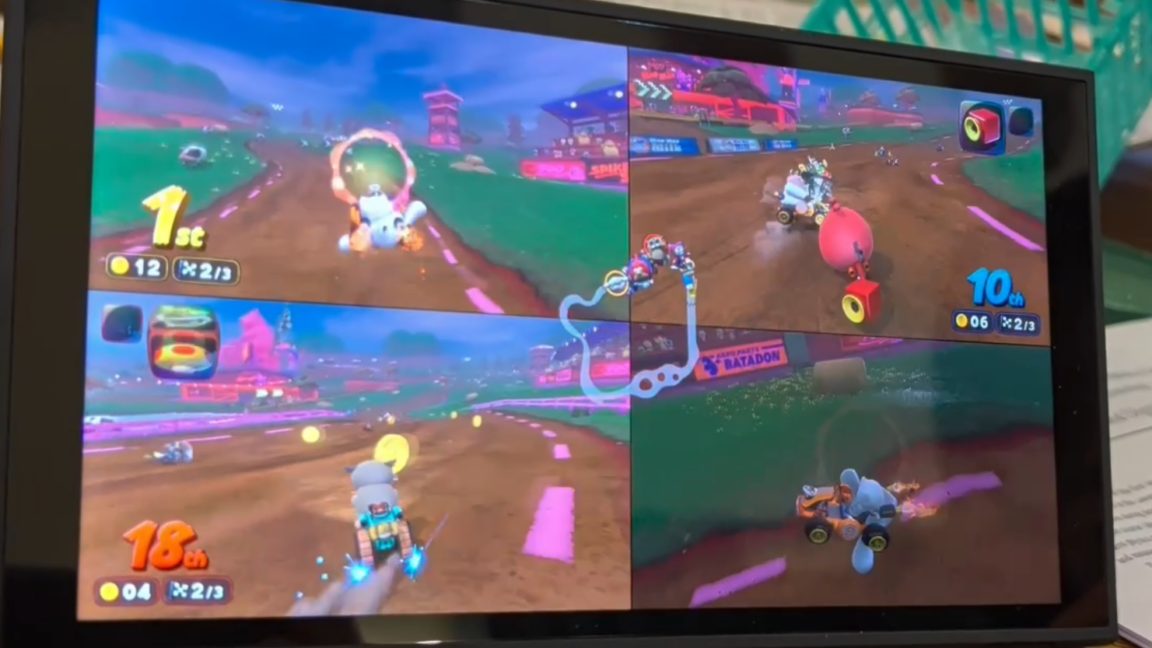
A security researcher has announced the discovery of a software vulnerability in the Nintendo Switch 2 console, achieving "userland" access. This access enables the execution of homebrew applications, game modifications, and save file backups on the console.
This partial exploit relies on an integer overflow error found within the interpreter of a programming environment called "SmileBasic." While it doesn't provide full control over the console, it offers significant capabilities.
Highlights
- Security researcher Sammy Hajhamid demonstrated achieving "userland" access on the Switch 2.
- The exploit stems from an integer overflow bug in "SmileBasic 4," software previously used on older Nintendo consoles.
- This access allows users to run homebrew, mod games, and back up save files.
- Nintendo has delisted SmileBasic from the Switch eShop, similar to its removal from the 3DS after a previous exploit.
- The current exploit does not provide full kernel-level control and is expected to be patched in upcoming firmware updates.
Details
Hajhamid utilized OpenAI's Codex AI tool to probe a weakness in SmileBasic's language interpreter. After approximately two weeks of effort, a 32-bit integer overflow error was discovered when removing items from an array in SmileBasic. This error led to an array pointer, which in turn granted read and write access to specific portions of system memory.
Subsequently, Hajhamid found a buffer overflow in the console's FileSystem services module, gaining arbitrary read and write privileges. This allowed for native code execution through a faked filesystem process. As proof of concept, the researcher showcased modded characters in the game Mario Kart World.
Nintendo has globally delisted SmileBasic 4 from the Switch eShop to prevent the spread of this vulnerability. A similar situation occurred in 2016 after the "smilehax" exploit on the 3DS. However, it's noted that a Japanese demo version might still be accessible.
Why it matters
This development is unwelcome news for Nintendo, given that a significant security vulnerability has been found just over a year after the Switch 2's release. While this exploit is not as severe as the "unpatchable" original Switch exploit from 2018, it indicates that Nintendo will face a continuous battle regarding the security of its console software. While future firmware updates are expected to patch this vulnerability, the "cat and mouse" game between hackers and hardware manufacturers seems set to continue.