Some Nobel Laureates Exhibit 'Nobelitis' Syndrome
Some Nobel laureates, after receiving the prestigious award, lose touch with reality and start making unscientific claims, a phenomenon dubbed 'Nobelitis'.
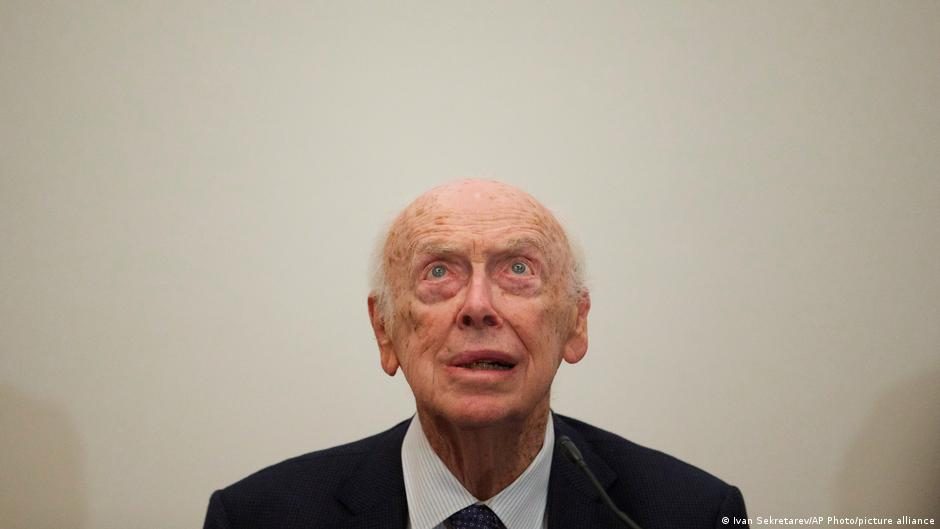
Some scientists, after being honored with the highly prestigious Nobel Prize, have begun advocating for unscientific and unproven theories, a condition referred to as "Nobelitis." This phenomenon suggests that laureates may lose touch with reality while grappling with immense expectations and sudden fame.
Highlights
- "Nobelitis" is an informal term describing how some Nobel laureates later in life start suffering from delusions of grandeur and spread unscientific claims.
- Linus Pauling, a two-time Nobel laureate in chemistry and peace, claimed Vitamin C was a universal cure for various diseases, from cancer to Alzheimer's.
- Virologist Luc Montagnier, who discovered HIV, later supported homeopathy and alleged that the COVID-19 virus was lab-made.
- James Watson, recognized for discovering DNA's structure, faced criticism for spreading racist theories.
- Experts caution against automatically accepting statements from Nobel laureates outside their specific fields of expertise.
Details
Nils Hansson, a professor of medical history at Heinrich Heine University, states that the sudden fame accompanying a Nobel Prize can be perilous. He emphasizes the risk of these world-renowned experts "starting to spread crazy, unproven scientific theories," as such ideas, when disseminated by Nobel laureates, are likely to be taken seriously.
Linus Pauling, despite winning two Nobel Prizes in chemistry in 1954 and peace in 1962, began claiming in the mid-1960s that Vitamin C was a universal remedy. The evidence for Pauling's alternative treatment, which he called "orthomolecular medicine," remains inconclusive even 60 years later. Similarly, virologist Luc Montagnier, who discovered HIV, later endorsed homeopathic medicine and asserted during the COVID-19 pandemic that the virus was created in a lab. German virologist Christian Drosten dismissed Montagnier's claims as "utter nonsense."
Why it matters
The Nobelitis syndrome illustrates that scientific achievements do not automatically confer expertise in all domains. Paul Nurse, President of The Royal Society and a Nobel laureate himself, advises that a good scientist should "be skeptical of everything, including yourself and your own ideas." The tendency of the media and the public to uncritically accept statements from Nobel laureates outside their areas of expertise can lead to the spread of misinformation. This poses significant risks to the credibility of scientific knowledge.