Left Party Sues Economy Minister Over Remarks at Germany's Top Court
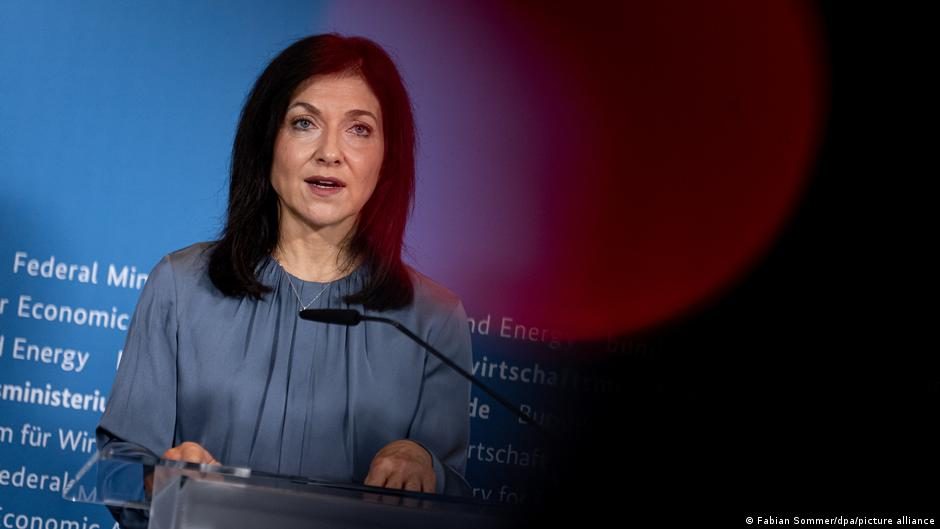
Germany's Left Party has initiated legal proceedings against Economy Minister Katherina Reiche at the Constitutional Court over comments she made on official channels.
Highlights
- The Left Party has filed a lawsuit against Economy Minister Katherina Reiche at the Constitutional Court.
- The dispute centers on Reiche's public statements, including an Instagram post, alleging the Left Party's ideology is antisemitic and its policies, such as apartment nationalization, threaten Germany's economy.
- Reiche reiterated her concerns during a visit to Ukraine, expressing fears of national economic decline under a leftist coalition.
- The Left Party's Berlin chapter accuses the Christian Democrats (CDU) of orchestrating a significant campaign against its leading candidate, Elif Eralp, following recent state election success.
- While some state ministries have retracted similar statements, others have not.
Details
Economy Minister Katherina Reiche, a member of the Christian Democratic Union (CDU) and Chancellor Friedrich Merz's party, made a post on her ministry's official Instagram account stating, "Antisemitism and expropriation endanger Germany and the economy." This comment implicitly referred to the Left Party's unproven antisemitic leanings and their proposal to nationalize corporate-owned apartments to combat escalating rents in Berlin. Reiche further amplified her criticism while in Ukraine, telling a major newspaper that a leftist government in Berlin would be detrimental to national growth, asserting that the Left Party's agenda posed a risk to both Berlin and the country.
The Berlin faction of the Left Party contends that the CDU is conducting an extensive smear campaign targeting Elif Eralp, their successful candidate in the recent Berlin state elections. The party has previously pursued legal avenues regarding comparable statements found on various CDU interior ministry websites across different states. They object to the use of official governmental platforms to disparage a political rival. Although the ministries in Saxony and Schleswig Holstein removed the contested remarks, those in Baden-Württemberg, Brandenburg, and Hesse have yet to do so.
Why it matters
This legal challenge underscores the heightened political tensions in Germany, particularly the discomfort among conservative factions following the Left Party's victory in the Berlin state elections. The outcome of this case could establish an important precedent regarding the legal and ethical boundaries for government officials using official communication channels to criticize other political parties.