Lula Wins Fourth Term as Brazil's President, Bolsonaro's Party Acknowledges Victory
Luiz Inacio Lula da Silva has been elected president of Brazil for a fourth term, defeating Flavio Bolsonaro, whose party has recognized Lula's win despite Bolsonaro's refusal to concede.
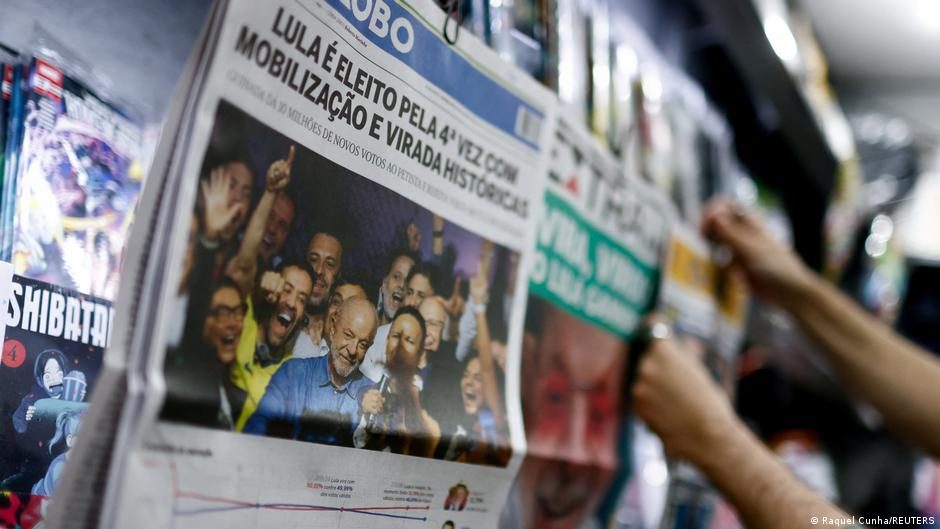
Luiz Inacio Lula da Silva has secured a historic fourth term as Brazil's president, triumphing over right-wing challenger Flavio Bolsonaro in a closely contested runoff election. Lula garnered 51.7% of the votes, while Bolsonaro received 48.2%, according to official results. In his victory speech, Lula called for increased regulation of large technology platforms.
Highlights
- Lula defeated Flavio Bolsonaro to become Brazil's president for the fourth time.
- Despite Bolsonaro's refusal to concede, his Liberal Party officially recognized Lula's election victory.
- Bolsonaro claimed his passports were confiscated and he was banned from leaving the country, alleging the order came from Supreme Court Justice Alexandre de Moraes.
- Following the election results, trading on the Brazilian stock market was suspended for 30 minutes as shares and the Brazilian real tumbled.
- Leaders from Germany, Nigeria, Tanzania, Seychelles, and Russia were among those who congratulated Lula on his win.
Details
Following the announcement of the election results, trading on the Sao Paulo stock exchange, Latin America's largest, was halted for 30 minutes after the benchmark Ibovespa index plunged by nearly 17%. This sharp drop was seen as the market's initial reaction to the re-election of the left-wing Lula.
Flavio Bolsonaro contested the results, claiming that an extension of voting hours favored Lula and vowing to seek an annulment of the runoff. However, electoral officials stated that the extension did not alter the election's outcome. Bolsonaro's own campaign had also requested more voting time in certain regions due to heavy rainfall.
Bolsonaro alleged that federal police approached him after he visited his imprisoned father, former President Jair Bolsonaro, ordering him to surrender his passports and prohibiting him from leaving the country. He attributed this decision to Supreme Court Justice Alexandre de Moraes, calling it an attempt to intimidate him. Neither the court nor the federal police immediately confirmed this reported ruling.
Why it matters
Lula's victory marks a significant political comeback in Brazil and could lead to substantial shifts in the country's domestic and foreign policies. Bolsonaro's refusal to concede and the alleged confiscation of his passports indicate ongoing political tensions in the nation. Furthermore, Lula's call for regulating big tech companies could intensify global discussions about the role and oversight of these platforms.