High-Speed Train Crash in Spain: Signal Failure and Control Centre Order Blamed
At least 68 people died in a high-speed train crash in central Spain on Wednesday, with officials blaming a control centre order following a critical train signalling system failure.
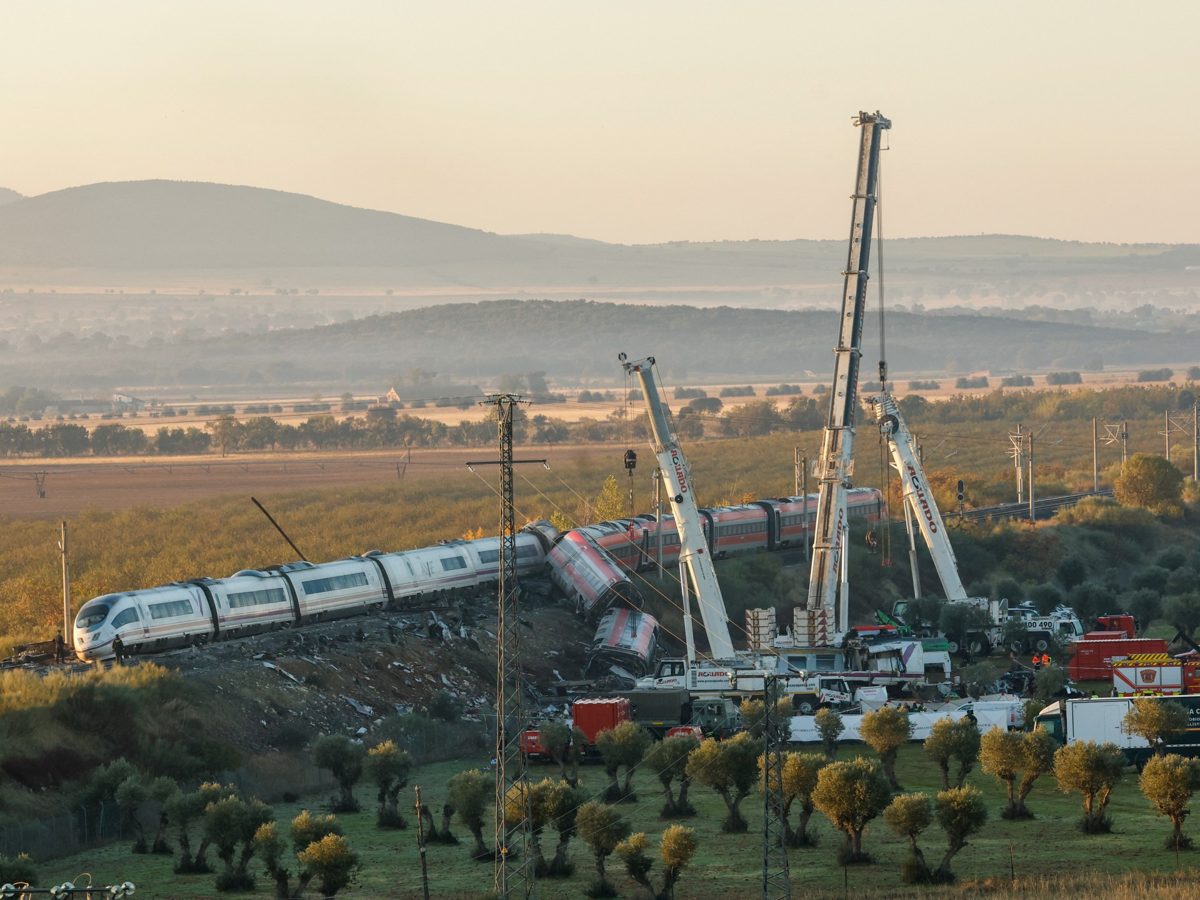
A high-speed train crash in central Spain on Wednesday resulted in at least 68 fatalities and approximately 80 injuries. The incident occurred near Urda, south of Madrid, when a moving high-speed train collided with the rear of a stationary train. Authorities attribute the accident to an "inexplicable" order from a rail control centre, issued after a critical signalling system failure.
Highlights
- The collision involved two high-speed trains traveling from Madrid to Seville: a moving Renfe train struck a stalled Iryo train.
- Transport Minister Oscar Puente stated that an "inexplicable" order from the control centre after a signalling system failure caused the crash.
- At least 68 people were killed and 80 injured, marking Spain's second major high-speed rail disaster this year.
- Prime Minister Pedro Sanchez visited the site, declared three days of national mourning, and vowed to investigate any negligence.
- The crash, occurring just weeks before national elections, has ignited political debate.
Details
The accident took place just before 9 am (08:00 GMT) on a raised section of track between Urda and Los Yebenes. The moving train was operated by Renfe, Spain's state-owned rail company, while the stalled train belonged to Iryo, a private operator that entered the market in 2022. The Renfe train was carrying 397 people, and the Iryo train had 147 passengers. Two carriages of the Iryo train derailed and fell down an embankment during the impact.
According to Transport Minister Oscar Puente, the main signalling system (LZB), which automatically maintains safe distances between trains, failed due to a computer error about half an hour before the crash. This caused approximately six trains, including the two involved, to stop automatically. Control then shifted to Adif, the state company managing Spain's rail infrastructure, in Madrid. Preliminary investigations suggest that controllers cleared the Renfe train to resume normal speed, even though the Iryo train was still stalled. The Renfe train accelerated to over 200 km/h (124 mph) before hitting the stationary Iryo train.
Why it matters
This incident is significant as it marks Spain's second deadly high-speed rail accident within a year, following another crash in January that killed 46 people on a similar route. Prime Minister Pedro Sanchez acknowledged that while the causes of the two crashes appear unrelated, two such accidents in one year are "unacceptable for a country like Spain." The timing of the crash, just weeks before national elections, has also brought transport policies and rail safety to the forefront of political discourse. Efforts are underway to upgrade Spain's LZB signalling system, which dates back to 1992, to the European Union's standard. This event underscores the critical importance of modern and reliable rail safety systems and robust control centre procedures.